Whole dried pods
Browse whole dried chilies. Check the selected product's pod dimensions, shape, stem treatment and preparation information. If stemmed or stemless supply matters, state that preference explicitly and confirm the offered material.
Start with the ingredient you need, its physical presentation and the preparation it will enter. Then compare each product's own heat, colour, processing and handling information. Similar chili names can accompany different specifications, so keep the product link or ID with every shortlisted material.
Browse the full ingredient catalogue or use the comparison route below. A collection helps you find products; the selected product specification provides the basis for the enquiry.
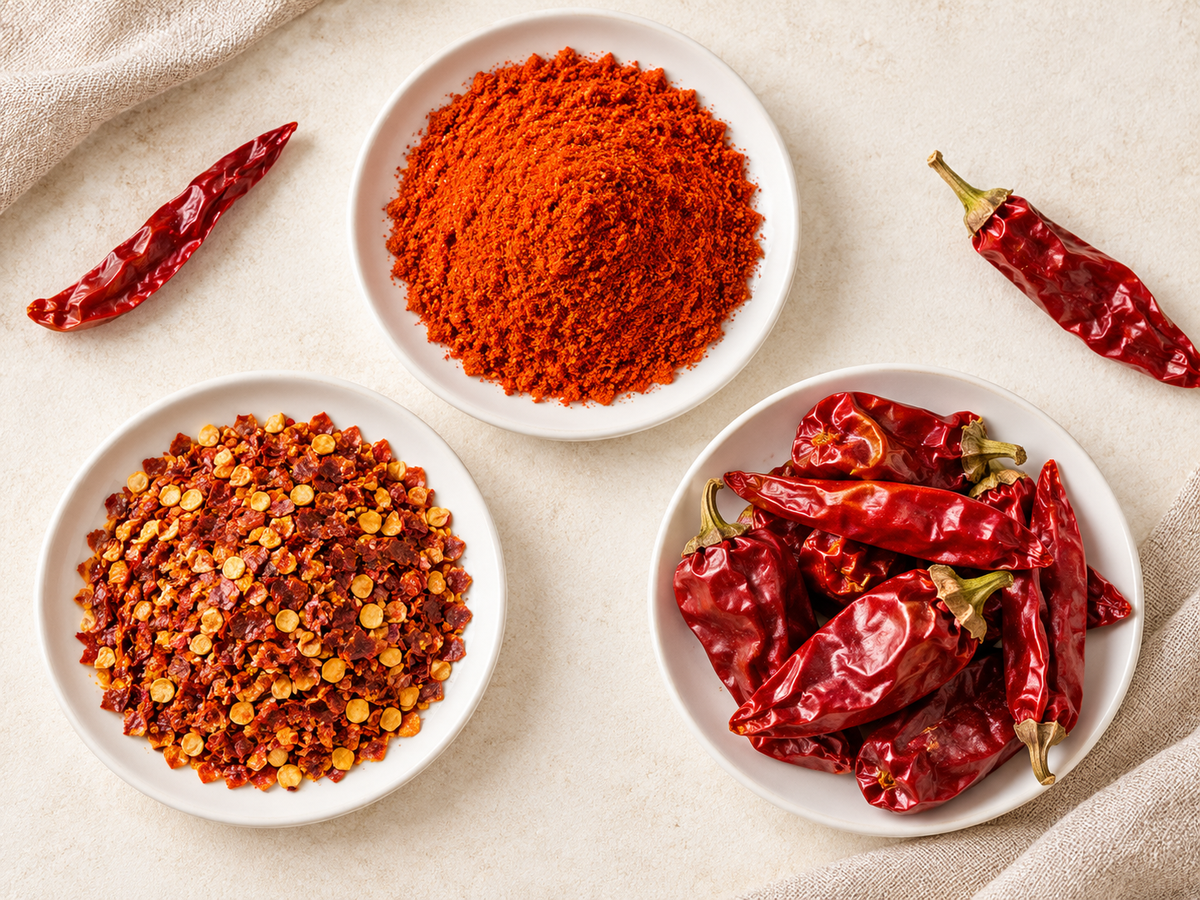
Read the product's ingredient, content and intended-use information alongside its title and description. Identify the actual material before choosing a specification. Where a title or description offers several options, state the selected identity and ask which corresponding specification the quotation will cover.
| Product direction | What to establish | Where to start |
|---|---|---|
| Single spice | Named ingredient, physical form and applicable parameters. Obtain the actual ingredient declaration for composition requirements. | Chili and paprika powders or the appropriate whole/cut range. |
| Seasoning blend | Selected flavour, full formulation information and applicable ingredient/allergen declaration for the food. | Seasoning blends. |
| Extract or specified ingredient | Source material, preparation, form and the meaning and basis of any stated ratio or assay. | Spice extracts and ingredients. |
A spice powder and an extract are separate material identities. Compare the actual ingredient and preparation description; do not substitute one for the other on the strength of a shared chili name. Keep details from different products on separate comparison lines.
Specify the form required by your preparation in the enquiry. A whole-pod dimension, a cut-piece size and a powder particle specification describe different physical questions. Ask for the relevant specification rather than transferring a pod length to a ground product.
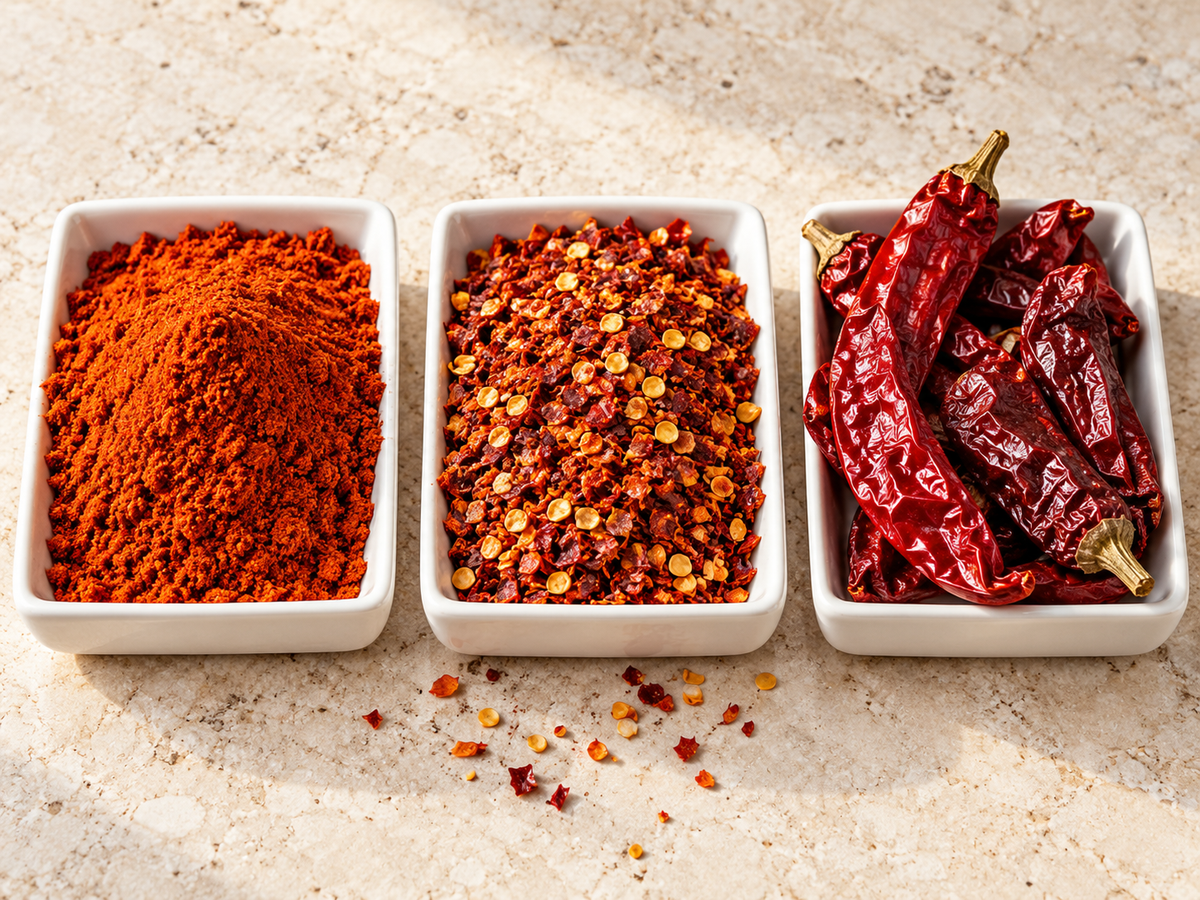
Browse whole dried chilies. Check the selected product's pod dimensions, shape, stem treatment and preparation information. If stemmed or stemless supply matters, state that preference explicitly and confirm the offered material.
The flakes and cuts collection groups these presentations. Ask for the cut dimensions or distribution and the seed presence required for the food. A general flake name does not settle either detail.
Use the powder collection for ground chili and paprika. Record the mesh or particle-size description with its unit and any stated passing criterion. Request the applicable method or sieve information where the comparison depends on it.
If one offer describes powder and flakes, ask for the selected form to be identified explicitly in the quotation. Separate lines or references help keep each material, packing and acceptance requirement clear.
The variety index groups products that explicitly use the relevant names. Use a name to find candidates, then compare the actual form and specification. A variety name alone does not establish a fixed heat value or a complete purchasing specification.
Where several varieties appear in one offer, name the variety you want and obtain its corresponding form, heat and packing information. Keep each option separate in the shortlist until the actual supply is identified.
Compare heat information with heat information and colour information with colour information. Where a product gives SHU for pungency or ASTA for colour, keep the value with that unit and the actual product reference. Include the applicable test or measurement basis when a numerical requirement determines acceptance.
Read the product's parameter section and description for its actual declared values. Record a stated fact in one column and your requested limit in another. If a number has no unit, ask what it measures and how it is expressed; leave it unresolved rather than assuming the missing unit.
State a moisture requirement with its unit, limit or range and relevant basis. For example, a buyer requesting a maximum should describe it as a maximum, not simply enter an isolated number. The supplier can then confirm the actual product specification proposed against that requirement.
Qualitative heat, colour and grade descriptions can help narrow the discussion. A product grade or sensory label concerns that material;review company or product certification through the appropriate documents and their scope. Read shelf life together with the applicable storage conditions and selected packing arrangement.
Use the processing index to find ingredients with an explicit processing description. Confirm which material and selected option the description applies to, particularly when more than one treatment or form appears in a listing.
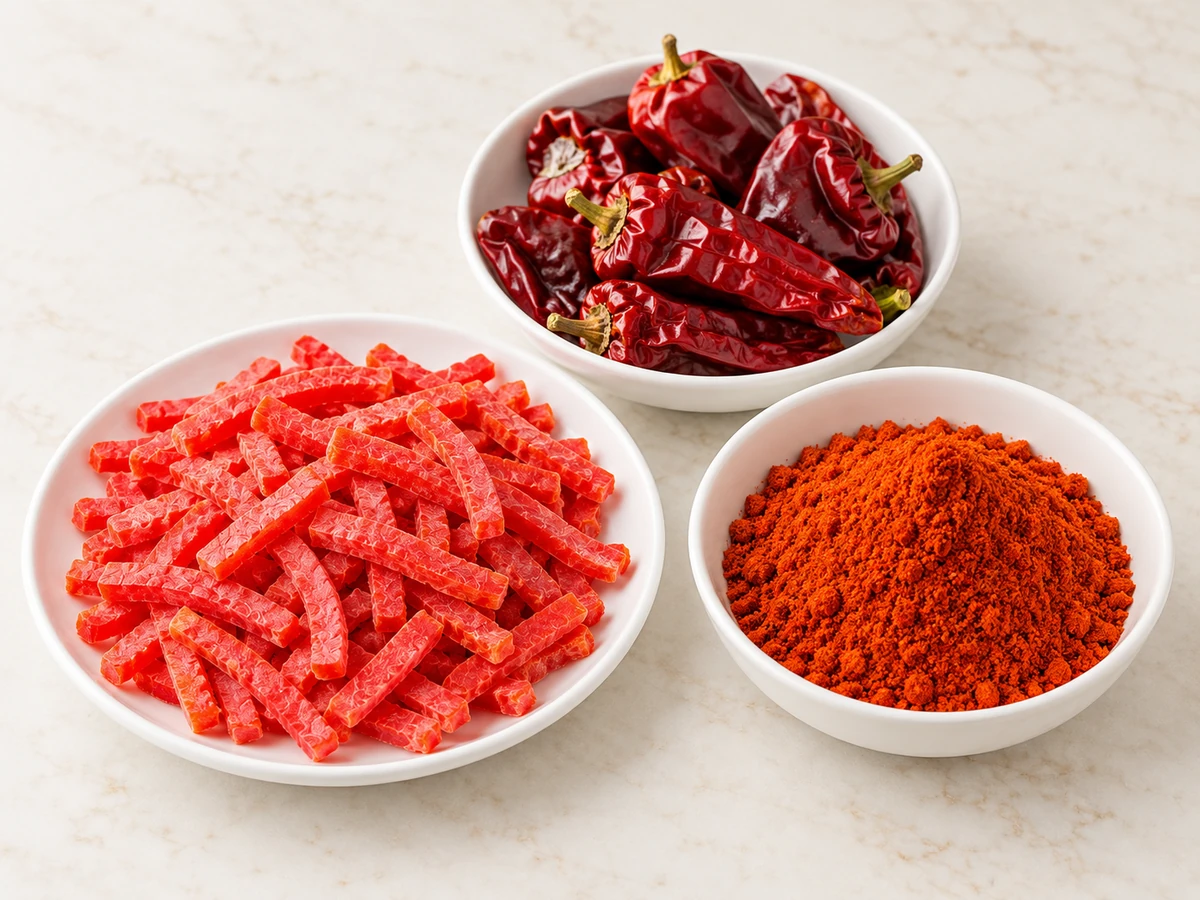
More than one processing description can accompany a product. Ask which treatments apply to the selected material and request clarification when the relationship is unclear. A drying description should not be used as a substitute for a product-specific sterilisation or microbiological specification. Likewise, obtain the actual storage instructions rather than deriving a temperature from a processing category.
Use one row for one selected product and offered option. Keep its source link, actual stated facts, your requirements and remaining questions together. This lets the supplier respond to an identifiable material and gives your team a consistent record for reviewing offers.
| Listed fact | Buyer requirement | Point to confirm |
|---|---|---|
| Product link, identity and offered form. | Ingredient, selected variety and physical presentation needed. | Which actual option and specification are being quoted? |
| Declared particle, heat, colour or moisture information. | Required values with units, limits and relevant measurement basis. | How does the selected material match the requested criteria? |
| Processing, packing, storage and shelf-life directions. | Required packing and receiving/use arrangements. | Which conditions and duration apply to this supply? |
Do not combine the heat of one product with the particle or storage specification of another. Compare the actual materials individually, then carry the accepted reference into the procurement brief.
Prepare your product shortlist