Begin with the physical result your recipe needs
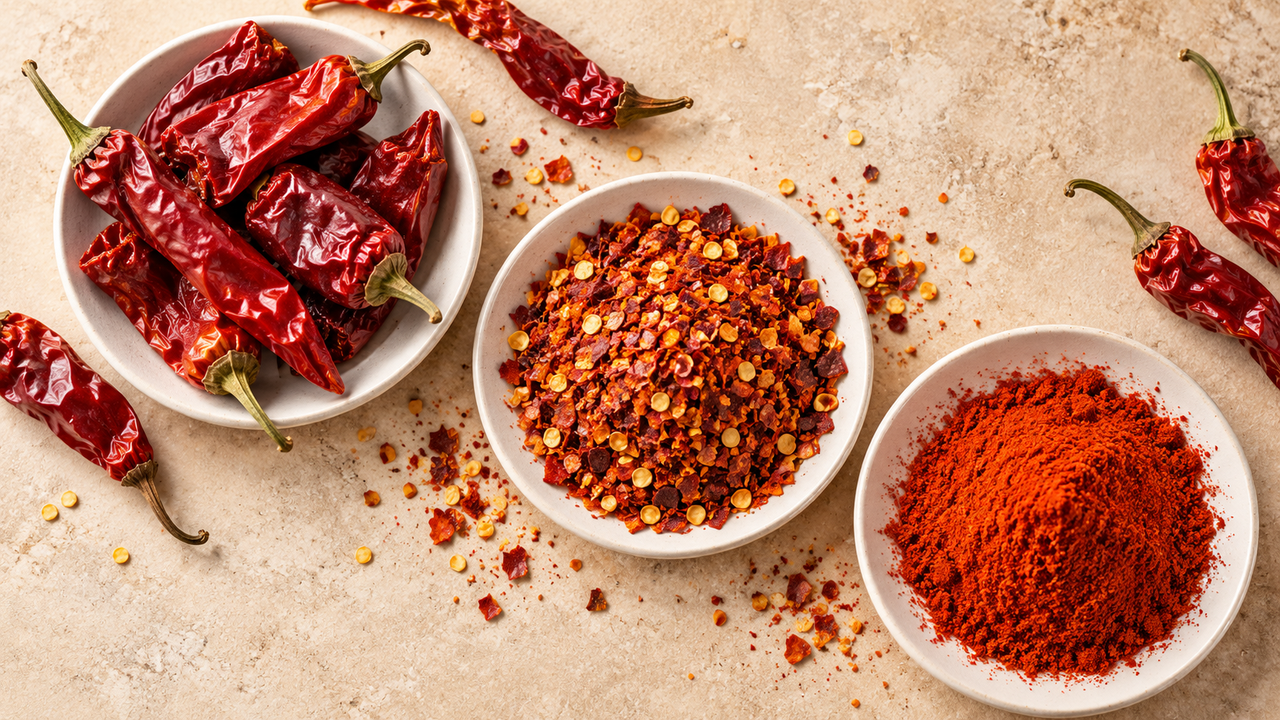
Choosing chili flakes, cut pieces or powder starts with a practical question: what should the ingredient contribute in the food you are making? The answer may concern a visible pepper piece, a ground spice presentation, a particular texture or a preparation step in the process. State that requirement before comparing product names.
The catalogue contains different physical forms and product identities. A form description helps you find candidates, while the actual specification tells you what material is being proposed. Record the product reference and selected option as you compare. This article provides a structured way to move from the desired preparation to a shortlist, a representative trial and a clearer purchasing enquiry.
Browse chili flakes and cuts and chili and paprika powders alongside the comparison. Keep the intended food and its acceptance requirements visible throughout the selection.
Describe the ingredient at the point of use
Explain where the chili enters the preparation. It might be added to a dry seasoning, mixed into a sauce, used in a dipping preparation or handled as a whole pepper before another step. Naming that point gives the supplier more useful information than asking for a general high-quality chili.
Describe the physical result you need at that stage. State whether visible pieces matter, which particle presentation is required and how the material will be handled by your process. Add any composition, colour or heat requirement separately so that form is not expected to answer every ingredient question.
Keep the brief tied to the actual food. A material can have an attractive appearance in its pack and still need assessment in the intended preparation. Ask for the relevant product details and agree the trial questions before selecting on appearance alone.
Compare three forms through different physical questions
| Presentation | Questions to resolve | Information to request |
|---|---|---|
| Whole pods | Which pod dimensions, shape and stem treatment does the preparation need? | The selected pepper specification and actual preparation guidance. |
| Flakes or cut pieces | Which piece size, particle presentation and seed presence are required? | Actual dimensions or distribution and representative appearance. |
| Ground powder | Which grind, mesh or particle criterion does the recipe require? | The stated particle description, unit and relevant passing or measurement basis. |
Use this comparison to identify the next question, rather than to assign a universal best form. A whole-pod length is not a powder particle specification. A general flake description does not establish an exact cut size. A powder name does not settle its composition or heat.
If a listing offers more than one form, identify the option you want and obtain its corresponding specification. Keep powder and flakes on separate enquiry lines where different materials are being assessed.
Write a particle requirement that can be answered
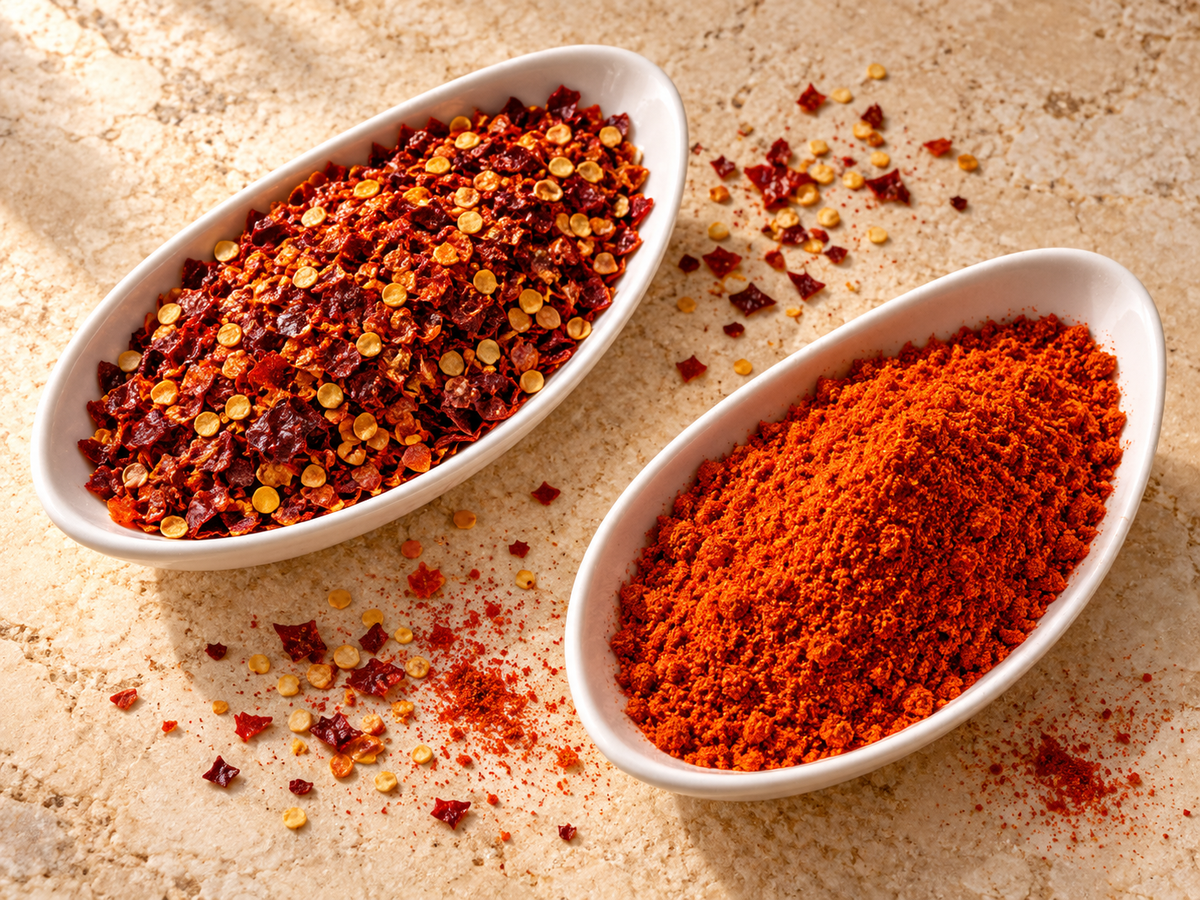
Use the physical description appropriate to the ingredient. For cut pieces, record dimensions and units where they are supplied or required. For a ground ingredient, keep the mesh or particle statement with its unit and any relevant passing criterion. Ask for clarification when the information is incomplete.
State a buyer target as a target. If the product page describes one presentation and your process requires another, explain the requested condition and ask which material can be proposed against it. Do not change the catalogue value in your worksheet to make the candidate appear to match.
Where particle distribution matters to acceptance, explain the criterion and request the applicable specification or method information. This gives the supplier a concrete question to answer. It also helps your own team compare samples against the same requirement rather than relying on a different informal interpretation of fine or coarse.
Check seeds and stems as their own selection details
Seed presentation and stem treatment should be recorded explicitly when they affect the preparation. Read the selected listing for the relevant description, then ask which material is offered. Do not infer seed absence from a colour or a general powder or flake name.
For whole peppers, specify whether a stem-related requirement is part of the request. For cut products, describe the seed presence and visible presentation needed in the food. Request representative appearance or an actual sample when a visual comparison is important to the decision.
Keep these details separate from grade and heat. A stem preference does not define a heat value, and a named variety does not complete a physical specification. Record the actual combination you want to evaluate so the response can identify the corresponding product and option.
Keep ingredient identity alongside the form
A red powder can be a single spice, a seasoning blend or a differently specified ingredient. Read the actual ingredient and content information before treating it as a replacement for another material. When the proposed product is a blend, request the applicable formulation and allergen declaration for the selected flavour.
An extract also needs its own identity and specification. A shared chili name is not a reason to substitute an extract for a ground pepper in a recipe. Establish the material, preparation and intended use before comparing the physical appearance.
Use the ingredient selection guide to connect form with identity, named variety and processing. The aim is a shortlist of identifiable materials, each with a clear reason for consideration, rather than a group of similarly coloured ingredients.
Test the selected form in the actual preparation
Ask whether a representative sample of the selected material is available and agree the conditions before dispatch. Identify which product, option and lot information will accompany it. Keep the sample reference with the relevant specification and handling instructions.
Before the trial, write down the question being tested. It may concern visible piece presentation, the desired powder character or the way the ingredient fits a particular preparation step. Define the observation and acceptance criteria that matter to your team. Use the same documented conditions when a direct comparison between samples is intended.
Record the actual amounts, sequence and process settings used. Note appearance, texture and flavour in the terms relevant to the food. A trial observation should identify the tested preparation; it should not be expanded into a universal claim about the ingredient in every recipe.
Turn the comparison into a useful record
Keep a separate record for each sample, even if several came from the same listing. Include the product link, selected form, supplied lot information, arrival details and the conditions under which it was kept. Add the preparation reference and the observations your team agreed to make.
When a result differs from the expectation, identify the question to clarify. Check that the tested material matches the reference and form under discussion. Ask for the actual specification or relevant product information instead of borrowing a value from another candidate.
The record should allow a colleague to understand what was compared and why one option was preferred. Include any remaining technical or composition questions. This makes the next supplier discussion more useful and keeps a promising recipe result attached to the correct material.
Translate the accepted form into the purchasing brief
Identify the accepted product and option in the RFQ. State the required form, relevant dimensions or particle criteria, seed or stem preferences, composition requirements and the heat and colour information that affect the same purchase. Add total quantity, desired packing and destination.
Ask the supplier to identify which specification and documents the written offer covers. Keep the agreed sample reference and acceptance criteria where they form part of the decision. If a different form or material is proposed, evaluate that change explicitly before comparing the commercial terms.
The bulk procurement guide explains how to connect these requirements to packing, sample conditions and quotation review. The food applications page helps describe the preparation context for the enquiry.
Review changes after the first trial
A later enquiry may concern a different cut, pack or formulation from the first sample. Record that change explicitly. Identify which original observations still concern the proposed material and which questions need a new comparison. This keeps an accepted trial from becoming an accidental approval of every similarly named product.
Ask for the corresponding specification when the selected form changes. If the packing changes, confirm the relevant handling and receiving information as well. Keep the updated product reference with the written offer so development, purchasing and receiving can identify the same supply. The useful outcome is a clear material choice with understood conditions, not simply a preference for the words flakes or powder.
Questions to ask when the forms appear similar
Is coarse or fine enough to define the requested material?
Use the supplied description, then add the actual physical criterion that matters to your preparation. Request dimensions, particle information or representative appearance where a general word leaves an important question open.
Can a product with several form descriptions be quoted as one material?
Ask which selected form and specification the offer covers. Keep different proposed materials identifiable in the quotation so their packing and acceptance requirements can be reviewed separately.
Should I choose only by the ingredient picture?
Use the image to understand the presentation, then read the actual product information and confirm the relevant specification. A representative trial can address the physical questions that matter in your own food.
What should I send to Velia Spices?
Send the product reference, selected form, intended preparation and the requirements your business needs to evaluate. Include quantity, packing and destination so the enquiry describes a clear purchasing task. Contact the team with your ingredient brief.