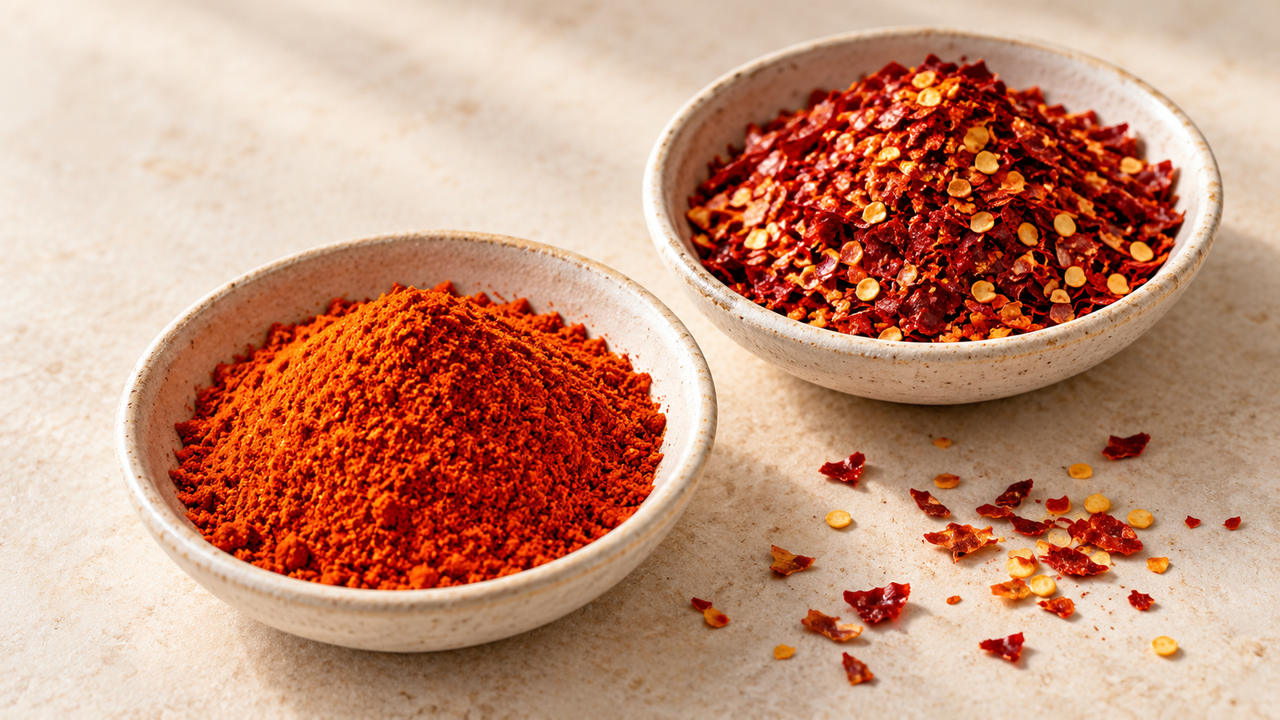
Read heat and colour as two separate requirements
A commercial chili ingredient can be selected for several reasons at once: the flavour it brings, the appearance wanted in the food, the physical form required by the process and the composition specified by the buyer. Heat and colour belong in that discussion as separate requirements. A number without its label, unit and product reference gives an incomplete basis for comparison.
Begin with the actual ingredient you want quoted. Keep the product link, selected variety and physical form alongside every recorded value. Then ask which specification applies to the proposed material and which evidence or measurement basis is relevant to your acceptance decision. This approach helps a development team and a purchasing team discuss the same material without turning a broad catalogue description into a fixed result for every product.
The chili and paprika selection guide provides the wider identity and form comparison. This article focuses on turning heat and colour descriptions into a usable purchasing brief.
1. Attach the value to a material, not just a name
Write the product reference before copying a specification. Identify whether the offer is a chili powder, a cut pepper, a whole pod, a seasoning blend or an extract. A shared chili name does not make these materials identical. Even within a named variety, the listing may describe different grades, particle forms or options.
If several varieties or forms appear together, ask which option a numerical description covers. Keep a separate line for each proposed selection. A powder described for colour selection and another material described for pungency should each retain its own reference and relevant specification. Combining their attractive features into one imagined product would make the enquiry harder to answer accurately.
Also record whether you are copying a declared product parameter, a buyer-requested target or a result from an identified sample. These can all be useful, but they perform different jobs. A target states what you want. A declared parameter describes the proposed specification. A supplied result needs its own material and reporting context before it can support a comparison.
2. Separate descriptive heat from a numerical specification
Words such as mild, spicy, hot or extra-hot help a buyer describe a desired flavour direction. Keep those descriptions where they are supplied, and discuss how the selected ingredient will be assessed in the intended preparation. They should not be silently converted into an invented numerical heat value.
Where a product provides SHU as its pungency unit, record the stated value or range with that unit. Ask whether the description concerns a specific selected grade or a choice among materials. A range presented across varieties needs a selected variety and specification before it becomes a precise purchasing reference.
A recipe trial can add useful sensory observations for your own food. Record the material and preparation conditions used, then describe the observation in those terms. A trial note such as an acceptable heat impression in the tested preparation is different from a numerical ingredient assay. Keep both kinds of information in their proper places rather than using one as a substitute for the other.
3. Keep colour descriptions with their own basis
A colour description can concern the ingredient's appearance, the intended visual result in a preparation or a separately stated colour parameter. Identify which question matters to your purchase. A red ingredient description alone does not specify how your finished food will look after its actual preparation.
Where ASTA is explicitly used as the product's colour specification, retain that label with the value and the selected material. Compare it with the relevant colour requirement rather than with a pungency number. If the product presents colour grades according to requirement, ask which grade is offered for the actual enquiry.
Visual comparison can also be useful when it is planned consistently. Record what was observed, the sample reference and the conditions of the preparation being compared. Ask for the corresponding technical information when a measured colour criterion determines acceptance. The practical aim is to make the appearance requirement understandable and repeatable for the purchasing decision, without replacing a technical parameter with an unsupported visual assumption.
4. Request the unit and measurement basis together
Copy the full expression that gives a parameter its meaning. This includes the unit, the stated limit or range and any relevant condition. A maximum, a minimum and a selectable range describe different things. Preserve those distinctions in the enquiry.
If a value arrives without a unit, ask what it measures and how it is expressed. Do not supply the missing unit from a nearby product or a familiar industry phrase. Likewise, a percentage needs its identified subject. A particle-passing percentage, a moisture percentage and a composition percentage should remain separate questions.
When a numerical value will determine acceptance, request the relevant method or reporting basis and the document scope. Ask which material, sample or lot the information concerns. You do not need to impose a generic testing procedure to make a clear enquiry;you need to identify the actual criterion and agree which information will be used to assess the proposed supply.
5. Read a multi-parameter listing without merging its options
The catalogue includes cryogenic-dried Kashmiri chili powder with separate colour, pungency, particle and moisture information. Its colour and pungency descriptions include requirement-dependent or variety-dependent ranges. The useful next step is to identify the selected material and the specification requested for that supply.
This illustrates a broader purchasing habit:keep every qualifier with its parameter. A colour option according to requirement should remain an option. A heat range described across varieties should not become a fixed heat result for every named chili in the offer. A powder's particle specification answers another physical question again.
Use the listing as a starting point for a focused enquiry. State the desired variety and form, then ask for the actual colour, heat and other criteria to be quoted. Where the planned food has several acceptance requirements, identify them separately so that the response can address each one for the same selected product.
6. Build a comparison worksheet your team can use
A compact worksheet helps keep the buying discussion organised. Use one row for one product and option, and separate the supplied fact from the requirement you want to agree. Leave uncertain details as questions until the relevant information is provided.
| Item | Record from the offer | Add for your enquiry |
|---|---|---|
| Material | Product reference, identity, variety and form. | The exact selected option and intended food. |
| Heat | Actual taste description or stated value and unit. | Required profile, limit or range and relevant basis. |
| Colour | Actual appearance description or stated colour parameter. | Required appearance or measured criterion. |
| Supporting information | Supplied specification, sample or batch reference. | Documents and acceptance checks to agree. |
Keep particle size, composition, packing and handling alongside this sheet when they affect the same purchase. The aim is a consistent product reference across departments, not a longer list of disconnected numbers.
7. Carry the selected criteria into the trial and offer
Before evaluating a sample, identify the material, its supplied information and the food preparation you intend to use. Agree the observations and acceptance questions that matter to the project. Keep the preparation conditions and actual sample amounts in the trial record so that later comparisons can be understood.
After review, carry the accepted product reference and relevant criteria into the quotation discussion. Ask which specification, packing and applicable documents the written offer covers. If the sample or documentation leaves a question open, state that question explicitly rather than completing the answer from another product.
The specifications and documentation guide explains how to distinguish a catalogue parameter from a batch result and certificate scope. The procurement guide brings these requirements together with quantity, packing and destination.
8. Give development and purchasing the same reference
A development brief may begin with the desired appearance of a sauce, while a purchasing brief begins with a catalogue product. Bring the two descriptions together before comparing quotations. Identify the selected ingredient, the appearance and heat observations that matter in the food, and any numerical criteria your team actually requires.
If the development team changes the proposed form or grade, update the shortlist reference as well as the trial notes. Otherwise, an attractive result from one sample may become attached to a quotation for another material. Ask the supplier to identify the offered specification against the revised request and keep the response with the comparison worksheet.
The final handover should be understandable to someone who did not take part in the trial. It should explain what was selected, which information supported the decision, what conditions were used and which questions remain open. That record makes later purchasing discussions more precise without turning a recipe observation into an unsupported technical guarantee.
Questions to resolve before requesting a quote
Can I compare a colour number with a heat number?
Keep heat and colour as separate criteria. Retain each parameter's actual label, unit and product reference, and request clarification if the meaning is unclear.
Does a familiar variety name provide the heat specification?
Use the name to find candidates, then read the selected product's actual heat information. Ask which variety or grade the quoted specification covers.
What should I send if the listing gives several ranges?
Send the product link and identify the desired material and form. State your required heat, colour and other criteria separately, and ask for the corresponding selected specification.
Browse chili and paprika powders to prepare a shortlist, or contact Velia Spices with the product reference and the requirements your business needs to evaluate.