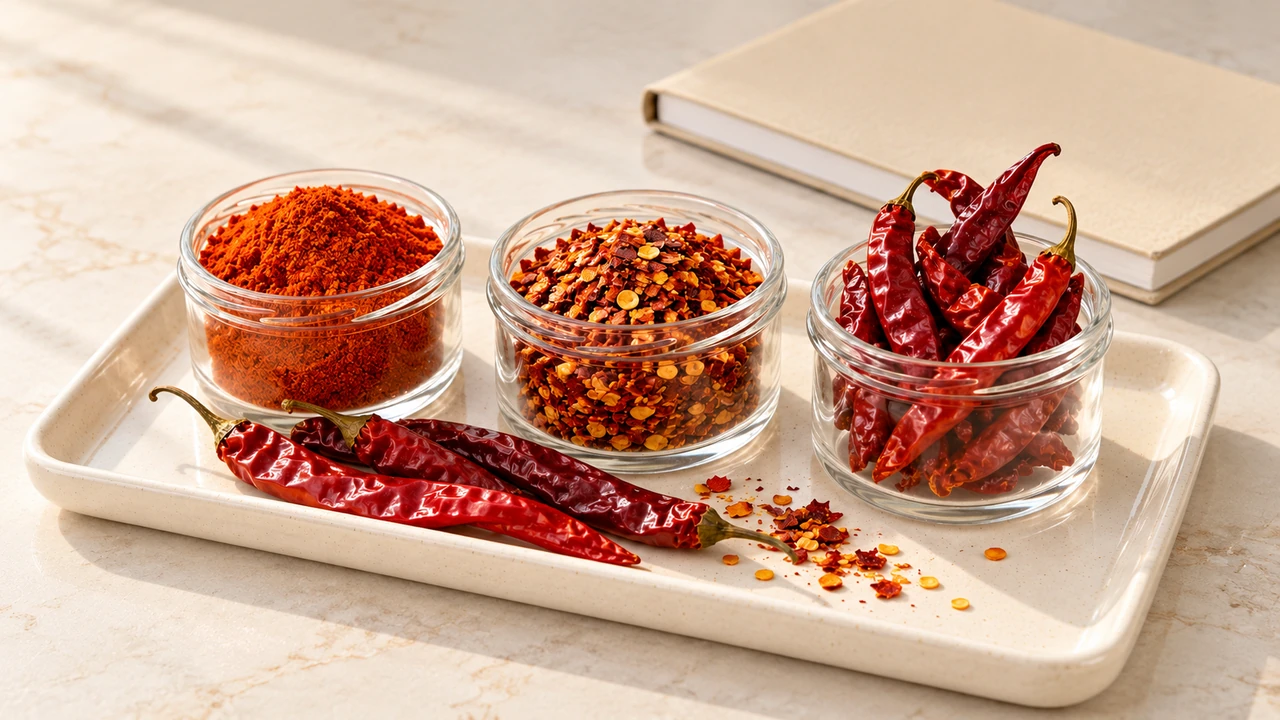
Give the sample trial a purchasing question
A chili ingredient sample is most useful when the team knows what it is trying to learn. Identify the food preparation, the selected material and the acceptance questions before comparing samples. This helps keep the trial focused on the actual ingredient that may be purchased.
A sauce developer may want to compare a powder with a cut presentation. A seasoning team may need to assess a particular flavour or particle description. A buyer may need to understand whether an offered material matches an agreed specification. These tasks can share a record, but they should not be treated as the same question.
This guide sets out a practical trial record for sauce and seasoning projects. Sample availability and conditions are agreed for the selected product. The procurement guide explains how the resulting information fits into a bulk enquiry and written offer.
Ask for a representative, identifiable material
Begin the request with the product link or ID and the actual option being considered. State the desired variety or flavour, physical form and intended preparation. If the listing includes several materials, ask which corresponding specification and sample can be proposed for your project.
Ask whether a representative sample is available, what information will accompany it and which supply it represents. Agree the amount, packing, charges, transport arrangements and dispatch conditions before proceeding. Record any relevant preparation or handling instructions so the receiving team knows what information to expect.
Request the product and lot or batch details that are available for the sample. Where an ingredient declaration, specification or applicable analysis is part of your decision, include that request at this stage. The useful outcome is a clearly referenced material and an understood trial scope, rather than a bag whose relationship to the enquiry is uncertain.
Create the record when the sample arrives
Record the arrival date, package identification and the product reference supplied. Note the selected option, lot or batch information, amount received and any accompanying instructions or documents. Keep photographs or observations of the actual package where they help identify the material later.
Compare the received description with the request. If the form, label or reference leaves an important question open, ask for clarification before treating it as the intended comparison material. Keep that correspondence with the trial record so a later reviewer can understand which sample was evaluated.
Use the actual storage and handling instructions provided for the ingredient. Dry, fresh, frozen and preserved materials need their applicable product information. Record how the sample was kept and when it was opened; this gives useful context for subsequent observations without inventing one storage rule for every chili ingredient.
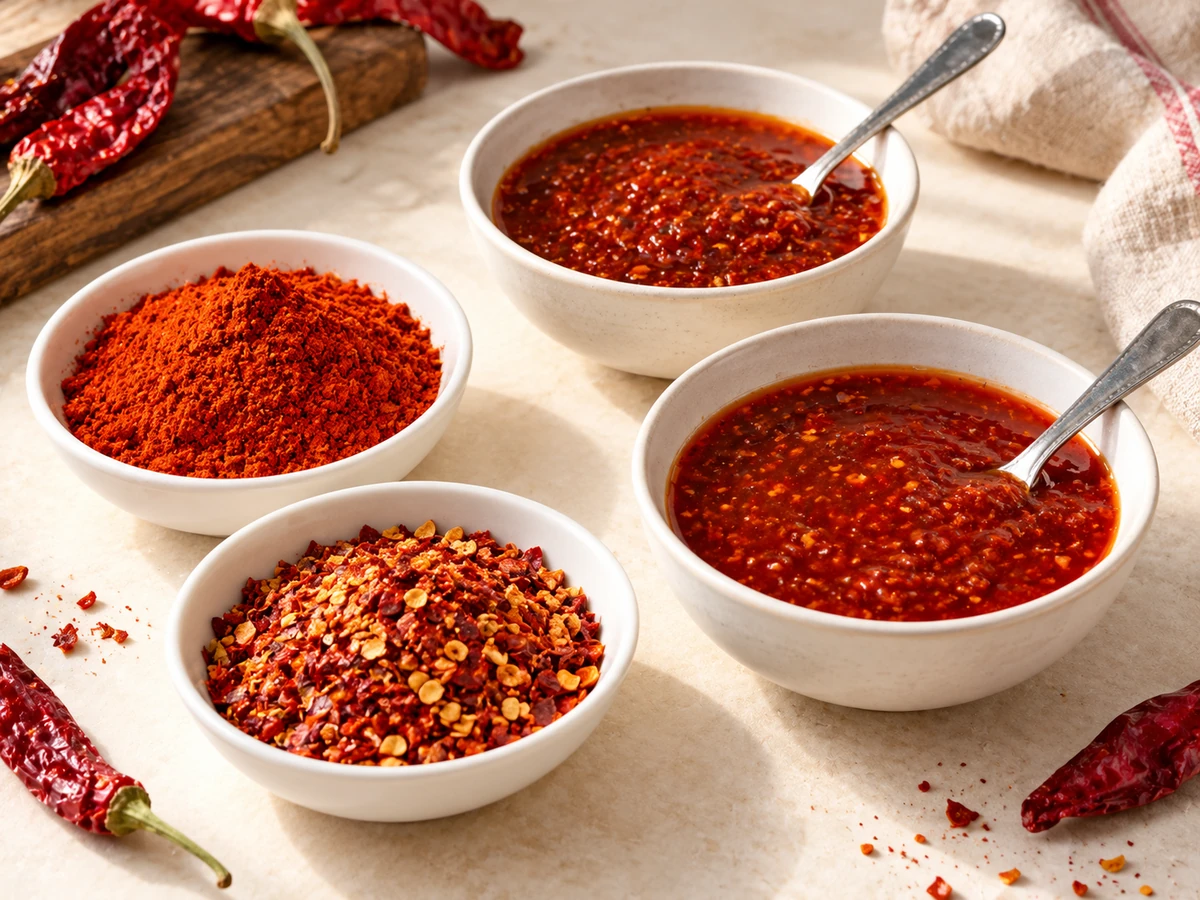
Define the preparation before judging the result
Write a short trial brief stating the food, the ingredient's role and the questions being assessed. Identify the preparation or recipe reference your team will use. State which observations and acceptance criteria will influence the purchasing decision.
For a direct comparison, use the same documented preparation conditions wherever the project requires comparable results. Record the actual ingredient amounts, sequence, mixing or other process settings and relevant preparation times used by the team. The aim is a comparison that can be understood later, not an assumed universal recipe.
If the trial changes during the work, record the change and identify which observations concern each version. Keep development notes separate from the original product specification. This lets the team distinguish a change in the preparation from a change in the ingredient being assessed.
Use observations that match the project
| Record area | What to identify | Question to answer |
|---|---|---|
| Material reference | Product, option, supplied lot and sample date. | Which material was evaluated? |
| Preparation | Recipe reference, actual amount and documented conditions. | How was the observation produced? |
| Appearance and physical form | Observed colour, visible particles and relevant texture notes. | Does the tested preparation meet the project's physical criteria? |
| Flavour observations | Heat impression and other flavour notes relevant to the food. | How does this sample fit the intended profile? |
| Technical information | Actual specification or supplied result and its scope. | Which acceptance criterion does the information address? |
Choose the observations your team actually needs. A recorded sensory impression should describe the tested preparation. A supplied technical result should remain attached to its identified sample or lot and method information. Neither should silently become a claim about every recipe or every possible batch.
For sauces, identify the ingredient and prepared formulation separately
First establish whether the candidate is a dry spice, a fresh or frozen pepper, a preserved ingredient or a prepared sauce. A red chili powder and a semi-solid chili condiment are different material discussions even when both are considered for a sauce project.
Record the actual formulation information and preparation instructions relevant to the candidate. If the product is a prepared condiment, identify its ingredients and supplied form before comparing it with a single spice. If it is a dry ingredient, state the particle, flavour and colour requirements that matter to the intended preparation.
The food applications page links actual sauce and hotpot examples. Use the selected product reference in the sample request, then assess the offered material under your documented project conditions. Keep any unanswered formulation or handling question with the record for clarification.
For seasonings, keep composition and physical criteria visible
Identify whether the candidate is a single spice or a seasoning blend. For a blend, state the selected flavour and obtain the applicable ingredient and allergen declaration. A broad flavour name does not provide a complete formulation for the food your business is making.
Record the actual particle or cut presentation required by the preparation. Where seed presence, visible flakes or a ground texture matters, include that criterion in the sample brief. Ask for the corresponding specification rather than assigning a physical property from a picture alone.
Compare samples against the same defined task. If one is a different formulation or physical form, identify the difference explicitly and explain what is being compared. A useful record can show that two candidates answer different product-development questions without forcing them into an artificial like-for-like ranking.
Interpret the result within the evidence you have
Summarise what the trial established for the identified preparation. Distinguish observations made by your team from product information or results supplied with the sample. State which acceptance questions were answered and which need additional information.
If a numerical criterion determines selection, request the relevant specification or analysis and its measurement basis. Match the document to the product, sample or lot concerned. A recipe observation and a batch analysis can both contribute to a decision while answering different questions.
The specifications and documentation guide explains the product, entity, date and scope checks. Use those checks to clarify the evidence needed for the purchase rather than requiring an unrelated document or interpreting a missing detail as an established negative result.
Record the decision as well as the observations
At the end of the review, state what your team has decided for the identified project. One outcome may be that the sample meets the defined recipe observations and can move to quotation review. Keep the accepted reference and criteria with that decision, including any technical information still required for the purchase.
Another outcome may be an open question rather than a rejection. The physical result might be useful while the actual ingredient declaration or selected specification still needs clarification. Record the question and the information requested instead of converting uncertainty into a claim that the material lacks a property.
A third outcome may be a request for a different form or formulation. Identify the proposed change and the reason for another comparison. Keep the earlier record intact so the team can distinguish what was learned from the first sample and what the next trial needs to establish. Clear decision notes make the purchasing discussion more efficient without expanding the trial into an approval of unrelated products.
Carry the accepted reference into the written offer
Once the team has selected a material, identify its product and option in the RFQ. Include the accepted physical, flavour, composition and other relevant specification criteria. State the sample reference or trial record that informed the decision and ask how it relates to the proposed supply.
Review the offer for the actual ingredient, packing, quantity, documents and commercial arrangements. If the supplier proposes a change, record it and identify which acceptance questions need to be revisited. Keep the final written reference consistent across development, purchasing and receiving.
Sample evaluation supports a purchasing decision; the final scope still needs to be agreed for the actual purchase. Use the same selected reference when discussing the packing, handling instructions and any applicable acceptance process.
Practical questions before starting the trial
Should I assume a sample is free or immediately available?
Ask about availability and agree charges, amount, packing and dispatch arrangements for the selected material. Keep the answer with the enquiry.
What if the supplied sample has a different description?
Ask which product and specification it represents. Resolve the reference before using its observations as support for the intended purchase.
Can I reuse an earlier trial when the material changes?
Identify the change and review which earlier observations remain relevant. Ask for the matching specification and decide which project questions need a further comparison.
Send Velia Spices your product reference and trial requirements, including the intended preparation, selected form and the information your team needs to evaluate.