
Bulk Chili Powder from China for Food Manufacturing
We supply chili powder from China for food manufacturers choosing a defined ingredient for sauces, dry seasonings and food preparation. Start with composition, heat and particle requirements, then compare the selected powder in your food.
Discuss Your Chili Powder Requirement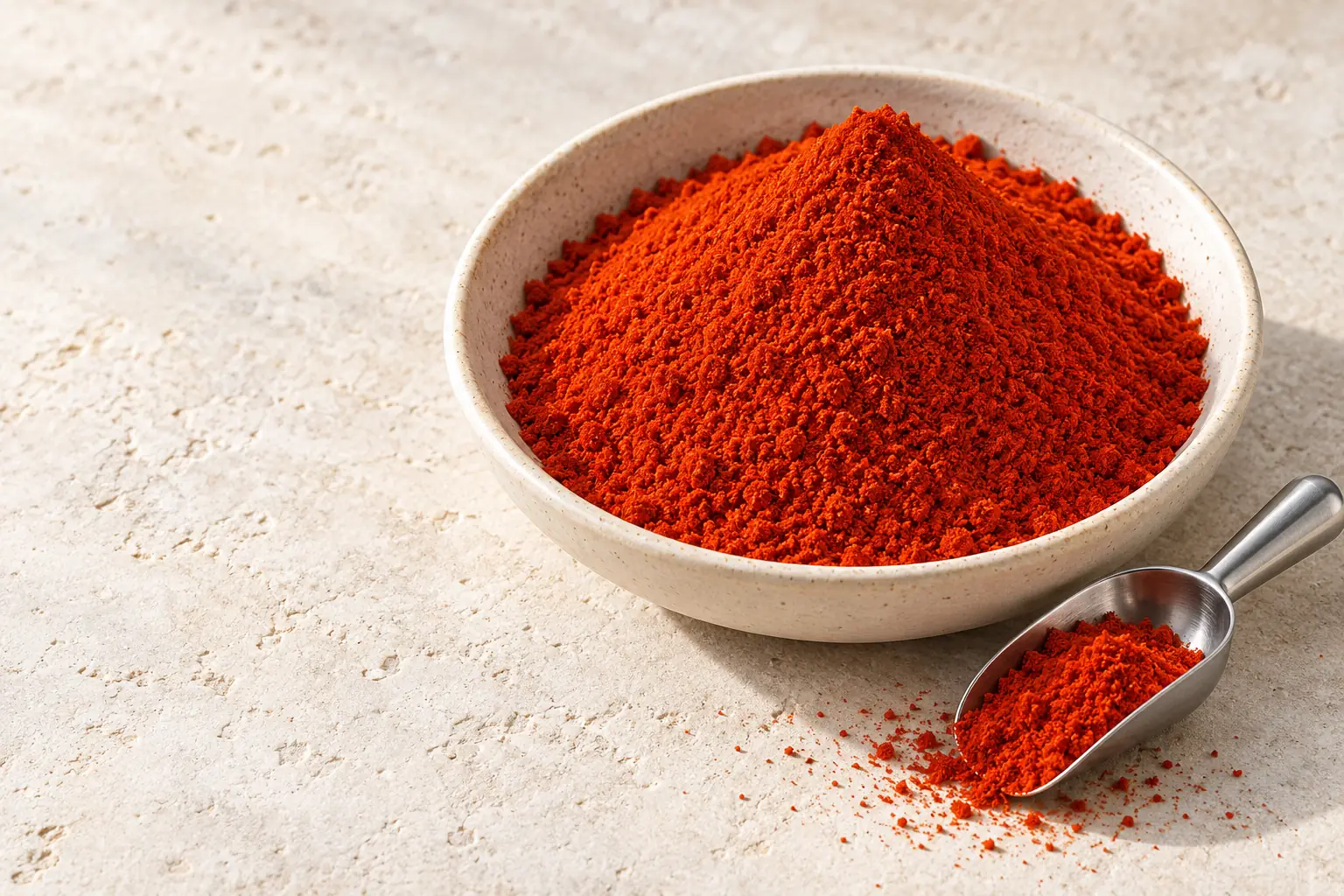
A Single Chili Ingredient for Your Own Formula
Our hot red powder reference declares 100% dried red chili. Your team can keep salt, oil and other seasonings in its own formula instead of introducing them through a compound chili blend.
This distinction matters when replacing an existing ingredient. Our barbecue seasoning, for example, declares chili powder, sesame, cumin, sugar, peanut, salt and MSG. It is a different supplied recipe, rather than the same powder in another pack.
Pure red chili composition · Compound barbecue seasoning composition
Compare a Hot Grade and a Lower-Heat Grade
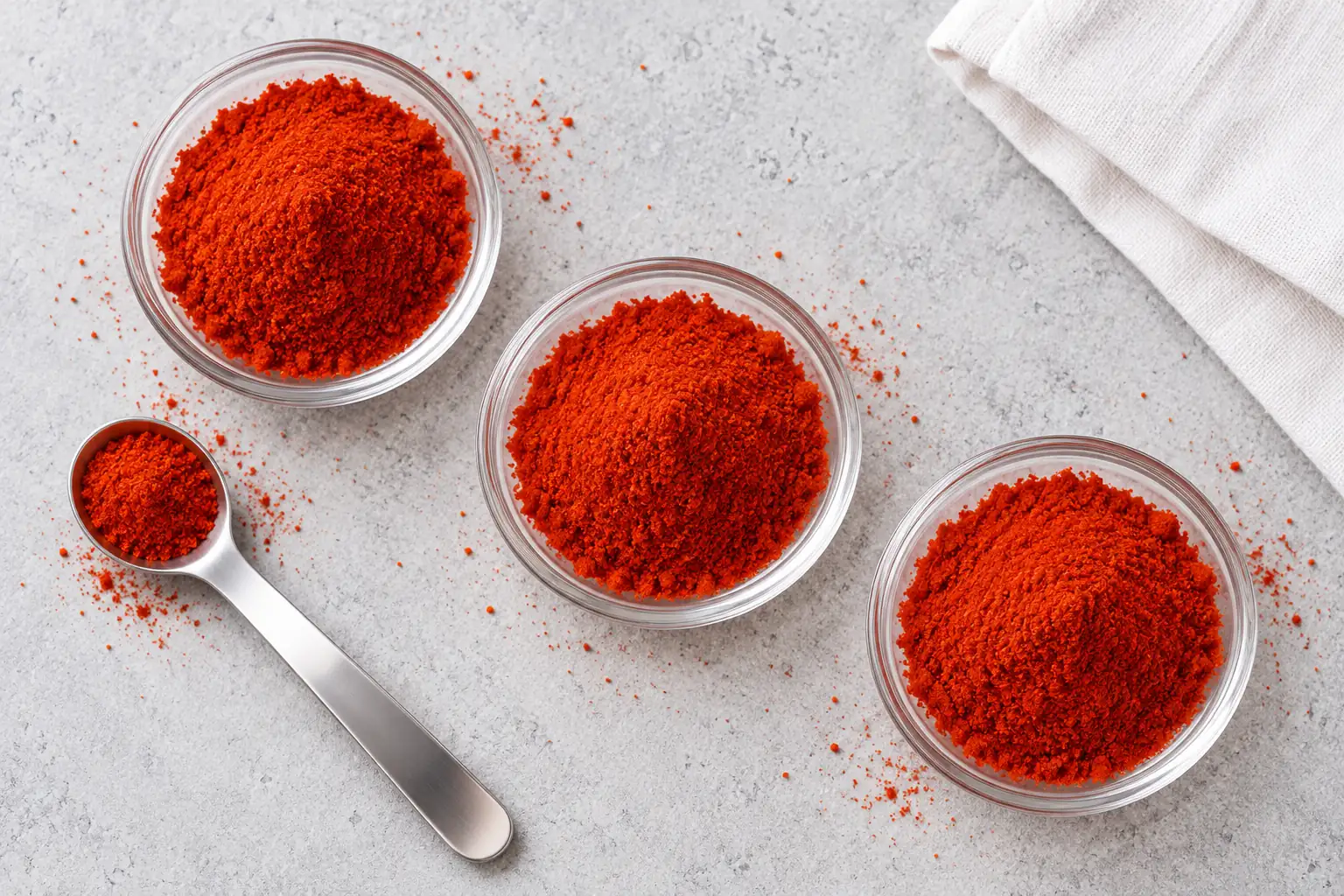
The hot powder combines 20,000–30,000 SHU with 60–80 mesh. A separate lower-heat red powder combines SHU ≤1,000, ASTA 150–160 and 60 mesh. Keep each combination on its own shortlist row.
The first gives a defined hot-powder starting point. The second is a candidate when the recipe needs a red colour contribution with a lower heat target. Neither description settles the addition rate in your finished food.
| Reference | Declared heat and particle specification | Other declared detail |
|---|---|---|
| Hot red powder | 20,000–30,000 SHU · 60–80 mesh | 100% dried red chili |
| Lower-heat red powder | SHU ≤1,000 · 60 mesh | ASTA 150–160 |
Translate Your Production Step into a Material Requirement
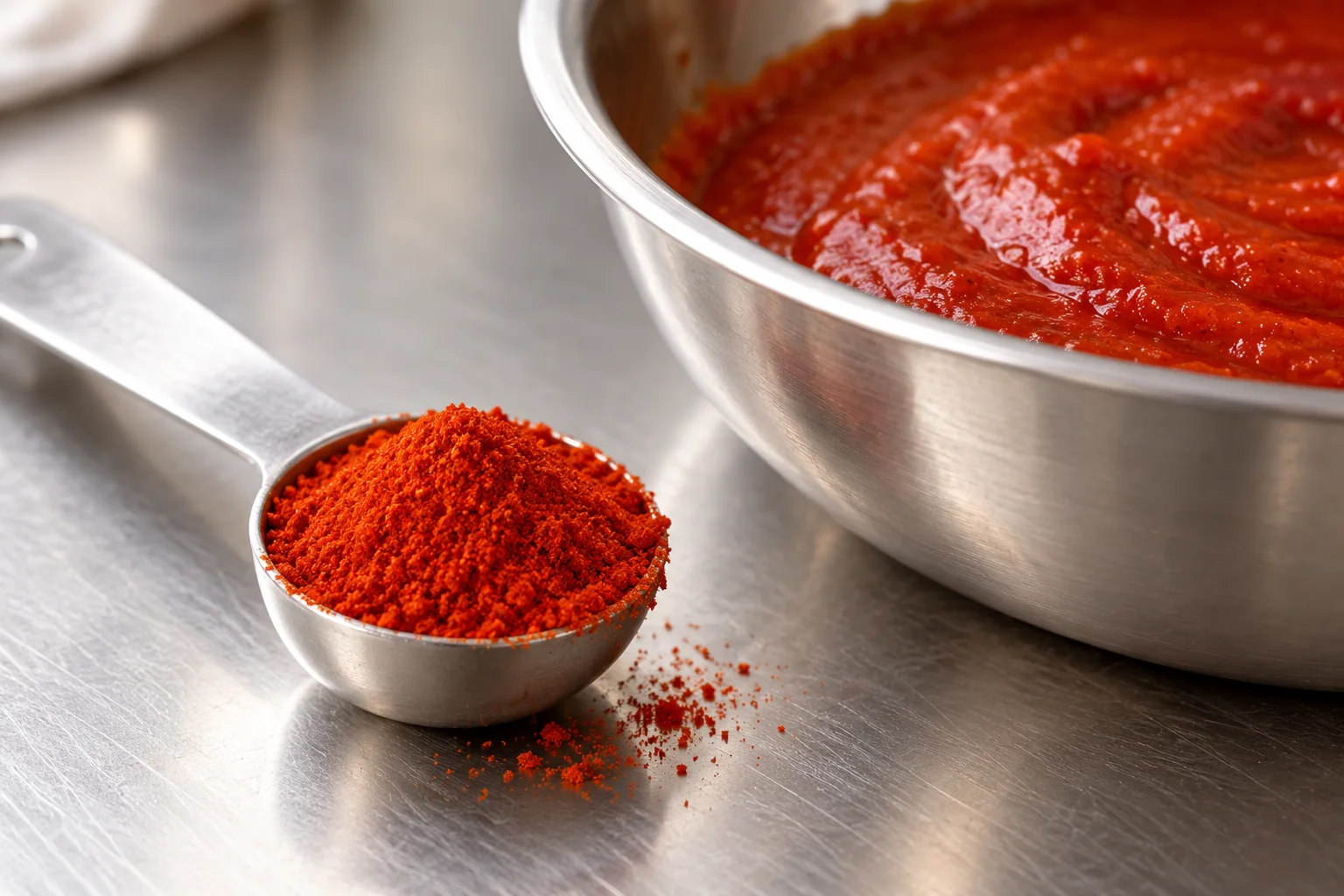
For a sauce, record when the powder enters the liquid base and when you judge colour and heat. For a dry blend, retain the actual ingredient weights and the particle appearance required in the mix.
A coating or finishing use also needs its own ingredient and treatment requirements. Send those details with the product reference so the discussion concerns the powder in the process you run.
Record the Inclusion Rate Before Comparing Samples
Compare the candidate and your current powder in the same food base. Use a recorded addition rate, mixing sequence and evaluation point, and keep a changed dose as a separate trial.
For arithmetic only, 0.5% inclusion equals 5 g in 1 kg of finished food. This is a calculation example, not a recommended recipe dose. The accepted level comes from your own food evaluation.
Keep the Powder Grade and Bulk Pack Together
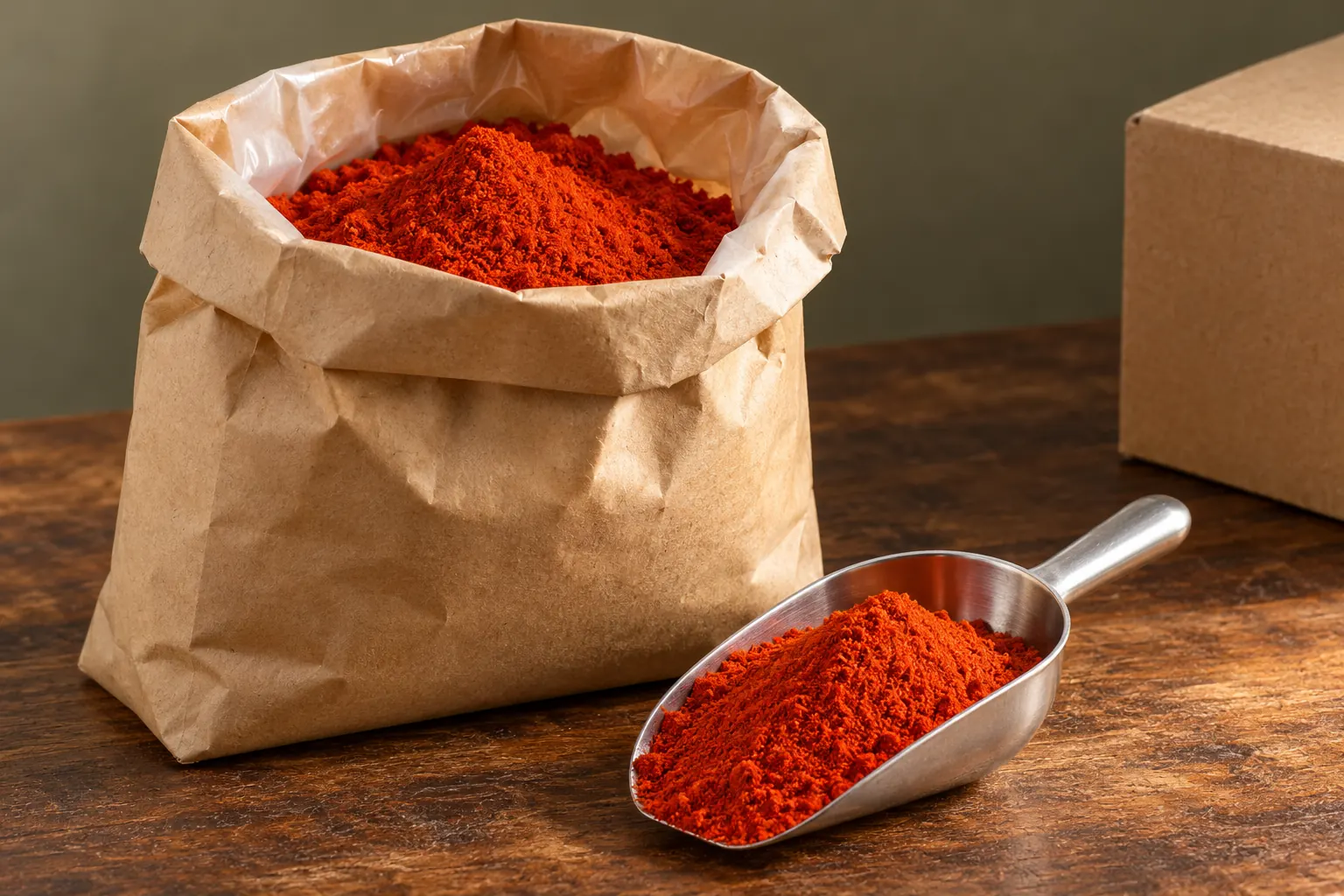
The lower-heat powder listing offers 1 kg, 5 kg, 20 kg and 25 kg packs as well as OEM packing. Name the selected product and pack instead of assuming all powders have the same arrangement.
State the total order quantity separately. A planning request for 1,000 kg in 25 kg bags describes 40 bags; price, availability and the actual commercial quantity still belong in the quotation.
Keep a Supply Change Visible in the Approval Record
Once your team selects a material, retain its product reference, agreed heat and particle specification, sample record and packing. These details define the ingredient that the offer should describe.
If the proposed material changes, identify the changed composition, grade, process or pack before approval. A powder that shares the same red colour or a similar title may still require another comparison.
Ask for Records That Answer Your Acceptance Criteria
Keep SHU, particle and any colour requirement as separate parameters. If a numerical result determines acceptance, state the method and criterion your team requires with the selected material.
A catalogue declaration describes the offered product; a supplied analysis concerns its identified sample or lot. Request the relevant records without treating a general certificate name as the result for a batch.
| Criterion | Useful information to retain |
|---|---|
| Composition | Selected product and its complete ingredient declaration |
| Heat | SHU limit or range and applicable analytical basis |
| Particle size | Sieve designation and the required passing or retained criterion |
| Supply identity | Sample or lot reference, pack and applicable dates |
Evaluate the Powder in the Finished Food
Compare the heat, colour and eating texture after the same process and at the same evaluation stage. Keep the food base, ingredient addition and actual heating conditions with the observations.
If a lower dose gives the preferred result, include that dose when comparing ingredient cost. Price per kilogram of powder and ingredient cost per batch answer different commercial questions.
Send a Food-Manufacturing Powder Brief
Send the powder link, your food and addition stage, the heat and particle limits, and any excluded additions. Add the order quantity, net pack and destination.
Include the sample and document requirements your development and purchasing teams need. We can then discuss one material reference instead of an undefined bulk chili powder request.
Send Your Product Requirements