
Pure Chili Powder for Recipes Without Added Salt or Oil
For recipes where you add salt, oil and spices yourself, our catalogue includes powders declaring 100% chili. Choose the ingredient declaration first, then select the heat and particle grade for your food.
Share Your Ingredient Requirements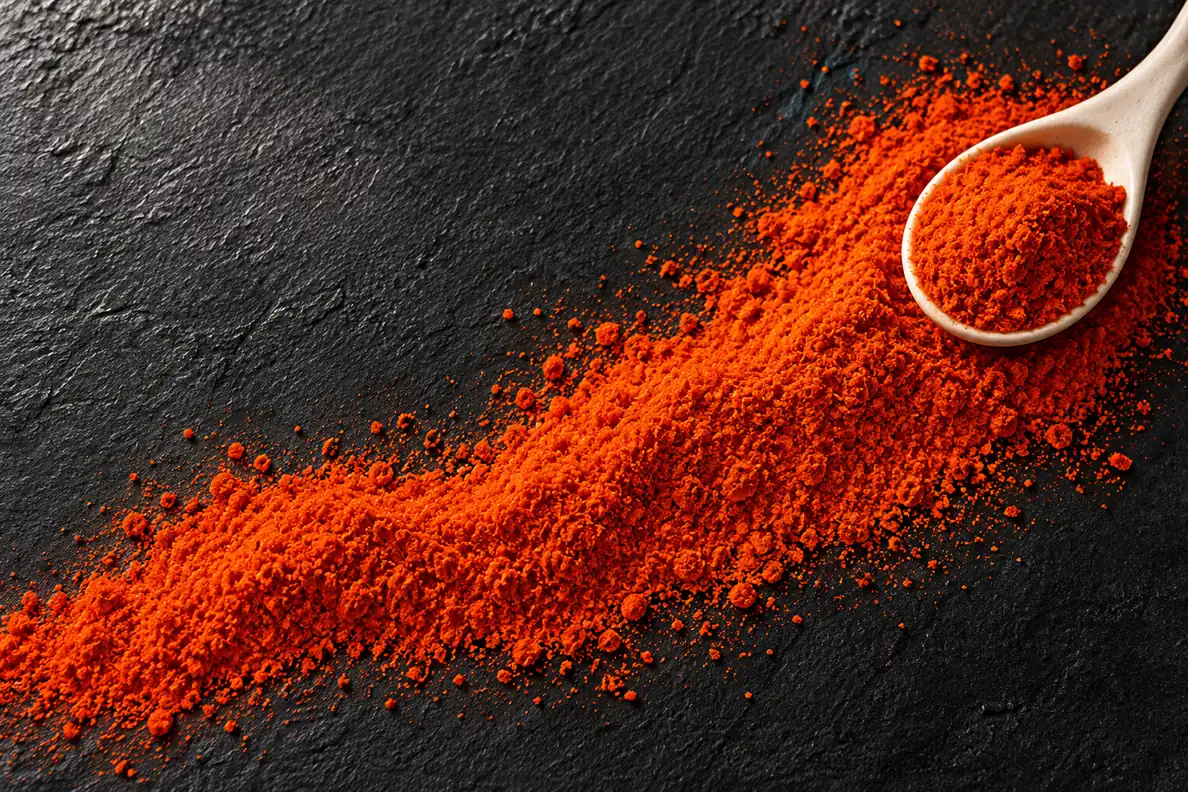
Pure Chili and Compound Seasoning Bring Different Ingredients
Our pure hot red powder declares 100% dried red chili. The barbecue blend separately lists chili powder, sesame, cumin, sugar, peanut, salt and MSG. The difference is the supplied composition, not simply the flavour name.
If your recipe already has its own salt and spice system, a compound blend changes several additions at once. Use the single-chili route when your purchasing brief calls for control of those additions.
| Material | Declared ingredients | Recipe implication |
|---|---|---|
| Pure hot red powder | 100% dried red chili | Your formula supplies the other ingredients |
| Barbecue chili blend | Chili, sesame, cumin, sugar, peanut, salt, MSG | Those ingredients enter with the seasoning |
| Chili–cumin blend | Cumin, chili, Sichuan pepper, spices, salt | A different pre-combined flavour base |
Use the Declaration for the Actual Powder
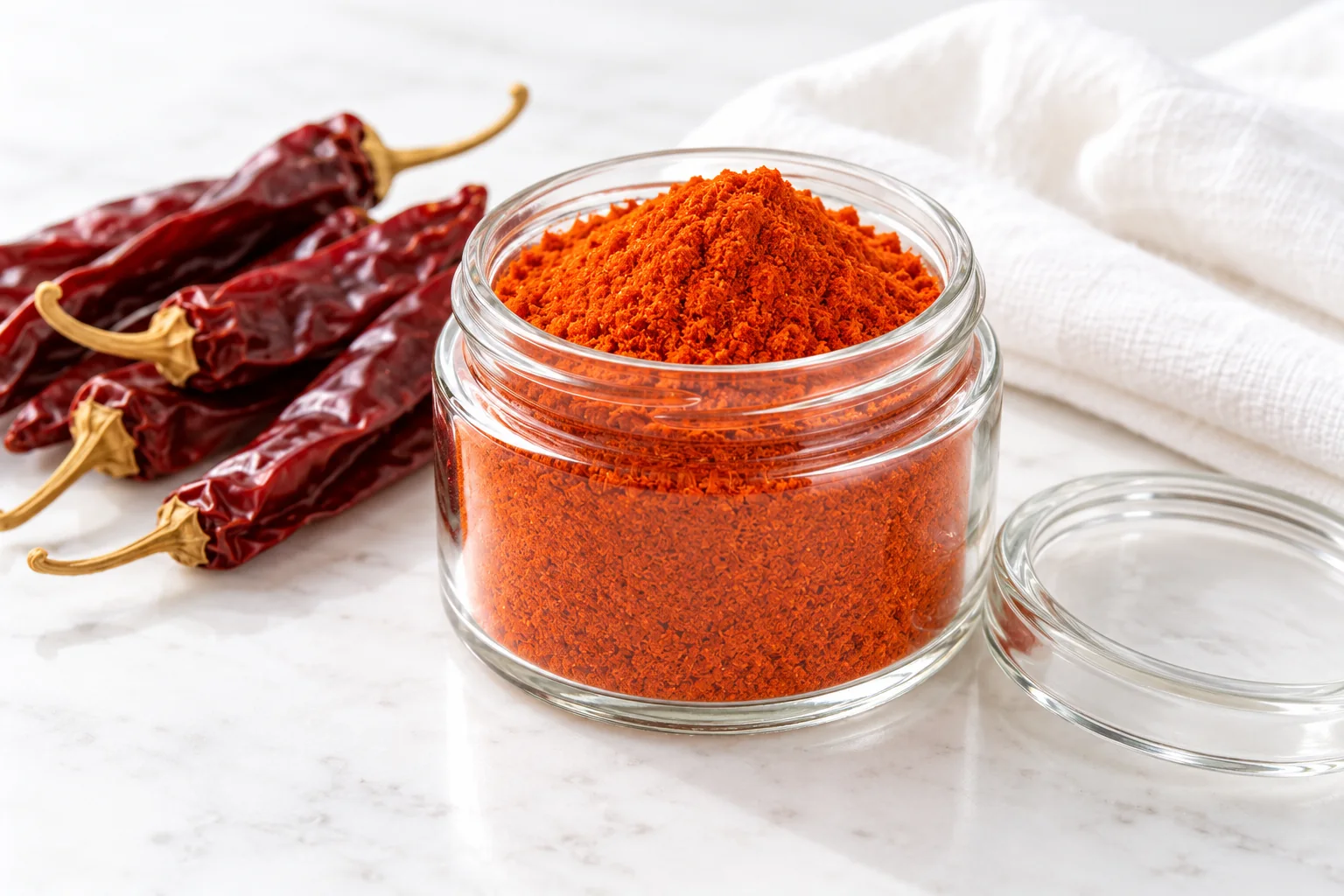
The pure dried powder reference states Ingredient: 100% chilli. The hot red powder separately states Ingredients: 100% dried red chili and Content: pure red chili powder. Those are useful product-specific starting points for this brief.
Keep the chosen reference with the sample and requested ingredient declaration. A pure composition does not establish a fixed heat value, one particle size or every production-related restriction for all products.
Name the Additions Your Formula Excludes
State no added salt, oil or other spices when those are your actual purchasing restrictions. List a named carrier or flavour ingredient separately if your formulation also excludes it.
A product with a relevant 100% chili declaration belongs in the first shortlist. A product that explicitly lists an excluded addition does not fit that composition brief, even if the pack or colour looks attractive.
| Your requirement | Check against the supplied ingredient |
|---|---|
| No added salt | The complete declared composition for the selected powder |
| No added oil | The powder identity and any listed oil ingredient |
| No other spices | Chili-only declaration versus a pre-combined seasoning |
| Named exclusions | The exact formulation and any separately required production information |
Choose the Heat Grade After the Composition
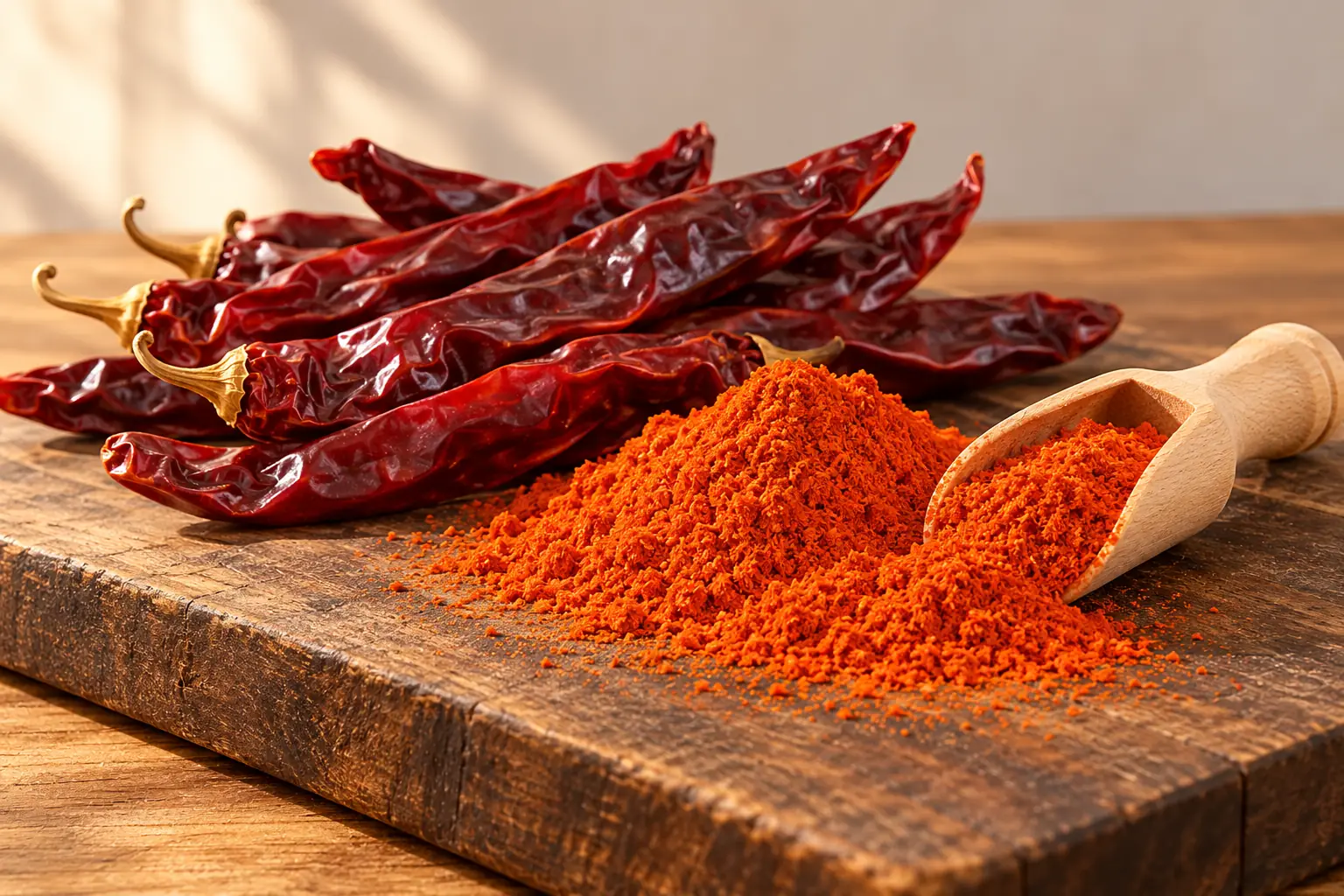
The hot reference combines 100% dried red chili with 20,000–30,000 SHU and 60–80 mesh. Its declared composition and physical grade belong together in the sample brief.
For a lower heat target, the red chili paprika reference lists SHU ≤1,000, ASTA 150–160 and 60 mesh. Compare its full selected-product declaration against the same excluded-addition list before approving it.
Keep Processing and Composition as Separate Requirements
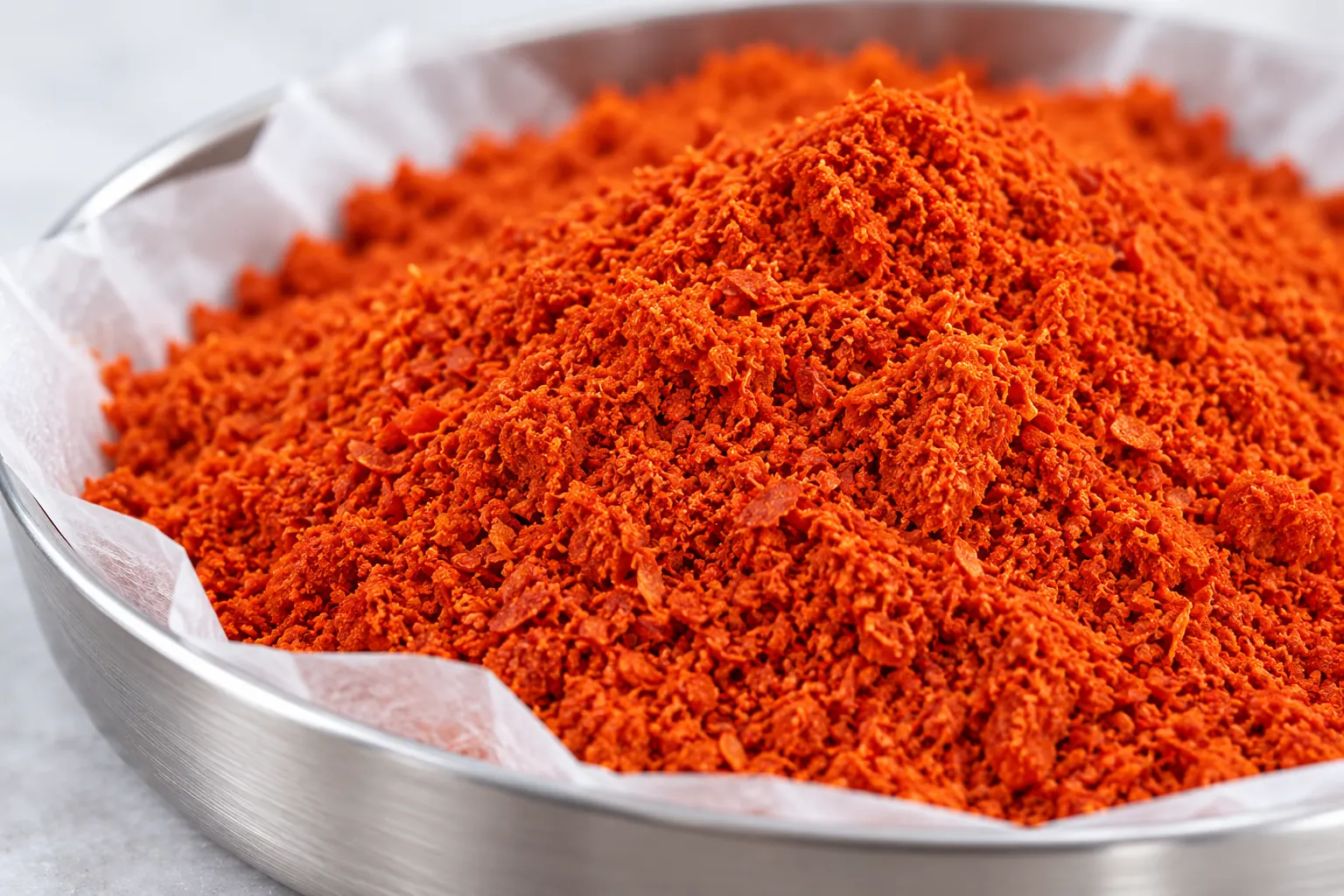
Our freeze-dried green powder declares 100% freeze-dried green chili and maximum moisture of 1%. The smoked red powder instead declares red chili powder with AD drying and smoked processing.
Those descriptions concern different ingredients and process routes. If your project also requires a particular treatment or related documentation, include that requirement separately from the no-added-salt or oil statement.
Change the Chili Without Losing Track of the Formula
In your comparison recipe, keep the base food, salt, oil and other spice additions recorded. Change the candidate chili powder on its own in the first trial so the observations concern that material choice.
Keep any later dose adjustment as a separate trial. Record powder weight, total food weight, mixing and heating conditions, and the evaluation point with the preferred sample.
Record Composition Approval and Food Approval Separately
The ingredient declaration answers the composition question. Your food trial answers the heat, colour and texture question. Keep both decisions with the same sample and proposed supply grade.
For peanut, sesame, soy or other production-related restrictions, state the exact information your team needs. A chili-only ingredient list and a cross-contact requirement are separate parts of the review.
| Review | Record to retain |
|---|---|
| Composition | Selected-product declaration and your excluded-addition list |
| Food trial | The sample, recipe conditions and preferred result |
| Other requirements | Any separately requested production or treatment information |
| Procurement | The agreed grade, quantity, pack and destination |
Send the Formula Boundary with the Product Brief
Send the chili product link and the additions you exclude, together with heat, particle and process requirements. Include the food you make, purchasing quantity, pack format and destination.
This lets the material discussion start with your actual composition boundary. The selected powder and its specification can then stay connected through the sample and quotation review.
Discuss a Pure Chili Powder Grade