Chili Powder for Baked Dough Products
We can discuss cayenne powder and red chili powder samples for recipes that receive the spice inside the dough before baking. Our catalogue offers a 100% cayenne powder and a separate red-chilli ingredient for comparison in the baked food you actually sell.
Your brief should identify the dough, the addition stage and the desired eating experience. A powder selected for a surface seasoning needs a separate comparison before you move it into bread, crackers or another baked product.
Discuss Your Baking Trial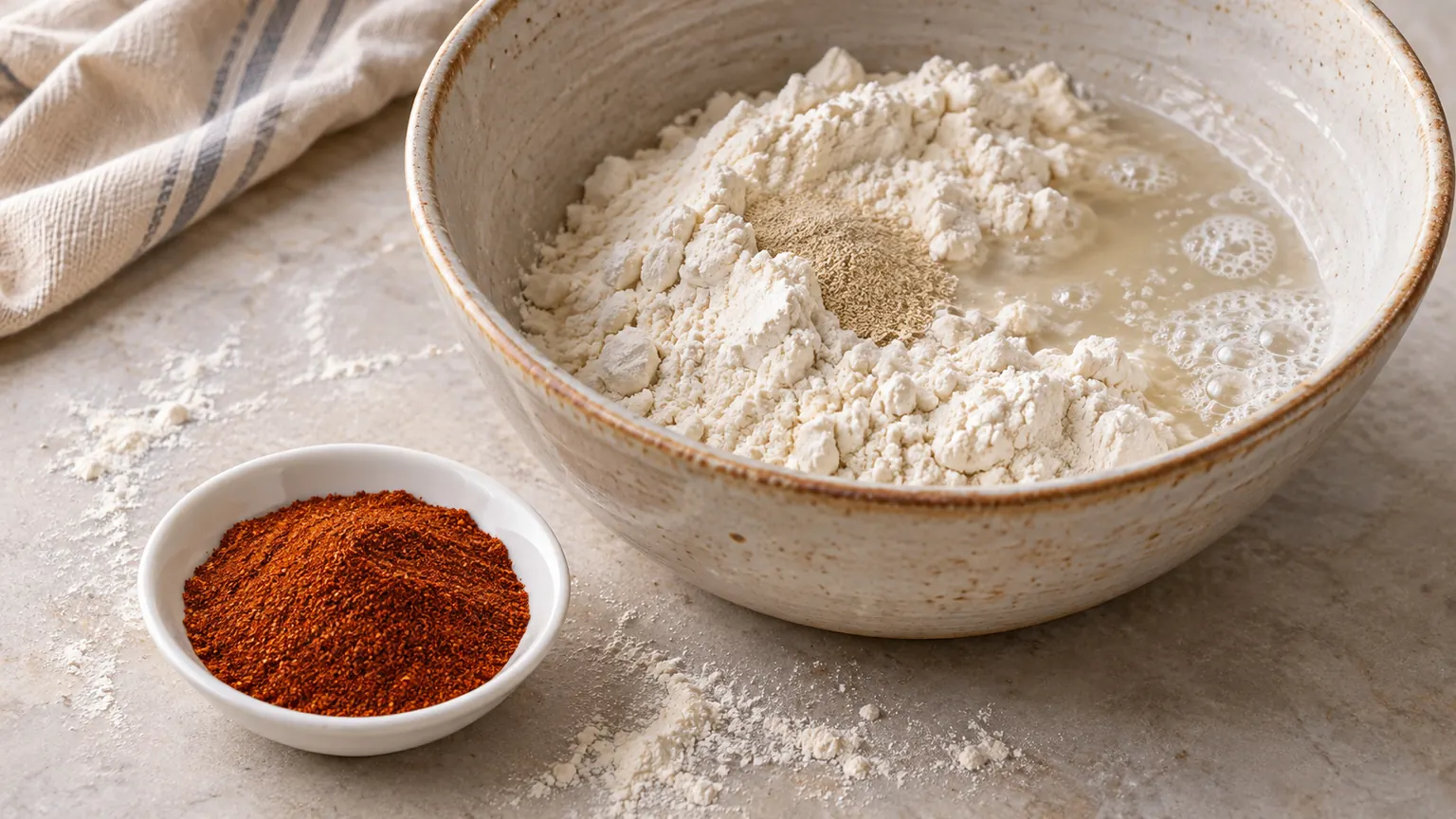
Two Powder Identities to Start the Trial
Our cayenne powder declares 100% cayenne pepper, raw powder form, FD drying and moisture of 8% maximum. Its customized-packaging entry supports a packing discussion after you have identified the ingredient. Those entries do not establish performance in your oven.
Our red-chilli powder names red chilli as the ingredient and describes food-processing use. It does not supply a numerical heat level or particle-size specification. We should agree those details for both candidates rather than translating a cayenne or red-chili name into a fixed grade.
| Reference | Declared identity | Define before comparison |
|---|---|---|
| Cayenne powder | 100% cayenne; powder; moisture 8% max | Heat, sieve requirements, applicable drying specification |
| Red-chilli powder | Red chilli ingredient; commercial processing use | Heat, particle size, selected powder specification |
Record the Route into the Dough
Tell us whether your team preblends the powder with dry ingredients, disperses it in another ingredient, or adds it during mixing. Record the real sequence, mixing conditions and any holding period. A trial is easier to interpret when the ingredient route stays consistent.
Keep surface dusting out of the first comparison if the purchase concerns dough inclusion alone. If your finished product uses both, record them as two additions so that an attractive surface colour does not obscure an unsuitable interior flavour or particle texture.
Look for the Texture Your Product Needs
Fine red particles through a soft bread and visible flecks in a cracker are different briefs. Set the intended appearance in words and, where available, with an accepted food reference. Request the sieve information needed to reproduce that texture.
Compare the raw dough for visible distribution and obvious concentrated pockets, while reserving acceptance for the baked product. We do not infer an even distribution from the powder photograph or promise that the ingredient leaves dough handling unchanged.
Keep the Baking Conditions with the Sample
Use the buyer's actual temperature profile, time, piece dimensions and equipment setting. We do not supply a universal bake schedule because a cracker trial and a bread trial answer different production questions. Compare the candidate with your current powder under the same conditions first.
Record the dough recipe revision, chili inclusion rate, sample identity and relevant process settings together. If the recipe changes, give the next trial a new revision so that a change in the baking process is not attributed automatically to the powder.
Judge the Food at Its Normal Eating Stage
Evaluate heat, chili flavour, interior colour and particle sensation after the product reaches its normal eating condition. If it is sold after a holding or packing period, include that stage in the buyer's assessment rather than approving only a fresh warm sample.
Write down which differences are acceptable and which require a revised powder or dose. Raw-powder heat and colour are helpful purchase attributes, but neither supplies a finished-product sensory result for your recipe.
| Observation | Compare with | Record |
|---|---|---|
| Heat and flavour | Your accepted finished food | Intensity, balance and aftertaste |
| Colour | Interior and crust separately | Appearance under consistent viewing |
| Particles | Your intended crumb or bite | Visible flecks and eating texture |
| Handling | Your normal dough process | Any observed difference needing review |
Use Interior and Surface as Separate Evidence
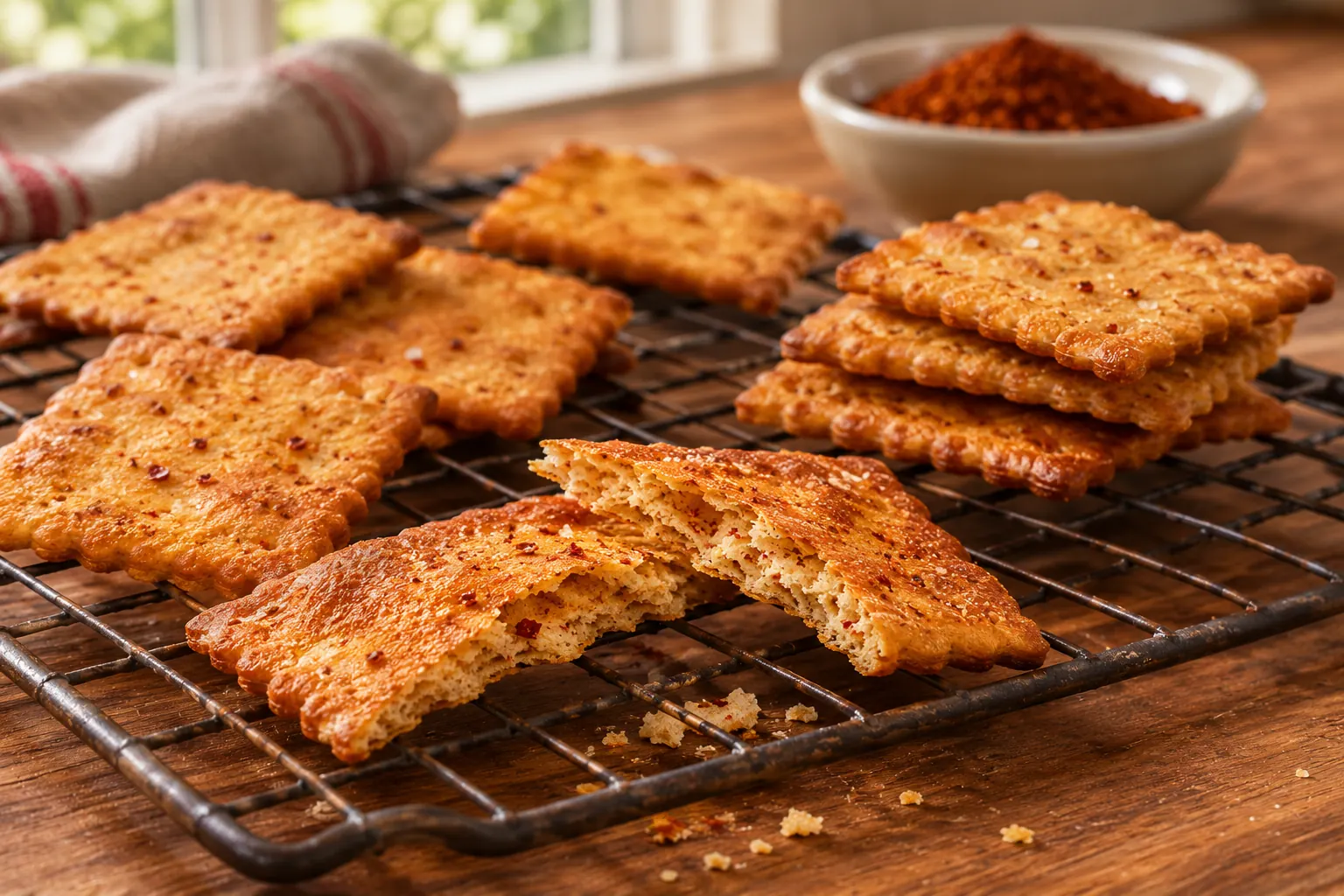
A broken cracker or cut loaf gives the team access to the interior that surface photographs cannot show. Assess a representative portion rather than relying on the darkest crust or the most attractive piece from a tray.
For a product with an additional topping, approve the interior seasoning first and then the complete combination. This keeps the sourcing decision focused on the powder mixed into the dough while allowing your team to evaluate the final presentation.
Connect Ingredient Requirements to Your Process
Share the ingredient restrictions and quality records required for this application. The two references describe chili ingredients; they do not establish a validated pathogen-reduction treatment or a completed baking study. The selected raw-material requirements belong in your approval file.
We can discuss the documents needed for the chosen sample with your quality team. Keep treatment requests, any required measurements and the actual food-processing conditions distinct so that the responsibility for each acceptance step remains clear.
Retain the Powder and the Trial Record
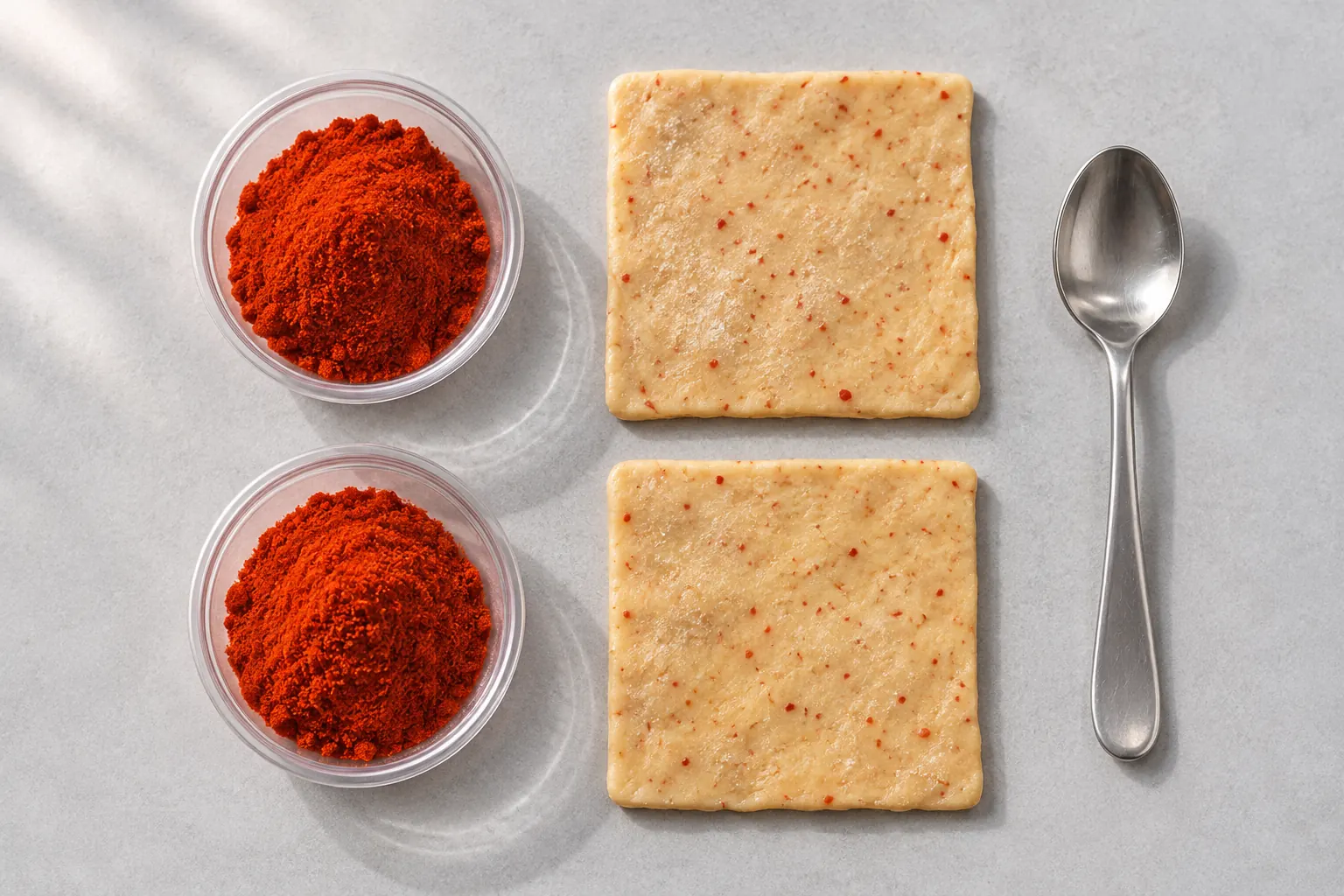
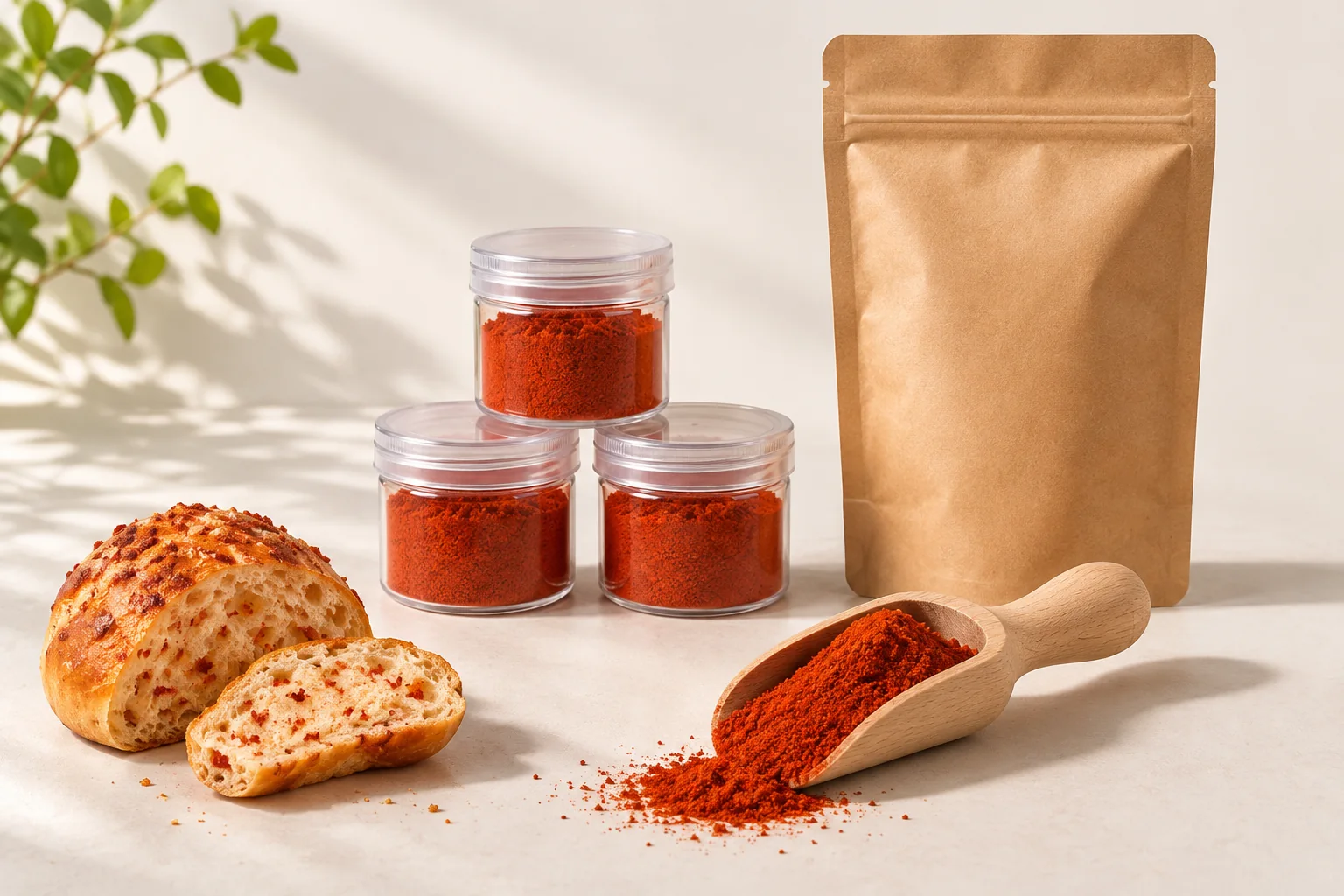
Keep the accepted powder sample associated with its recipe and baking record. Plain sample containers are useful only when your own traceable identity connects them to the material evaluated. Do not use an unrecorded jar of red powder as the repeat-order standard.
Confirm the packaging, storage instructions and required net weight for the order. Our cayenne powder describes customized packaging; the chosen pack still needs its own agreement for your production use and expected consumption pattern.
Send a Brief Built Around the Baked Product
Send us the baked-food type, addition stage, target heat, particle preference, recipe restrictions and trial quantity. Include your current ingredient specification and a description of the result you want to preserve. State the destination and packing requirement separately.
We can then discuss the cayenne or red-chili candidate against one concrete baking brief. Your approved powder, controlled food trial and agreed order specification provide the basis for a useful purchasing decision.
Request a Powder Sample Discussion