
Replacing a Chili Powder Supplier After Lot Variation
We can discuss pure chili powder from China when your current supply shows heat or colour differences that affect production. Begin with the ingredient and food result you need to keep, then assess a proposed grade using comparable records and samples.
Our hot pure-red-chili reference declares 20,000–30,000 SHU and 60–80 mesh. It provides one specific starting point. Choosing a new supplier still requires an agreed acceptance range and a trial; a catalogue specification alone does not establish a history of consistent lots.
Discuss Your Replacement Powder Brief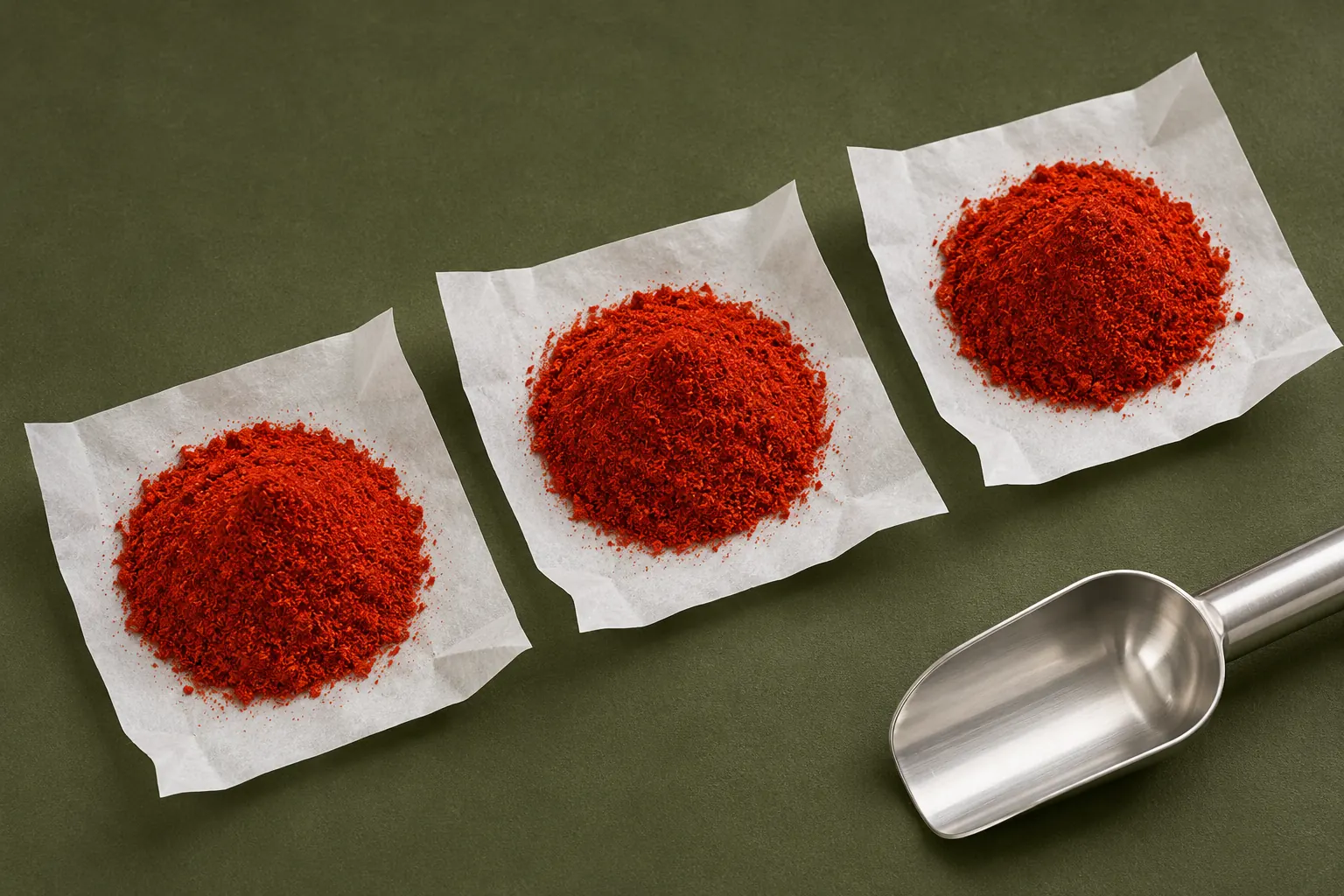
The Variation That Matters to Your Food
Separate the issue that triggered the enquiry. Record whether the concern is measured pungency, observed red appearance, a colour result, or an effect noticed in the finished food. Keep the current material and lot reference with that observation.
Your accepted range should describe what production can use. A general request for a more stable powder leaves the proposed supplier without the actual heat, colour and food requirements needed to discuss a candidate.
| Concern | Keep with the observation | Decision to define |
|---|---|---|
| Heat | Material, lot, method and result | Accepted pungency range |
| Colour | Measurement or consistent viewing record | Separate colour requirement |
| Food result | Recipe, dose and preparation | Acceptable finished-food difference |
One Specific Grade for the Comparison
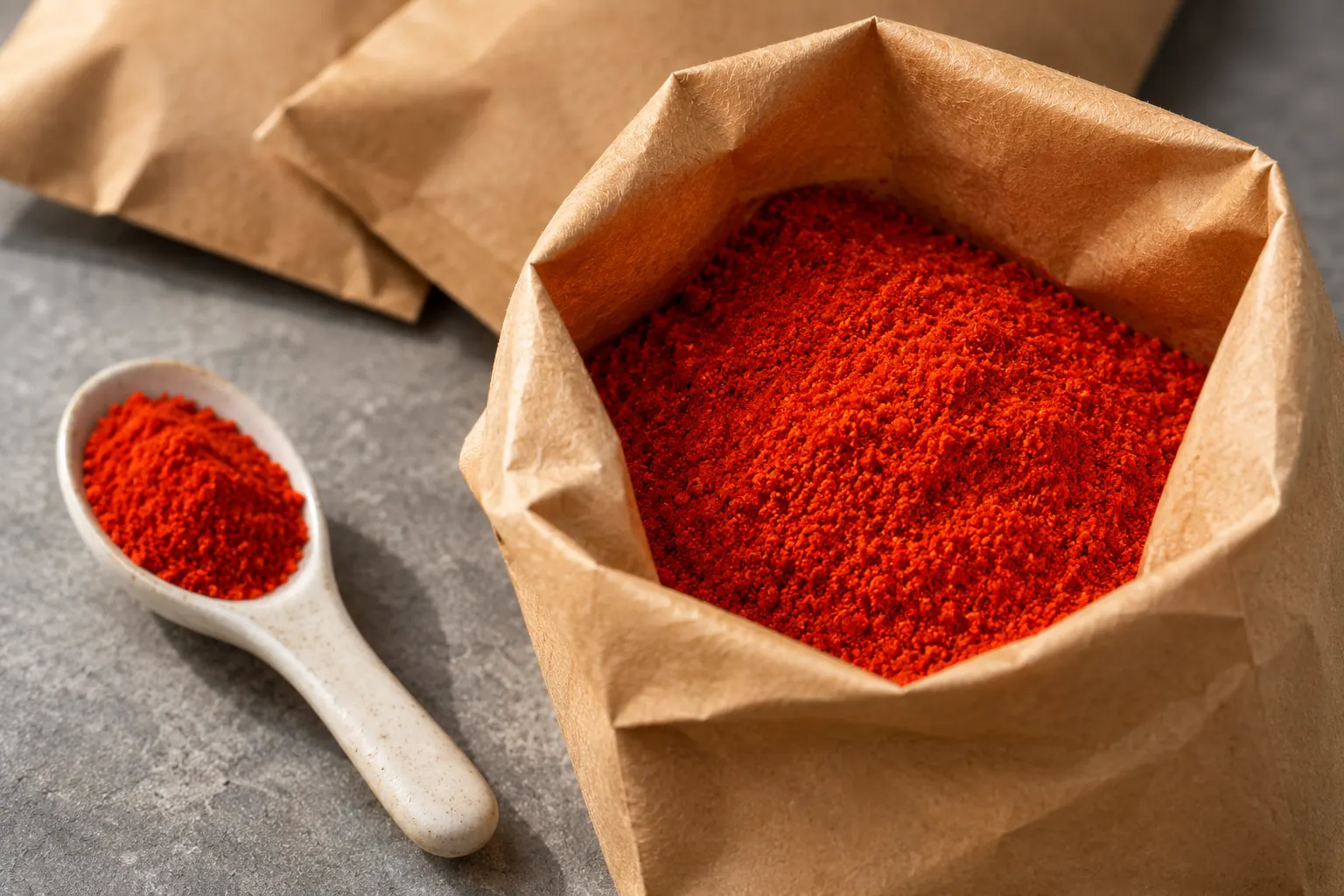
The pure hot red powder lists 100% dried red chili, 20,000–30,000 SHU and 60–80 mesh together. Its colour is described as bright red, without a numerical colour result for the lot. Keep any colour acceptance requirement separate from its heat declaration.
Our cryogenic Kashmiri powder has 40–60 mesh and moisture below 10%, with heat and colour options dependent on variety or requirement. Select the actual grade before considering it as an alternative. Its broad options list is not a permitted variation range for one recurring order.
Pure Hot Red Powder Specification · Cryogenic Kashmiri Powder Options
Heat Results on a Comparable Reporting Basis
Ask that each required result identify the material, lot, test date, method and edition. A number without those details can be difficult to compare with an earlier report or the retained ingredient that your recipe uses.
ASTA Method 21.3 (2026) describes HPLC pungency determination. Use the method reference to clarify the reporting basis with your chosen laboratory. When records use different editions or methods, request the appropriate technical review before interpreting the difference as a supply problem.
Technical reading: ASTA Method 21.3 (2026)
A Separate Record for Colour
Heat acceptance does not decide red colour acceptance. Define whether your team needs an agreed analytical colour result, a controlled visual comparison, or both. Keep the chosen basis consistent across samples and lots.
For a visual record, use the same presentation and viewing conditions rather than screenshots taken on different displays. For the food itself, compare the powder through the actual recipe and preparation. An attractive dry red sample does not establish the colour after your process.
| Record | What it supports | Keep consistent |
|---|---|---|
| Ingredient result | Your agreed raw-material criterion | Method and reporting basis |
| Visual sample | Appearance against the retained reference | Presentation and viewing |
| Finished food | Colour under your recipe conditions | Food base, dose and process |
The Replacement Tested in the Complete Food
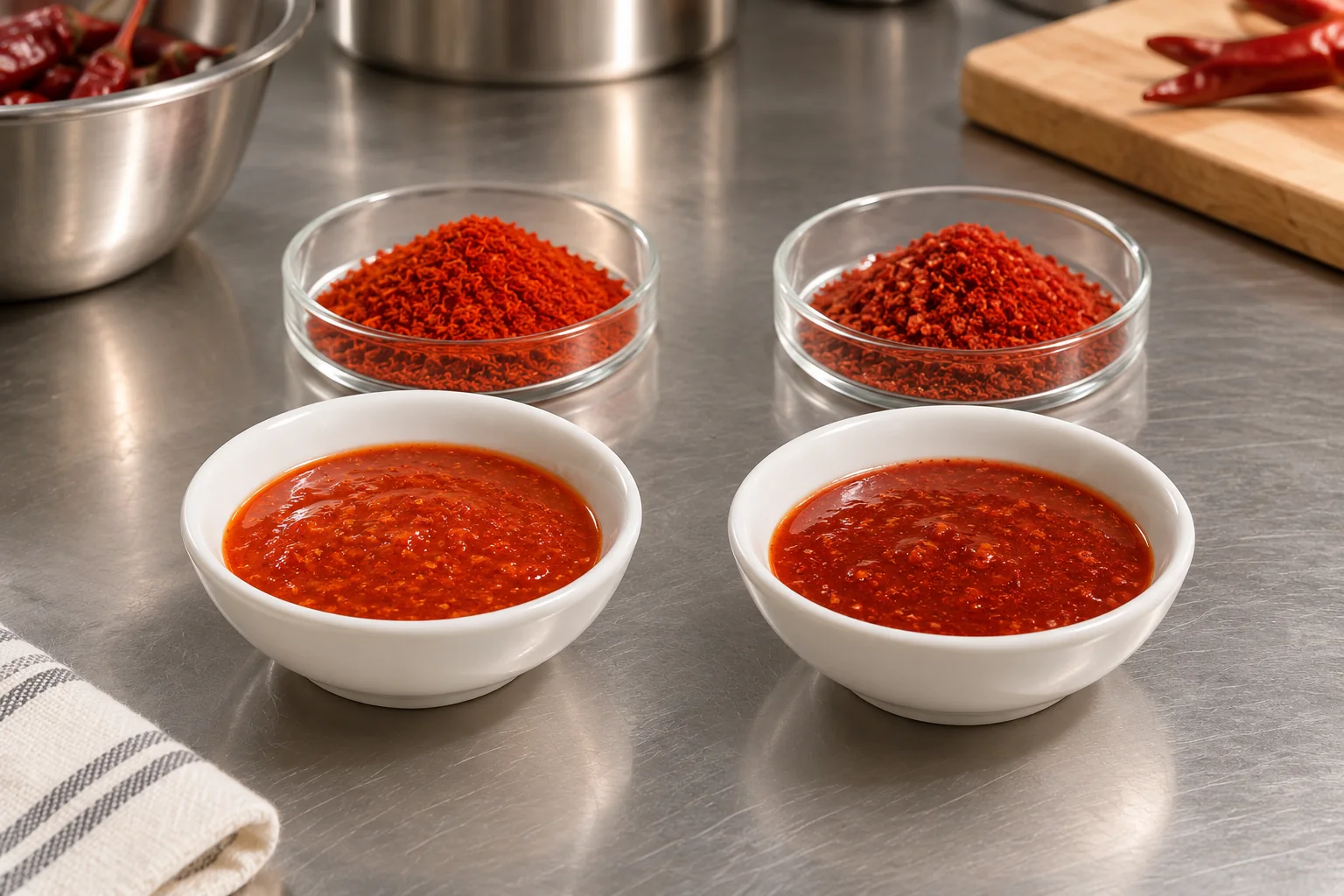
Use the current accepted ingredient and the proposed powder in the same food base at the same initial inclusion and preparation conditions. Record heat, colour, texture and flavour together at your normal evaluation stage.
If a dose adjustment is needed, retain the initial comparison and create a revised trial. That gives your team a useful separation between a different ingredient and a changed formulation. Do not label a candidate an equal replacement from one raw-material number alone.
Supplier Change and Grade Change as Different Decisions
A new source of the same agreed powder and a move to a different chili grade are separate choices. Record which one your project is making. A milder or differently processed material may need another recipe even if it appears more suitable during the initial review.
If you choose a different grade, approve its complete identity and relevant requirements explicitly. This prevents the new specification from being mistaken for evidence that the original grade has become more consistent.
Future-Lot Review Agreed Before Ordering
State the specification and lot documents your quality team expects for repeat purchases. Agree how results, sample identity and any proposed material change will be communicated for the selected supply.
Where you need a history across several lots, request the relevant records rather than treating one approved sample as a statistical study. Review what can be provided for the actual project and retain open points in the offer before commercial approval.
A Retained Reference That Remains Identifiable
Keep the accepted sample associated with its grade, date and trial record, and protect it using the applicable selected-product instructions. A plain pouch can hold a sample, while your own record establishes which material it represents.
Carry that reference into the order together with packing, quantity and handling conditions. If a later sample differs, compare it against the same agreed basis before changing the recipe or assuming the cause.
A Replacement Brief with Clear Acceptance Points
Send the current ingredient requirement, the heat or colour concern, relevant records and an accepted reference where available. Include the intended food, dose, particle needs and the separate acceptance ranges your team uses.
We can discuss the pure-powder candidate and the selected-grade information needed for evaluation. Add quantity, destination, packing and recurring document requirements so the quotation follows the material and food result you are approving.
Send Your Powder Replacement Brief