
Prepared Chopped Chili for Commercial Cooking
We supply prepared chopped chili from China for central kitchens, foodservice distributors and commercial cooking. Our spicy-and-salty chopped chili is a direct starting point for a recipe that needs visible chopped pepper and a defined seasoning contribution.
Choose the actual cut, complete ingredients and flavour balance before deciding the pack. A preparation that works in one stir-fried dish may need a different amount or texture in another food, so keep your cooking application in the first enquiry.
Discuss Your Chopped-Chili Requirement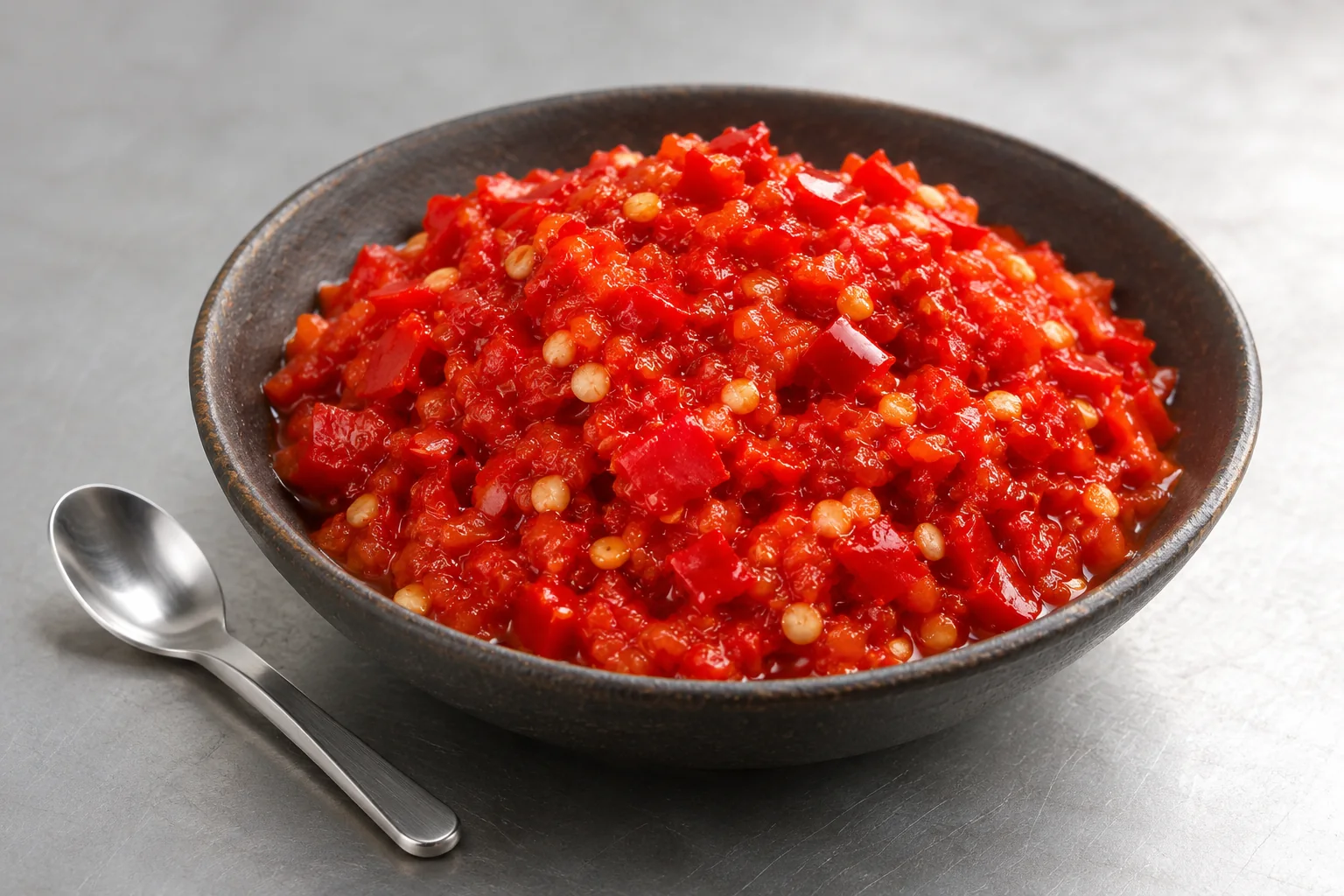
A Chopped Product and a Preserved Alternative
Our spicy-and-salty reference explicitly names chopped chili, frying and OEM supply. Its listed pack is 500 g × 15 per carton. The full selected recipe and measured cut are still points to confirm for your kitchen requirement.
The preserved-red-chili alternative lists red chili, water, vinegar and salt, with further processing as its intended use. Its shape entry is sliced. Discuss a chopped configuration explicitly rather than treating slices as the same incoming ingredient.
Prepared Spicy-and-Salty Chopped Chili · Preserved Red Chili for Processing
| Candidate | Declared starting point | Selection to complete |
|---|---|---|
| Spicy-and-salty chopped chili | Chopped chili; frying; OEM; 500 g × 15 | Cut, full recipe and flavour contribution |
| Preserved red chili | Chili, water, vinegar, salt; sliced; further processing | Actual chopped option and preservation specification |
A Cut Defined by the Finished Dish
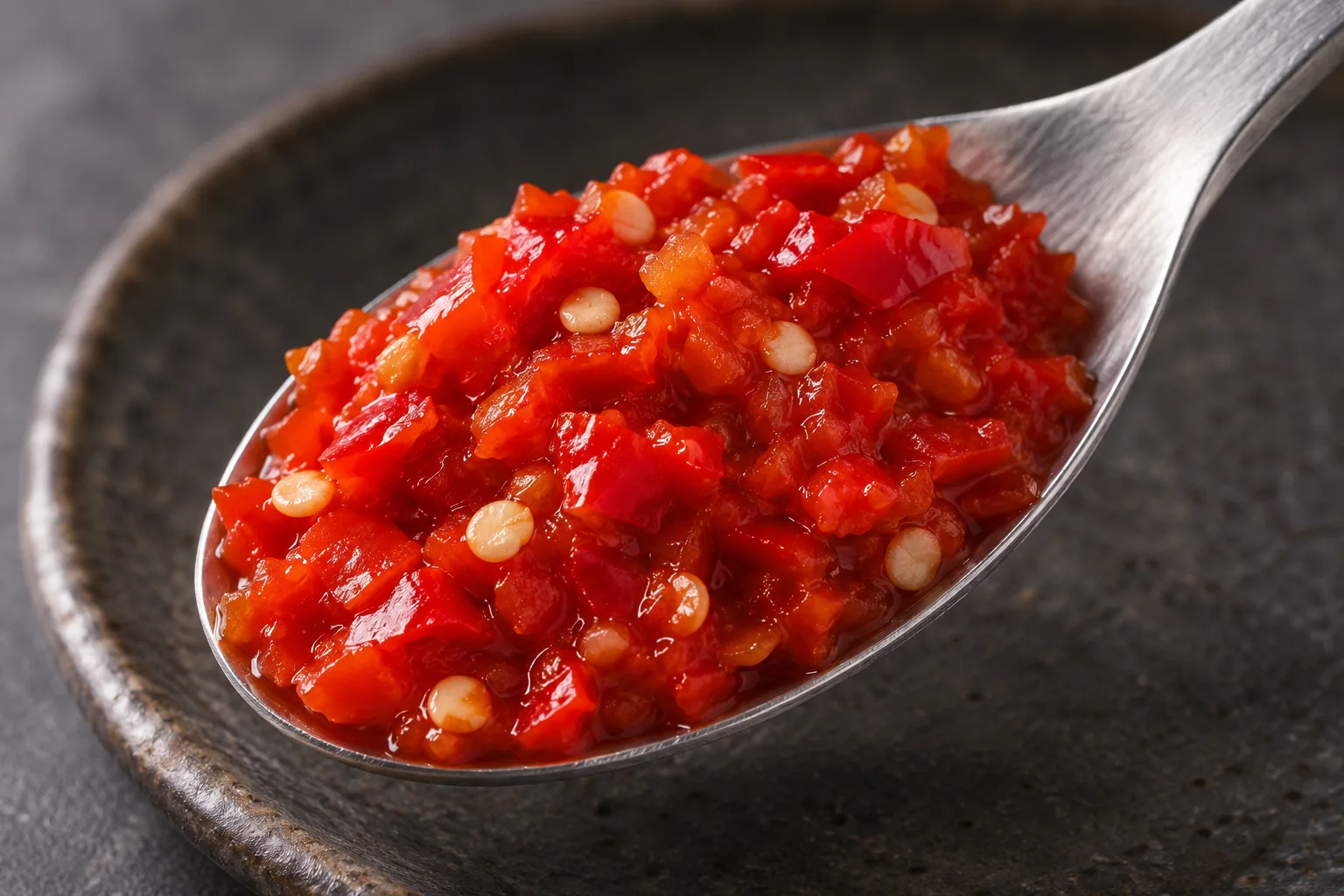
Describe whether you want distinct red pieces on the food or a chopped ingredient distributed through the dish. Include the particle sizes and the proportion of fine or larger material that would affect your serving appearance.
The chopped reference does not give a measured cut size. Use a retained sample and agreed physical criteria to communicate the texture your team wants. A spoon photograph helps explain the direction, while the selected cut specification defines what to purchase.
Salt, Acidity and Chili as Separate Recipe Inputs
A spicy-and-salty description does not supply a salt percentage or a numerical heat value. Request the complete declaration and the compositional data your formulation team needs, then account for the salt already present in sauces or other ingredients.
For the vinegar-containing alternative, include your sourness or acidity requirement separately. Do not assume a chopped name establishes fermentation, a particular acid level or the same flavour as another preserved chili. Keep those conditions attached to the actual preparation proposed.
The Ingredient Evaluated in Your Cooking Route
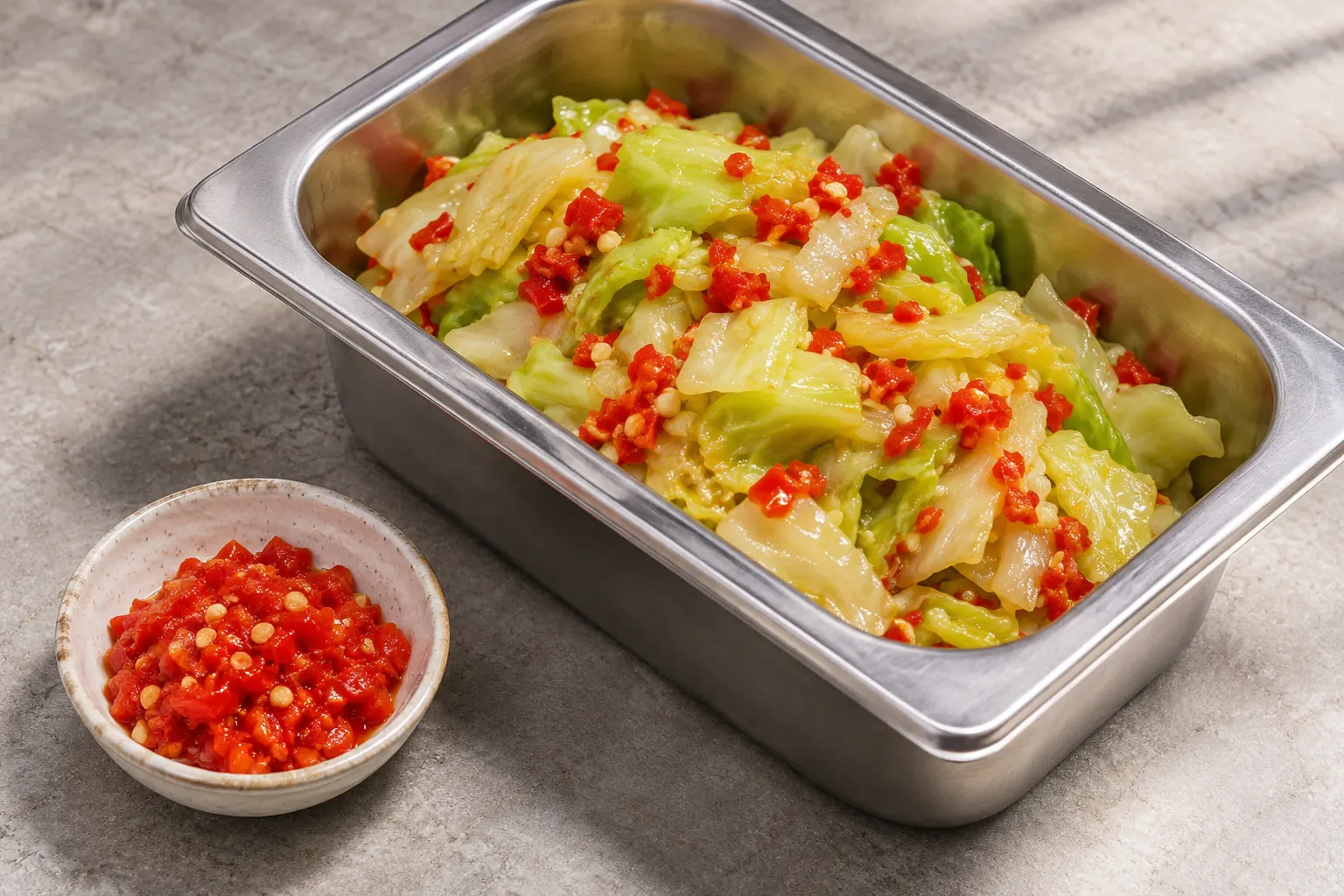
Tell us the dish, the addition stage and the preparation your operation uses. A chopped chili added while frying vegetables has a different context from a preparation stirred into a sauce or used in another finishing step.
Keep the product-specific use instruction with that choice. The preserved alternative is described for further processing; use its actual preparation and handling information when planning the trial. A food illustration provides context and does not establish a tested recipe or a universal serving method.
A Kitchen Trial with a Repeatable Basis
Prepare the current ingredient and the candidate with the same food base, starting amount and cooking conditions for the first comparison. Record visible chili pieces, salt and sourness balance, heat and the texture after preparation.
If the candidate needs a different amount, retain the first result and record the adjustment as a revised trial. Carry the accepted ingredient amount and sample identity into the kitchen instruction. This avoids treating a changed recipe as evidence of an equal-dose replacement.
Chopped Form and Preservation State Kept Distinct
Chopped describes the physical preparation. Fermented describes a processing state, while brined or acidified wording describes other aspects of a preserved ingredient. Select the combination your purchase actually needs instead of using one word to stand for all of them.
If your main requirement is an already fermented chili, continue with that product-specific route. If you need preserved input for your own further processing, use the brined-chili guide. Your chopped-cooking order should remain focused on the actual cut and recipe that your kitchen accepted.
| Requirement | What it defines | Keep with the order |
|---|---|---|
| Chopped | Physical particles | Cut and finished-food appearance |
| Fermented | Selected processing state | Applicable product description and records |
| Brined or acidified | Preserved input conditions | Actual composition and intended processing |
The Selected Pack with Its Handling Instructions
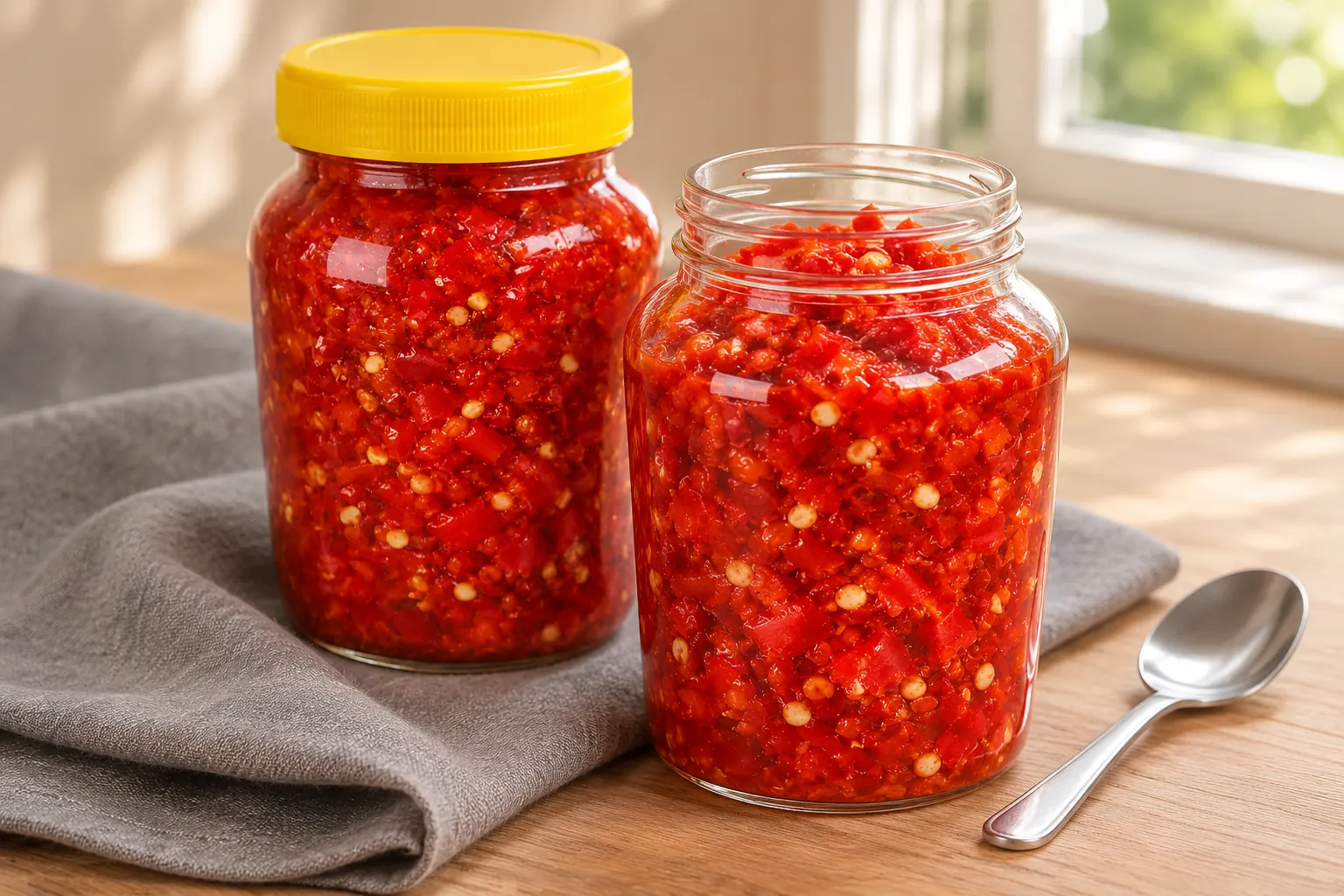
The chopped reference lists 500 g × 15 cartons, cool dry storage and twelve months. It also offers an OEM discussion route. Confirm the actual container, net unit weight, outer count and applicable dates for your order.
Request the instructions for unopened stock, opening and subsequent kitchen use. The preserved alternative has its own bulk, drum, vacuum or pail options and an eighteen-month statement; confirm its storage conditions rather than transferring the chopped product's guidance to it. Keep the selected pack connected to the chosen ingredient.
A Chopped-Chili Brief for Foodservice Supply
Send the dish and point of use, required chopped texture, flavour reference and any ingredient restrictions. Add the salt, heat or acidity information your approval team needs, together with trial quantity, destination and the preferred kitchen pack.
We can discuss the direct chopped-chili product or a selected preserved alternative against that brief. Confirm the complete preparation, accepted sample, cooking result and packing in the offer, and review any later change before using it as the repeat-order standard.
Send Your Commercial Cooking Brief