From Trial Orders to Bulk Chili Powder Procurement
We can discuss a chili-powder purchase in stages: identify the material, assess a sample, arrange the production trial you need and agree the commercial order. Each stage should have a clear purpose and its own quantity, packing and acceptance conditions. A sample offer does not establish a low minimum for every later order.
Start with your food application and the ingredient or formula you want to buy. This keeps the first discussion focused on material approval before a larger packing or customization commitment.
Discuss Your First Chili-Powder Purchase
Give Each Buying Stage a Different Decision
A small ingredient sample helps your team compare identity, specification and food performance. A production trial checks the chosen material in your actual operating route. The commercial order then needs a final grade, pack, quantity, destination and agreed terms.
Do not ask one sample to stand for all three decisions. Write down what your team must learn at each stage and which observations or documents are needed before moving forward. We can use that staged brief to discuss a concrete proposal.
| Stage | Main decision | Confirm for that stage |
|---|---|---|
| Sample assessment | Candidate ingredient or formula | Sample identity, specification and evaluation amount |
| Production trial | Suitability in the actual process | Trial quantity, pack and acceptance record |
| Commercial order | Approved supply arrangement | Grade, presentation, quantity and commercial terms |
Select One Grade before Requesting Trial Material
Our cryogenic chili-powder reference lists 40–60 mesh and moisture below 10%, while its heat and colour entries vary by selected chili and requirement. Use those choices to define the sample you need, rather than requesting an unspecified portion from a wide catalogue range.
For a compound seasoning project, our chili-lime reference describes custom label and blend discussions. Decide whether you are assessing an existing formula, developing a target flavour or bringing your own recipe; each route needs different inputs.
Cryogenic red chili powder · Custom label and chili-blend discussion
Confirm Sample Cost and Freight Separately
The cryogenic powder reference states that a free sample is available and sample shipping is borne by the buyer. Confirm the actual sample amount, destination and shipping arrangement for that request. Do not extend that product-specific statement to every formula or customized pack.
A separate private-label powder reference also describes sample availability. Use the selected offer to establish the applicable arrangement. Ingredient sample cost, courier cost and any development or presentation cost should remain separate items in the discussion.
Record What the Food Trial Actually Approves
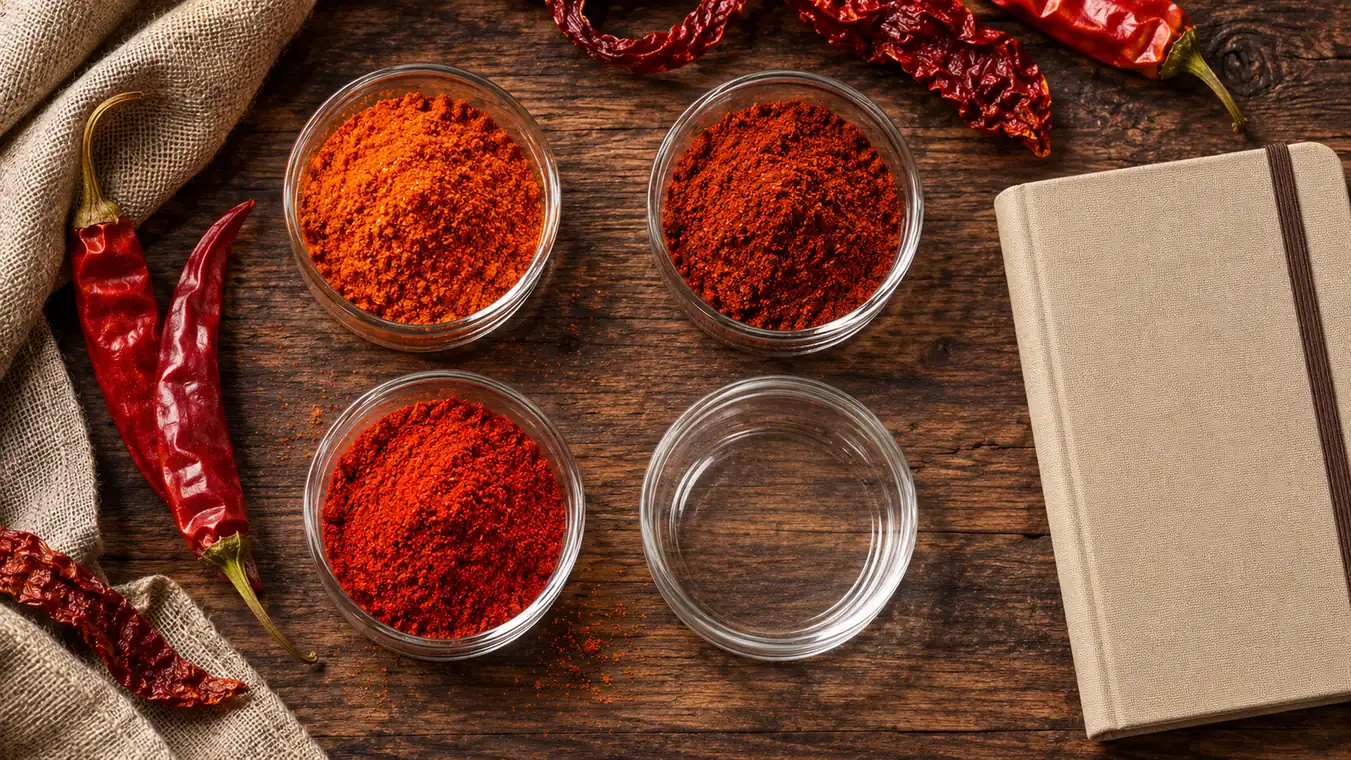
Compare the proposed material with your existing ingredient or target food under consistent conditions. Record the sample identity, recipe, addition amount and process. Evaluate the attributes that affect acceptance, including heat, appearance, flavour and texture where relevant.
Retain the accepted result and any required changes before discussing a larger trial. A successful small food preparation is useful evidence, but the next stage should still address the mixing, handling or application route used by your operation.
Size the Production Trial from the Work It Must Cover
Tell us how much material your planned production comparison requires and how that quantity was chosen. Include repeat preparations, material checks and retained samples if your procedure calls for them. We do not prescribe a universal trial-order quantity for every project.
Confirm whether the requested quantity and pack can be supplied on the proposed terms. Keep a production-trial enquiry distinct from a commitment to ongoing volume, and state expected future demand as a planning range when it is not yet an order.
Carry the Approved Specification into the Bulk Offer
After the trial, identify the accepted ingredient or formula, sample reference and specification revision. Confirm any heat, colour, particle and composition requirements that will be used for order acceptance. Add the required quality documents and receiving criteria.
A quotation should then define the actual net pack, outer arrangement, quantity, destination and relevant commercial terms. Ask about lead time for that specific order after its scope is known rather than assuming a catalogue example covers a different formula or presentation.
| Material decision | Supply decision | Approval reference |
|---|---|---|
| Selected powder grade | Net pack and quantity | Accepted sample and specification |
| Selected seasoning formula | Label and presentation | Full ingredients and formula revision |
| Required records | Destination and commercial terms | Quality and receiving requirements |
Review the Pack Change between Stages
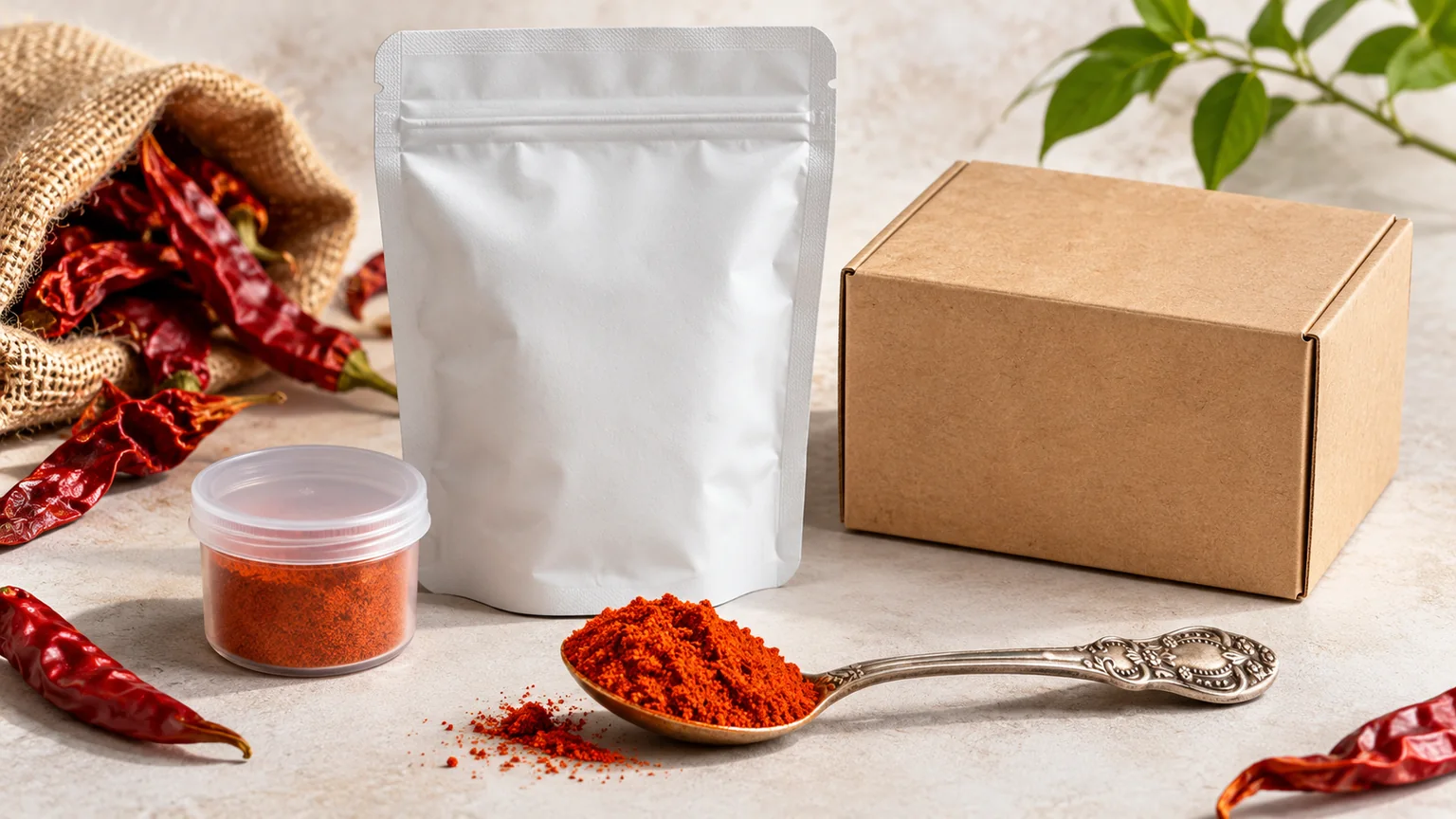
A small sample pot, a production bag and a branded bottle serve different stages. Confirm the actual pack and handling instruction when moving from one to another. A sample container does not establish the commercial net weight or the opening routine for a larger pack.
Keep the chosen material identity unchanged in the documents unless a revised formulation or grade is deliberately approved. If a new pack requires another review, connect that decision to the same accepted ingredient and order proposal.
Send the Current Stage and the Intended Next Step
Send us your food application, chosen powder or seasoning direction and the stage you are ready to arrange. Include the sample or trial quantity, packing requirement, destination, acceptance needs and any intended customization. State which information your team needs before the next decision.
We can discuss the selected material and a specific offer for that stage. Retain the approved sample, trial record and order specification together to make the transition into repeat procurement clear.
Start a Staged Purchase Discussion