
Developing Chili Seasoning from a Target Flavour Brief
You can bring us a target flavour before you have a final chili-seasoning recipe. Start with the food, reference profile, ingredient restrictions and the differences you want from an existing sample. Our custom label and blend reference supports a project discussion around those inputs.
The next step is to agree the actual scope, sample evaluation and commercial basis. A flavour brief gives that discussion a clear starting point without assuming that every requested profile is already an available formula.
Discuss a Target-Flavour Project
Describe the Food before Describing the Spice
Tell us whether the seasoning will enter a marinade, be cooked into a recipe or finish a ready-to-eat food. Include the base food and the additions already supplying salt, sweetness or aroma. A target for fries can differ from one for a grilled chicken preparation.
Use a reference food or identified seasoning where practical. Explain what you value in it and what you want to change. This is more useful than combining several culinary names without identifying a specific eating result.
Give the Flavour Separate Dimensions
Describe chili impact, salt, sweetness, savoury character, any smoky direction and the other aromas that matter to the product. Use simple comparisons against your reference and identify which dimensions are most important. Keep ingredient-origin requirements separate from sensory descriptions.
Our commercial BBQ reference describes sweet and smoky chicken-rub, grill, smoker and shawarma directions. Those are useful contexts for discussion, while the selected formula and its label need confirmation. They do not identify one universal recipe behind all of those names.
| Dimension | Useful input | Avoid assuming |
|---|---|---|
| Chili | Desired impact against the reference | A style name establishes exact heat |
| Sweet and savoury | Balance in the complete food | Taste identifies the ingredient source |
| Smoke and aroma | Preferred direction and limits | A culinary name supplies a full recipe |
| Texture | Visible particles and eating sensation | Every component has one fine grind |
Give Each Proposed Sample an Identifiable Role
Assign a reference to each proposed sample and keep its complete ingredient information with the evaluation. Compare it in the agreed food under consistent preparation and starting amount. Record which target it approaches and where it needs adjustment.
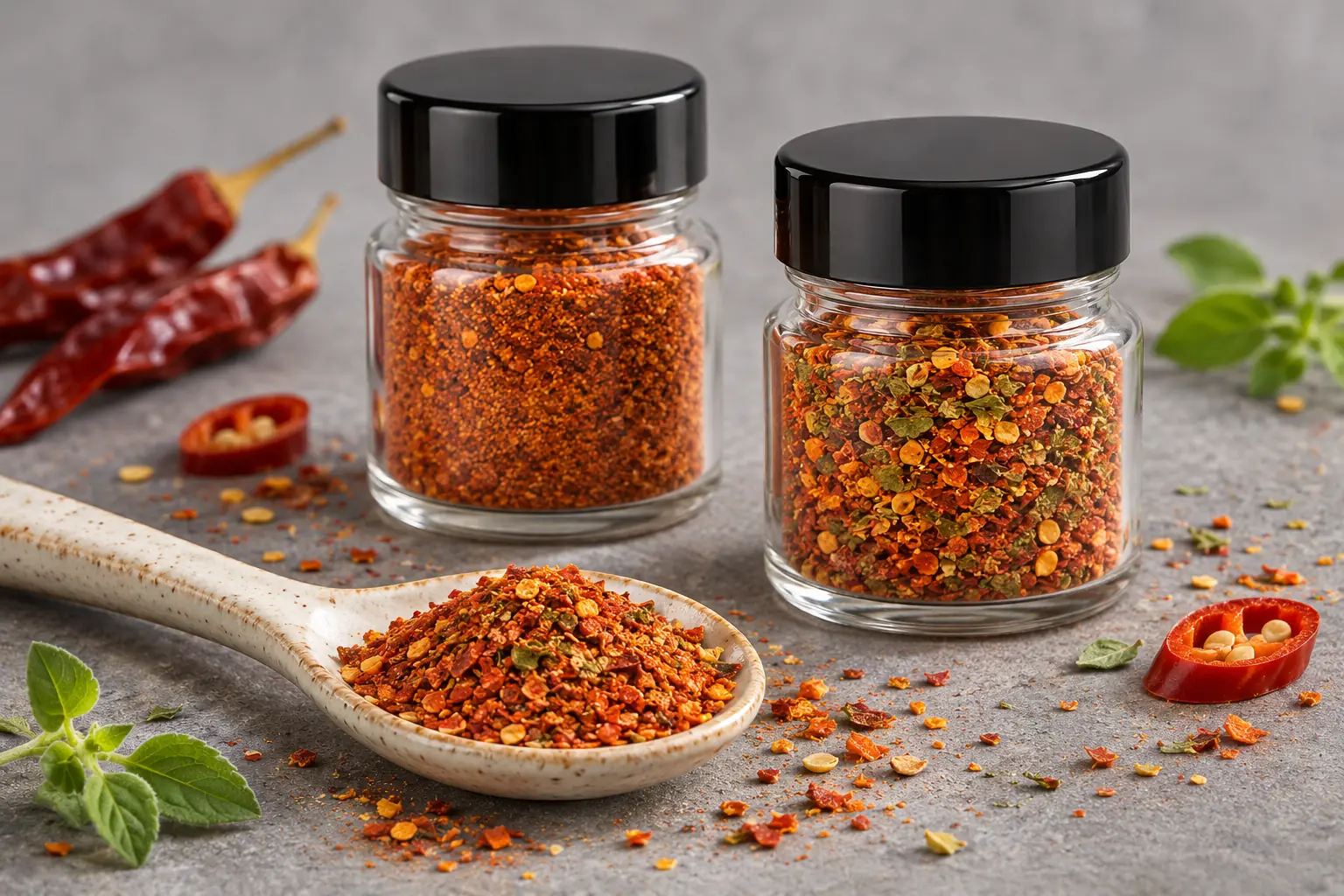
Do not treat a more attractive dry appearance as proof of a better food result. Colour, particles and aroma can support the discussion, but the sample must still be judged in the complete preparation that your business intends to sell.
Set Ingredient Boundaries before Revising the Profile
List ingredients that must be present, excluded or reviewed, including relevant compound components. If the project requires a particular citrus source, sweetener, dietary composition or declaration, state it at the start. A flavour name alone does not settle those requirements.
We can discuss the target within the agreed boundaries and request the information needed for the selected proposal. If a desired change would alter an important restriction, treat that as a decision for the project rather than adjusting the formula silently.
Use Focused Revision Rounds in the Actual Food
After the first trial, identify the most important changes rather than moving every attribute at once. Keep the food base and preparation consistent while comparing a revised sample. Record the sample identity, actual amount and result so that the reason for the next change remains clear.
Our chili-lime reference describes custom blend support, while your project still needs an agreed development scope. Confirm the intended evaluation rounds and decision points instead of assuming a fixed number of revisions or a guaranteed matching result.
Define the Point at Which the Blend Is Accepted
State what must match the reference and which differences can be accepted. Include the important physical and composition requirements along with the food result. Retain the chosen formula revision and a sample identity when the team approves it.
If you already own a final formula that must be followed, identify that as a different project route. Development from a sensory target and manufacture of an established buyer recipe should not share an ambiguous approval brief.
| Project element | Approval reference | Keep in the record |
|---|---|---|
| Sensory target | Accepted complete food | Profile, amount and preparation |
| Formula | Selected complete declaration | Revision and ingredient restrictions |
| Physical requirement | Agreed material criteria | Particles and other relevant fields |
| Project route | Target development or buyer-owned formula | Defined services and decision owner |
Move into Packing with the Chosen Formula
Once the formula direction is accepted, define bottle or bag, net weight, closure, outer count and label needs. Review the selected presentation against the handling and sales channel. A brand package should refer to the blend your team approved.
Confirm minimum order, timing and price for that actual scope. Existing private-label or custom-pack descriptions are starting points for discussion, while the offer must connect the selected formula, quantity, destination and presentation.
Send a Brief that Makes the First Sample Useful
Send us the food and use stage, reference profile, priority flavour changes, ingredient boundaries and sample quantity. Include the target channel, destination, packing preference and documents needed by your team. Explain whether the formula is open for development or already fixed.
We can discuss an appropriate scope and the information needed for the first comparison. Carry the accepted sample, complete formula and food-trial record forward so the next step concerns the same selected product.
Send a Flavour Development Brief