Chili Powder for Noodle Sachets with a Short Preparation Time
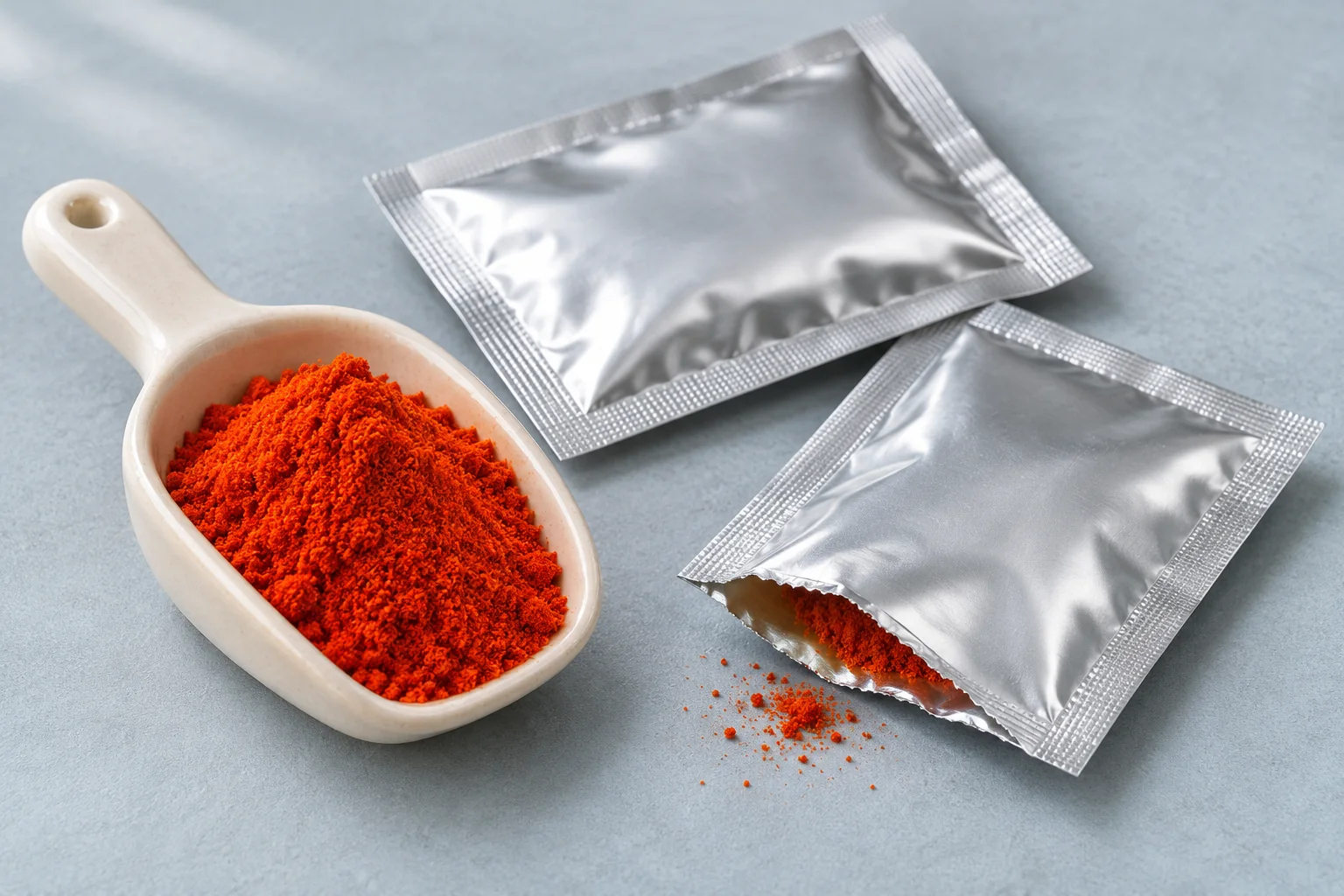
For a short-preparation noodle sachet, our 100-mesh raw AD Cayenne powder is a defined particle-format starting point. We also offer selected powder grades within a 40–120 mesh range and a separate red chili ingredient for a composition-led enquiry.
Choose the sample against the actual sachet, preparation and eating conditions. Fine powder does not mean a soluble ingredient, and a short preparation time does not by itself establish the quality requirements for the chosen chili. We can discuss the selected grade and documents alongside your food-trial brief.
Discuss Powder for Your Noodle Sachet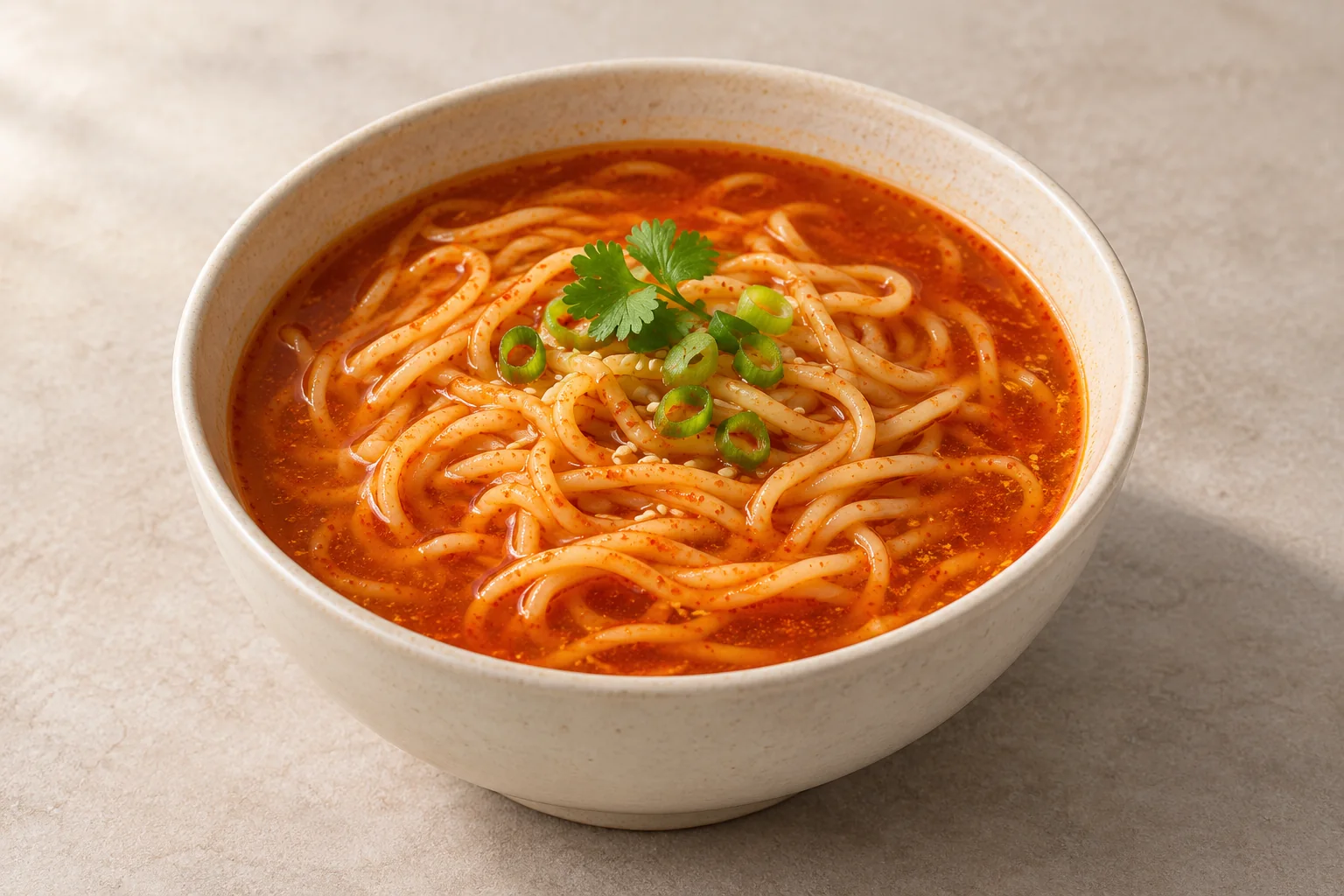
Specify the Sachet and Its Actual Preparation
Describe the dry seasoning mixture and the chili contribution within it. Include the noodle format, water quantity, starting water temperature, preparation time and stirring procedure specified for your product. Keep those conditions the same for the first ingredient comparison.
State how the finished food is eaten and the point at which your team evaluates it. Broth appearance, particles on the noodles and sediment remaining in the vessel can be different observations. A concise preparation record makes the sample enquiry useful without asking a powder name to define the whole application.
Choose Powder Options Rather Than a Flake Range
The 100-mesh Cayenne reference lists AD drying, raw processing and powder form. Confirm the complete composition and selected heat when requesting that sample. The particle label belongs to this product reference.
The Korean-style raw AD listing offers 40–120 mesh specifically for powder, with separate 5–25 mesh flake options. Select the actual powder grade and seed state. The red chili ingredient separately names Red Chilli; add your numerical heat and particle criteria where they determine acceptance.
100-Mesh Raw AD Cayenne Powder · Selected 40–120 Mesh Red Chili Powder · Red Chili Powder Ingredient
| Candidate | Physical starting point | Define for the actual sachet |
|---|---|---|
| Raw AD Cayenne powder | 100 mesh | Composition, heat and quality requirements |
| Korean-style red chili powder option | Selected grade within 40–120 mesh | Powder form, seed state and chosen heat |
| Red chili ingredient | Ground red chili identity | Particle requirement and selected heat |
Keep Particle and Seed Requirements with the Sample
If visible seeds or coarse particles would affect the eating experience, state the corresponding material requirement explicitly. The multi-option red chili listing includes seed and seedless choices; one selected state should follow the sample into the quotation.
Provide the sieve criteria your team uses when nominal mesh is insufficient. A fine dry appearance helps orient the enquiry, while an agreed particle record and the prepared-food observation support acceptance. Our sieve-distribution guide develops the measurement fields without assuming a complete distribution from one mesh label.
Observe Dispersion and Texture Without Assuming Dissolution
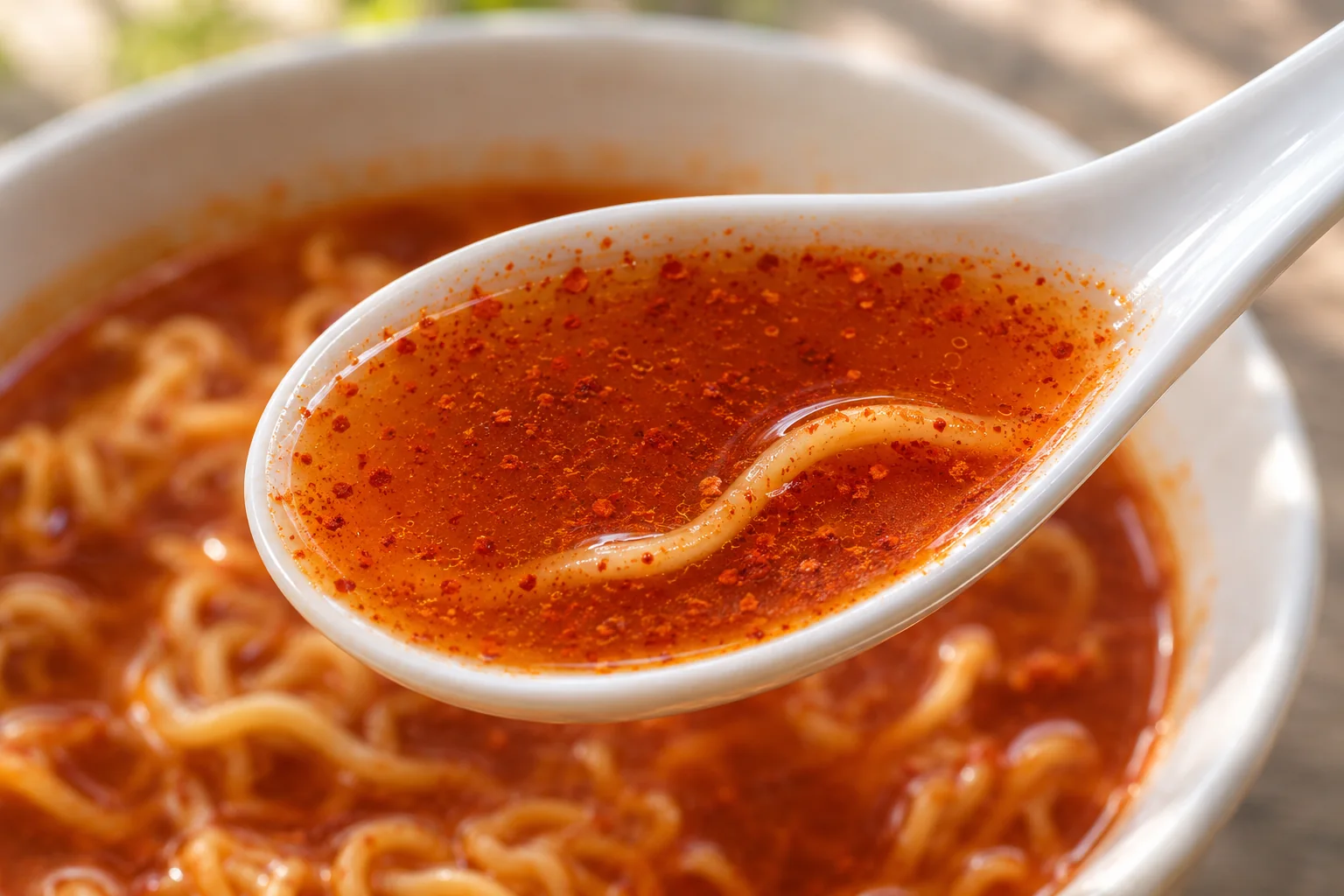
Prepare baseline and candidate portions under the same recorded conditions. Observe visible particles, settling and the texture during the intended eating period. Record the result in the complete seasoning mix, since the raw powder is only one component.
Describe what you observe rather than calling a powder instantly soluble. A sample may distribute through the broth while visible chili particles remain. If the first trial needs adjustment, preserve it and record the revised dose or grade as a new version.
Select Heat and Colour for the Prepared Food
Keep heat, colour and texture inside the same food comparison. The multi-option listing offers a broad heat and colour scope, so agree the values for the actual selected powder rather than treating the entire range as one result.
For the first comparison, keep the other seasoning ingredients and preparation conditions unchanged. If a candidate needs a different chili inclusion level, record the revised formula and assess it again. Retain the accepted food result with the selected grade so a later order follows the same flavour and appearance decision.
Review Ingredient Treatment Against the Intended Use
Provide the quality standard and treatment evidence your team requires for the chosen powder and food process. FDA’s spice-safety guidance notes that the effect of cooking on contamination depends on temperature and duration. A short-preparation description therefore needs the actual process review appropriate to your product.
Keep that review separate from whether the powder tastes and looks suitable. Request the relevant selected-material and lot records where required. A broad contamination label or raw dried description is not a substitute for the evidence used by your quality team to approve the ingredient.
Technical reading: FDA Spice-Safety Guidance
Carry the Chosen Grade Through Packing and Storage
After selecting the candidate, connect its composition, seed state, particle requirement and heat criteria to the offer. State whether you are purchasing a chili raw ingredient or a complete seasoning sachet, so packing discussions address the actual purchasing object.
Confirm the material’s applicable storage instructions and commercial configuration. The Korean-style reference’s 24-month shelf-life statement is tied to −18°C; do not apply that period to another temperature without the selected supply instruction. Keep the accepted grade and required records with quantity, destination and pack details.
Send a Noodle-Sachet Ingredient Brief
Send the sachet composition, current chili ingredient, actual preparation conditions and intended eating format. Add target heat, colour, seed state and particle requirements, along with the food-trial and quality records used for approval.
Include sample needs, quantity, destination and the raw-ingredient packing required. We can discuss a 100-mesh candidate or another selected powder grade against that information. Retain the accepted preparation record and material specification for repeat purchases.
Send Your Noodle-Powder Specification