
Brined and Salted Chilies for Further Food Processing
We can discuss green chili in brine and salted red chili for sauce, seasoning and other food-processing projects. Start with the chili form and preserving recipe your process can use, then compare the amount of pepper and liquid entering the food.
A brine description does not by itself define salt concentration, acidity or every ingredient. Our green preserved references and the separate chili-and-salt red-pepper reference provide different starting points for a composition-specific enquiry.
Discuss a Preserved Chili Input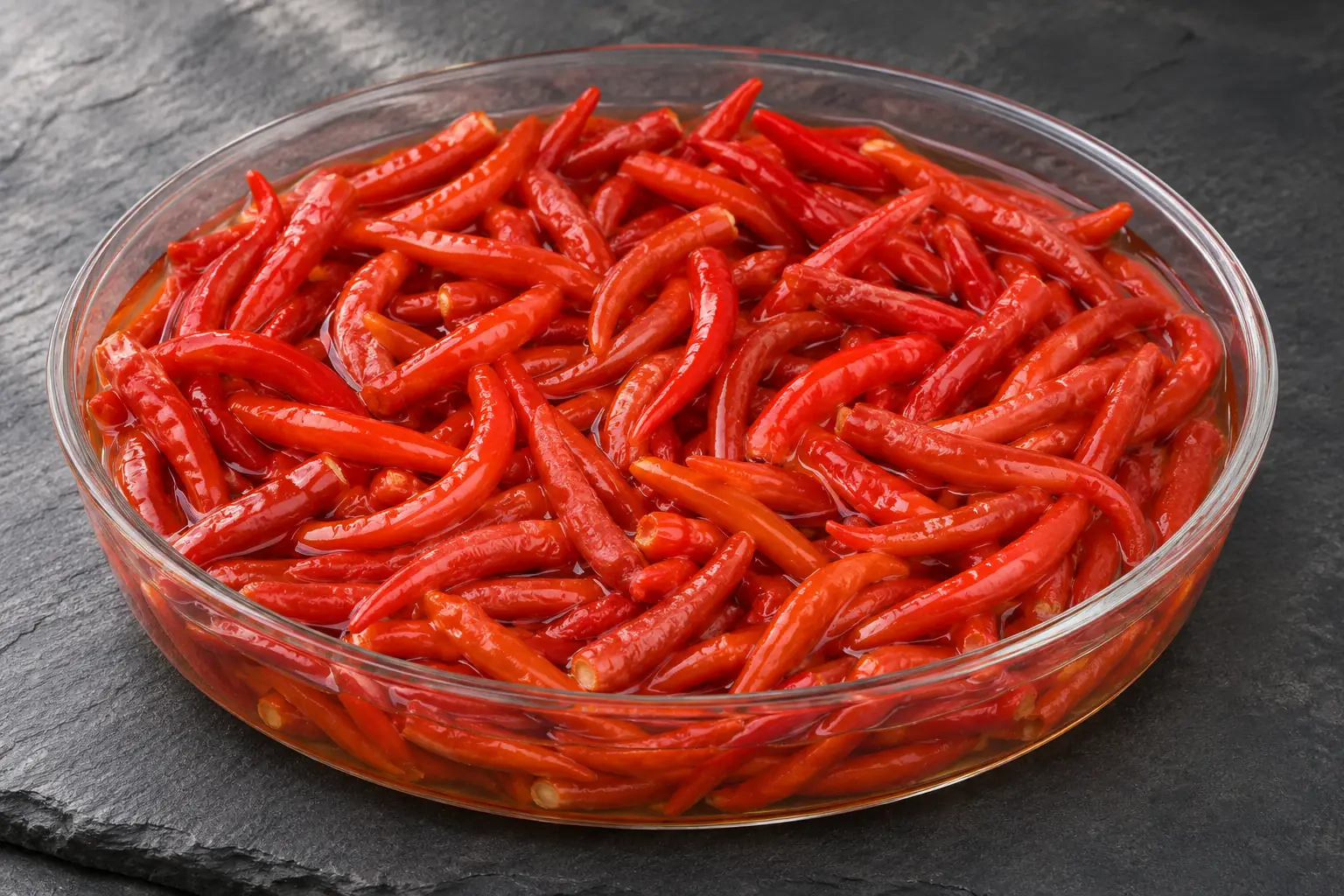
The Preparation Your Factory Will Perform
Describe the food you make and the physical preparation the chili will receive. State whether your operation needs whole pods for further cutting, another agreed form, or material that enters a recipe with some of its liquid. Keep the required heat and finished texture in the same brief.
Identify the handling and preparation guidance needed for that selected input. A preserved ingredient and a ready-to-serve menu topping have different purchasing tasks, even when the raw-material names appear similar.
Different Preserved Chili References
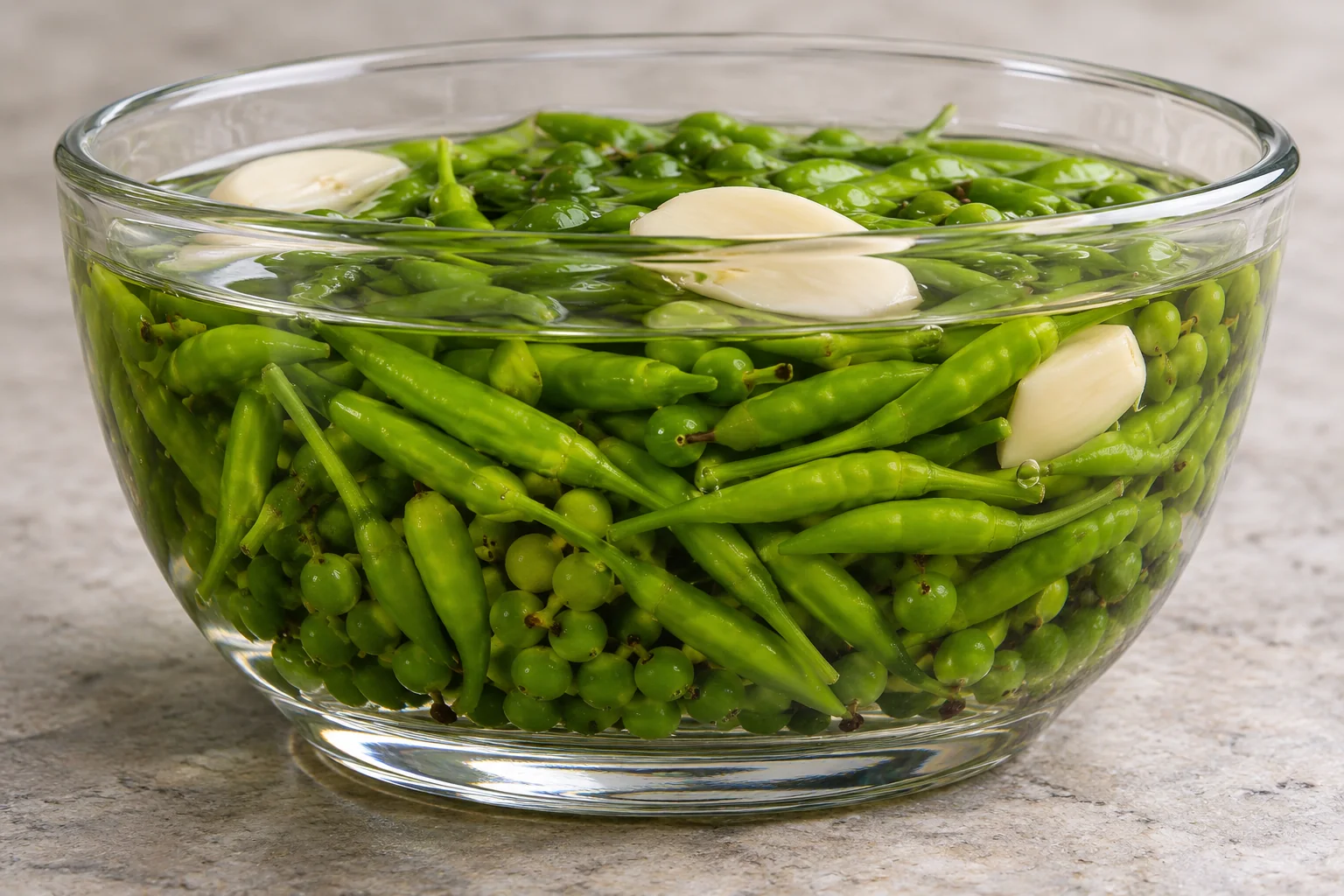
The pickled green-pepper and chili reference describes elongated green material with sour, salted and vinegar taste. Its can and pouch directions can support a container discussion, while the complete selected recipe still needs confirmation.
A separate green pepper and chili reference is described as in brine. Our salted red chili reference names chili and salt and includes sauce raw-material use. Select the appropriate material rather than transferring the green product’s preserving recipe or pack to the red one.
Pickled Green Chili in Brine · Green Pepper and Chili in Brine · Salted Red Chili for Sauce Ingredients
| Reference | Listed direction | Decision to specify |
|---|---|---|
| Pickled green chili | Elongated; sour, salted, vinegar taste | Full preserving recipe and physical requirement |
| Green pepper and chili in brine | Green material; cooking use | Actual ingredients, liquid and selected pack |
| Salted red chili | Chili and salt; sauce raw material | Salt level, form and recipe contribution |
The Complete Preserving Recipe
Request the full selected ingredient declaration, including the preserving liquid and other components. If vinegar, fermentation status or another ingredient matters to your process, state the requirement explicitly. Do not use the word brine to exclude those possibilities.
The green-chili reference photograph shows a mixed preserved presentation. Appearance can help communicate a physical direction, but it does not establish the complete ingredient list or its proportions. The declaration and accepted sample should identify the actual material you are considering.
Salt and Acidity Recorded on an Agreed Basis
Tell us the salt and acidity criteria your formulation requires and the way your team expects those values to be reported. Distinguish a preserving-liquid result from a result for the whole prepared material when that difference affects your recipe.
Keep the measurement basis, selected sample and required limits together. Sour or salted taste descriptions are useful flavour directions, while numerical acceptance requires the actual values and applicable method. This guide does not assign an unreported concentration to any candidate.
| Field | Clarify for the selected ingredient |
|---|---|
| Salt | Required value and reporting basis |
| Acidity | Chosen criterion, method and sample basis |
| Ingredients | Full recipe and relevant restrictions |
| Physical form | Whole or another agreed preparation |
| Use | Liquid retained or removed by your process |
The Chili Quantity Your Recipe Actually Uses
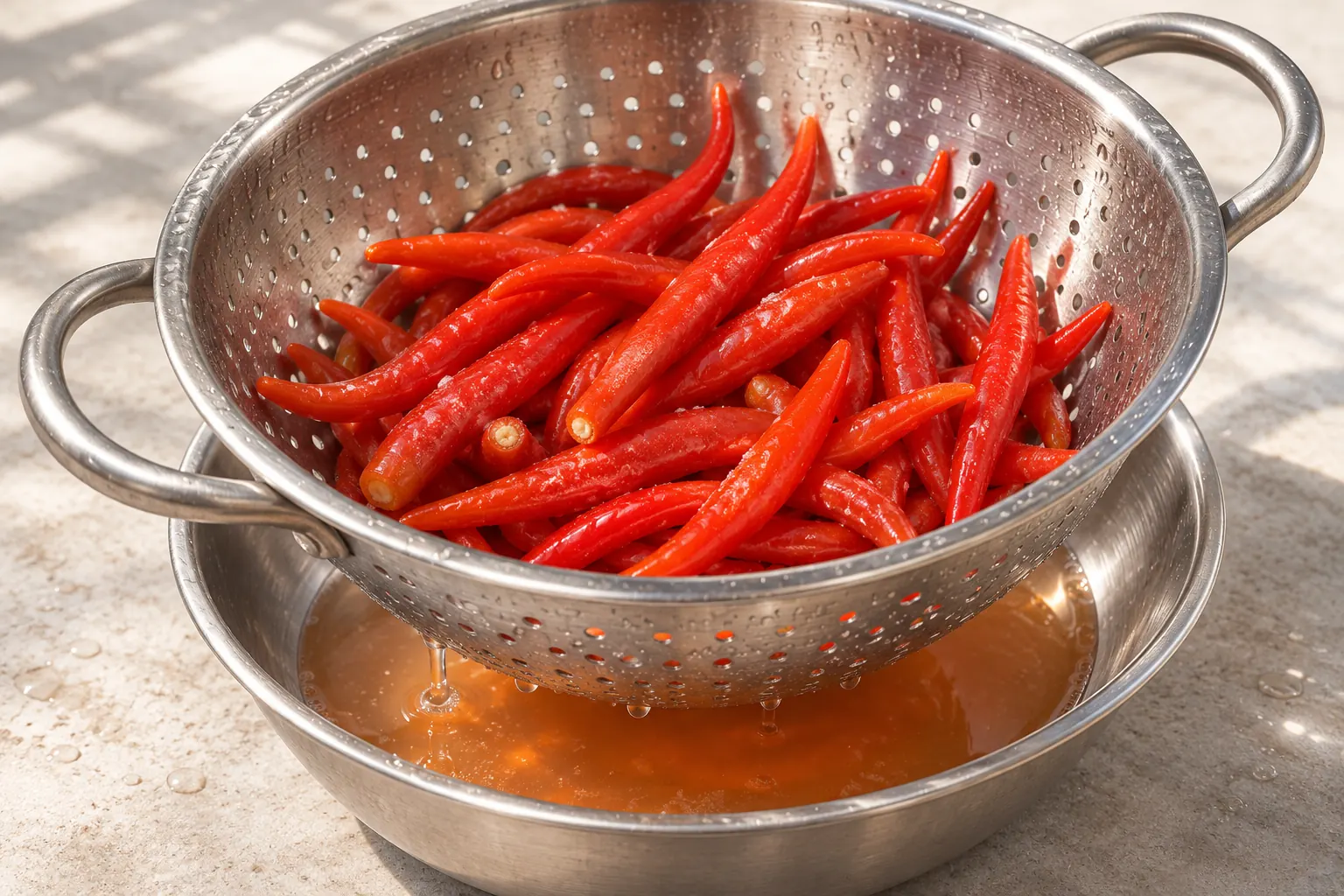
Confirm net contents and the drained chili amount when your process separates the preserving liquid. Codex CXS 1-1985 distinguishes net contents from drained weight for food packed in a liquid medium. These are also useful separate fields for comparing a preserved-ingredient offer.
Use the quantity basis relevant to your own food trial. If your process incorporates liquid, record the amount retained; if it separates liquid, record the actual material used after that step. A container’s nominal volume does not establish a pepper mass or a fixed usable yield.
Technical reading: Codex CXS 1-1985, Section 4.3
A Food Trial That Includes the Preserving System
Evaluate the selected chili using your actual sauce or seasoning recipe and preparation. Record the material amount, any liquid incorporated, other salt and acid additions, and the physical preparation used before mixing. Compare heat, flavour and texture in the complete food.
If the recipe changes, retain a separate trial version. This helps your team see whether the accepted result came from a different preserved ingredient, a changed use basis or an adjustment elsewhere in the formulation. No equal-dose replacement follows from a brine name alone.
A Container with Its Own Handling Conditions
The green references describe tin-can formats of 580 ml, 850 ml and 3100 ml, or a pouch direction. Confirm the actual container, net and drained amounts where relevant, units per carton and the instructions applicable to that supply.
Keep storage conditions and dates specific to the chosen product and pack. The catalogue contains different duration and storage statements across these references. Obtain opening and subsequent-use guidance separately instead of transferring an unopened shelf life to your factory’s handling routine.
The Accepted Ingredient Connected to the Finished Food
A salted red input may be the useful starting point when your process wants chili with a declared chili-and-salt direction. A green preserved option may be more appropriate for a different flavour and appearance target. Let the selected recipe and food trial decide the route.
If your project specifically needs an already fermented chili preparation, use the separate fermented-ingredient guide. Fermentation is a product-state requirement to establish rather than an assumption made from a sour taste or a preserved presentation.
A Composition-Specific Preserved Chili Enquiry
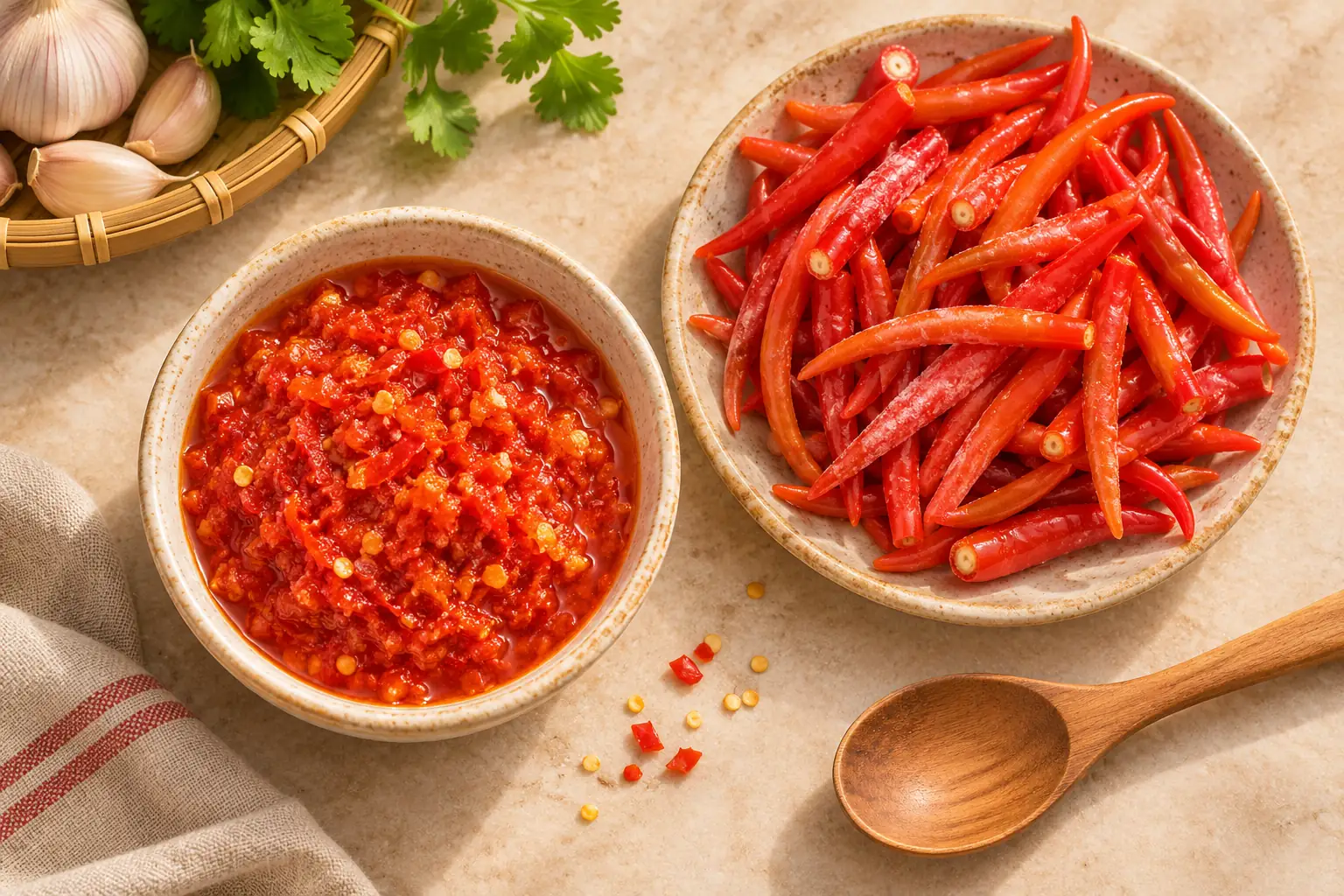
Send the further-processing use, required chili form, heat and appearance target, and complete ingredient restrictions. Include your salt and acidity criteria, quantity basis, sample requirements and the preserving-liquid role in the recipe.
We can discuss the relevant green brine or salted red chili reference against that brief. Add the actual container requirement, quantity, destination and requested documents so the offer identifies the material your process can evaluate and use.
Send Your Preserved Chili Requirements