
Chili Powder with a Moisture Limit at or Below 8%
For a purchasing specification of moisture at or below 8%, our catalogue includes a 100% Cayenne pepper powder declaring 8% maximum and two chilli-only red powder references declaring no more than 7%. They are product-specific starting points for a moisture-led shortlist.
Choose the correct ingredient as well as the limit. The Cayenne and chilli-only candidates do not become identical materials because each can enter an 8%-maximum screening exercise. We can discuss the chosen composition, particles and heat alongside your moisture requirement and the acceptance evidence needed for an order.
Discuss Your Powder Moisture Limit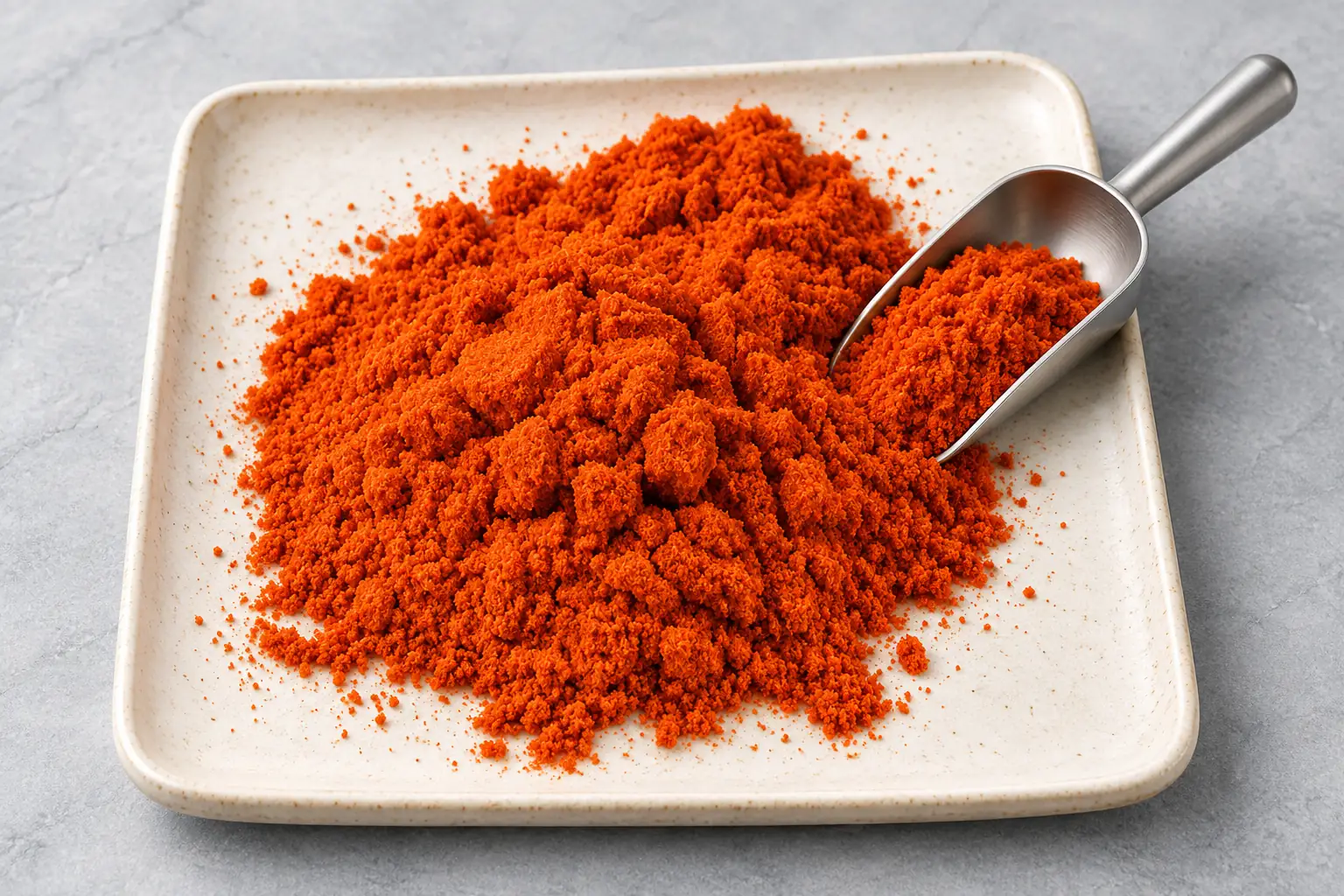
Compare the Declared Limits with the Ingredient You Need
The Cayenne reference identifies 100% Cayenne Pepper with an 8% maximum moisture entry. The red powder for seafood dipping and hotpot, and the dry-packed hotpot powder, each declare chilli only,60 mesh and moisture at or below 7%.
These are catalogue limits rather than the results of every sample or delivery. Keep the chosen product and specification with any test result used for approval. If you require a different heat or particle profile, add those conditions before deciding which moisture-qualified candidate to trial.
100% Cayenne Powder with 8% Maximum Moisture · Chilli-Only Red Powder with ≤7% Moisture · Dry-Packed Red Powder with ≤7% Moisture
| Candidate | Moisture declaration | Other selection points |
|---|---|---|
| 100% Cayenne powder | 8% maximum | Cayenne identity; selected heat and particles |
| Red powder for dipping | ≤7% | Chilli only;60 mesh;AD;raw |
| Dry-packed hotpot powder | ≤7% | Chilli only;60 mesh;AD;raw |
Agree the Measurement Basis Before Comparing Results
A percentage limit is incomplete for acceptance unless the reporting basis and measurement method are clear. Specify the agreed procedure and edition with your laboratory or quality team, and connect the result to the material sampled.
ASTA Method 2.1 describes moisture by vacuum-oven loss on drying for capsicum spices, including chili and paprika. It is a relevant method reference to discuss. Do not assume that two differently measured values are directly comparable without reviewing their basis, and do not treat a method listing as a test result for our powder.
Technical reading: ASTA 2.1 Capsicum Moisture Method
Keep the Sample’s Handling History Clear
Connect the incoming sample identity with its packing and the conditions under which it is stored before evaluation. Record any opening and sampling steps needed by your approval procedure. This makes the sample and its moisture result traceable within your own purchasing file.
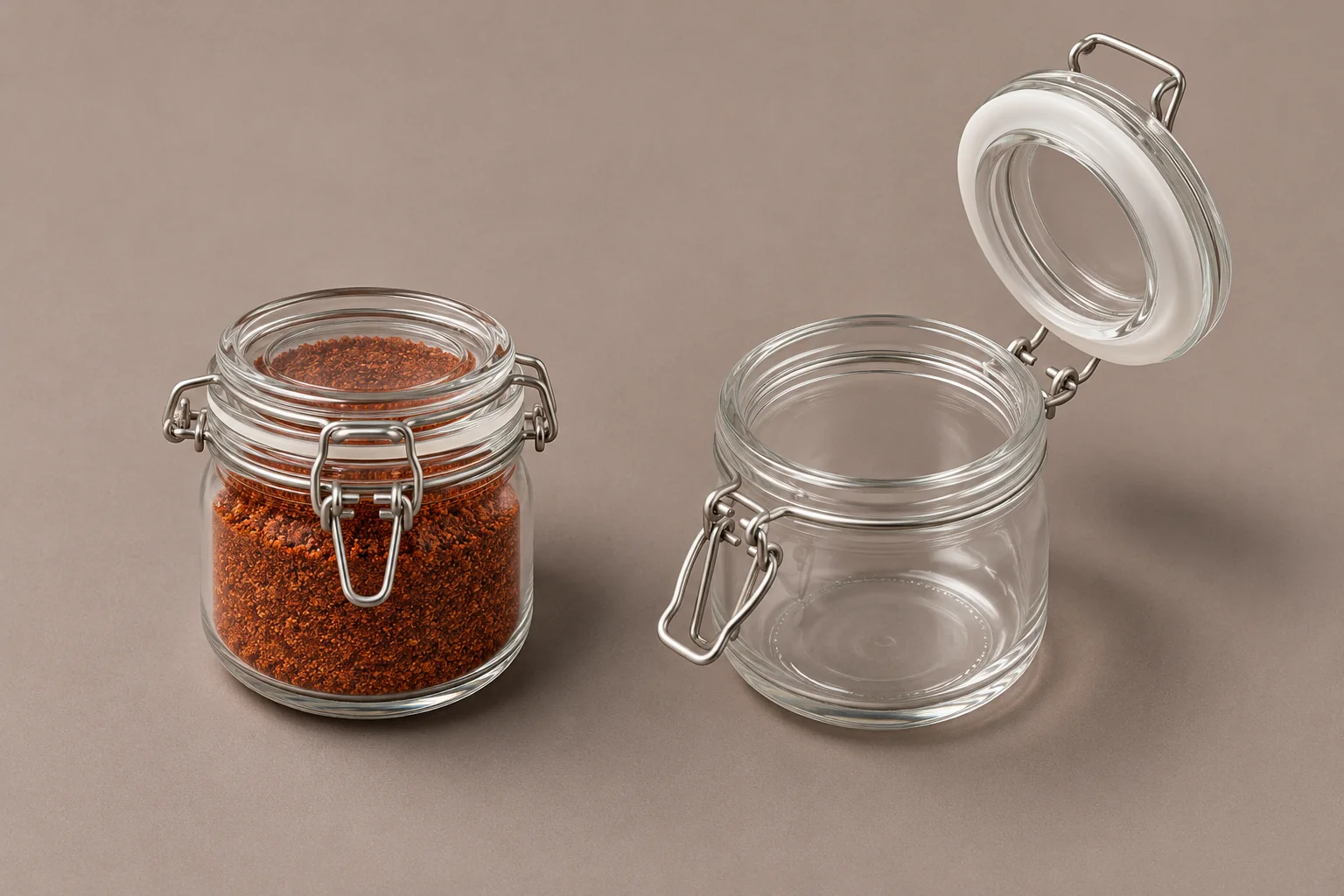
For repeat supply, agree the point at which the moisture requirement applies and the records that accompany the order. A dry-looking powder is useful to inspect for general appearance, while the numerical limit must be assessed through the agreed method and material record.
Keep Moisture and Water Activity as Separate Fields
If your quality specification also requires water activity, request it separately. ASTA publishes a distinct Method 6.0 for water activity in spices, while Method 2.1 addresses moisture by loss on drying. A moisture percentage is not a water-activity result.
Keep each required measurement with its own method, result and acceptance basis. This guide does not assign a water-activity limit from the catalogue moisture figures. Your intended food use and quality standard determine which additional evidence belongs in the material file.
Technical reading: ASTA 6.0 Water-Activity Method
Evaluate Physical Performance Through Its Own Trial
Meeting a moisture limit does not establish the powder’s behaviour in your dosing equipment or the texture of a finished food. If those are selection conditions, compare the candidate in the relevant operation and record the actual result.
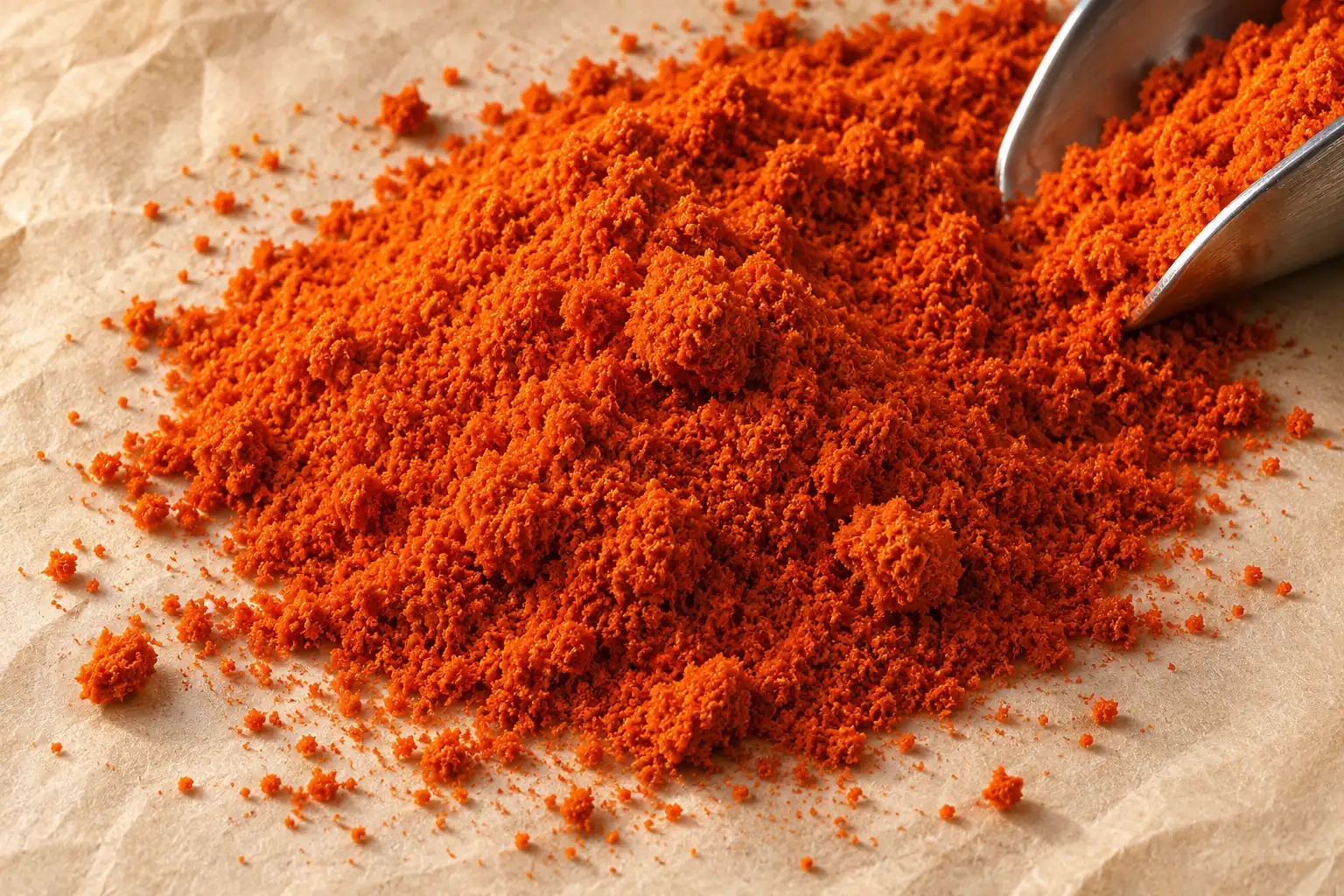
Keep observations about agglomerates, particles or handling distinct from the numerical moisture result. A photograph of dry powder cannot determine its moisture or guarantee flow. Our automatic-dosing guide develops the sieve and equipment-trial requirements for buyers whose main concern is material delivery through a feeder.
Confirm the Packing and Storage Conditions for the Order
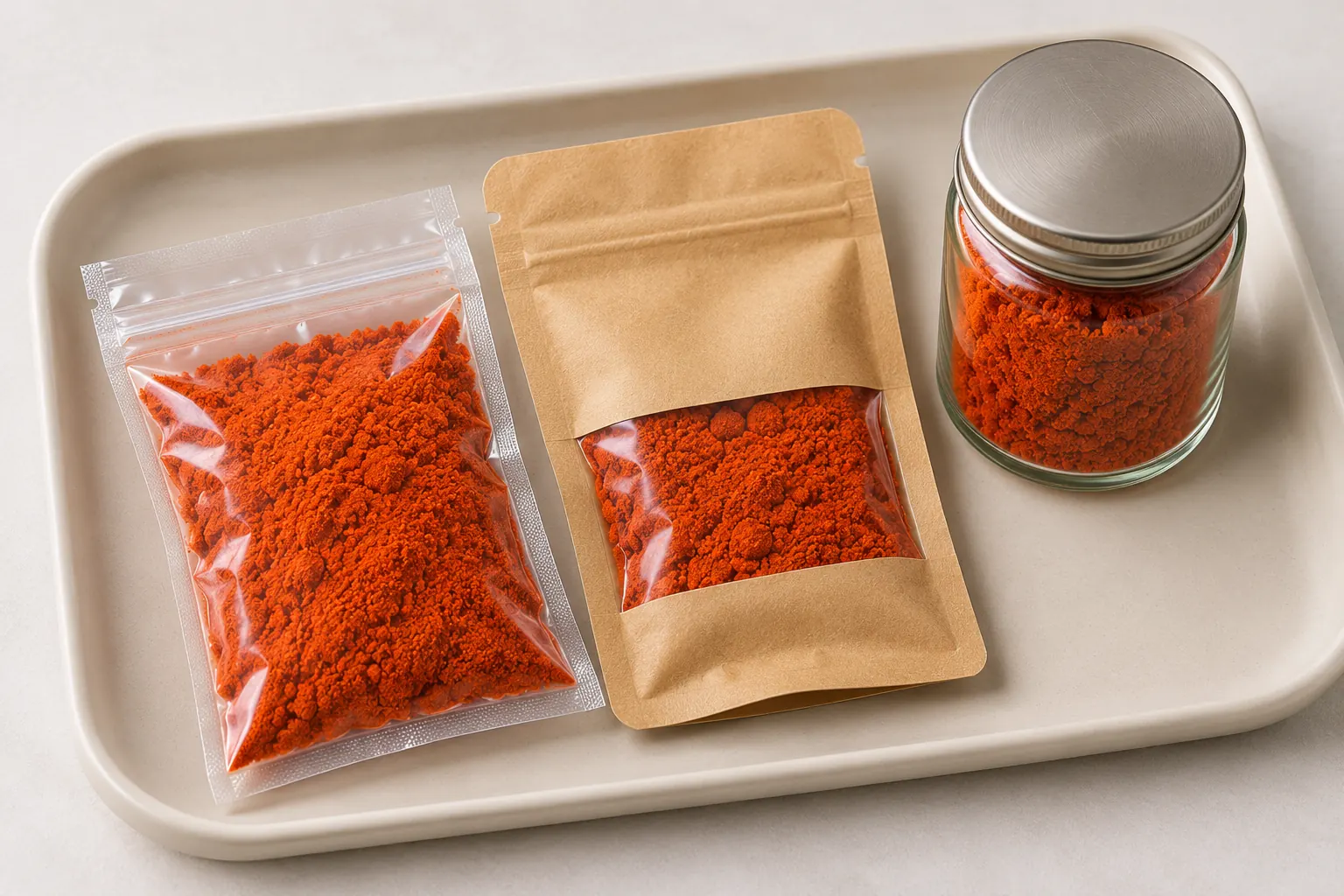
The Cayenne reference specifies cool, dry, clean storage away from sunlight, with 24 months from production. The two chilli-only dipping references separately state cool, dry storage and 24 months. Confirm the handling instructions that apply to the chosen pack and supply.
Include your closure, transport and stock-use requirements in the offer discussion. A stated moisture ceiling does not create an extended shelf-life promise or replace the storage instructions. Keep the final pack, applicable dates and handling conditions with the material specification.
Preserve the Accepted Grade for Repeat Buying
Retain the product reference, accepted sample and agreed moisture method with your other material requirements. If a supplier proposes a different particle grade or composition, review that change explicitly rather than approving it solely because its moisture limit is also below 8%.
The final quotation should identify the material and conditions your team accepted. Where results are required with deliveries, agree that documentation requirement before ordering. This keeps a moisture-led enquiry connected to a usable ingredient specification through samples, bulk supply and later replenishment.
Send a Moisture-Specific Powder Requirement
Send the moisture ceiling, agreed method if already specified, required ingredient identity and particle profile. Include the food application, heat and colour needs, sample procedure and quality documents used for approval. Add quantity, destination and preferred packing.
We can discuss the 8%-maximum Cayenne reference or the separate ≤7% chilli-only candidates against that brief. If Cayenne identity controls the purchase, retain it as a condition alongside moisture rather than substituting a generic red powder by percentage alone.
Send Your Moisture Specification