
20,000–30,000 SHU Chili Powder at 60–80 Mesh
We offer a pure red chili powder whose own product description lists both 20,000–30,000 SHU and a 60–80 mesh fine grind. It gives your purchasing team a defined starting point when a formula needs hot red chili powder rather than an unspecified seasoning.
Keep those two requirements together in the enquiry. We can discuss the selected ingredient, sample and packing against your food application, with acceptance conditions agreed before an order.
Send Your Heat and Mesh Requirement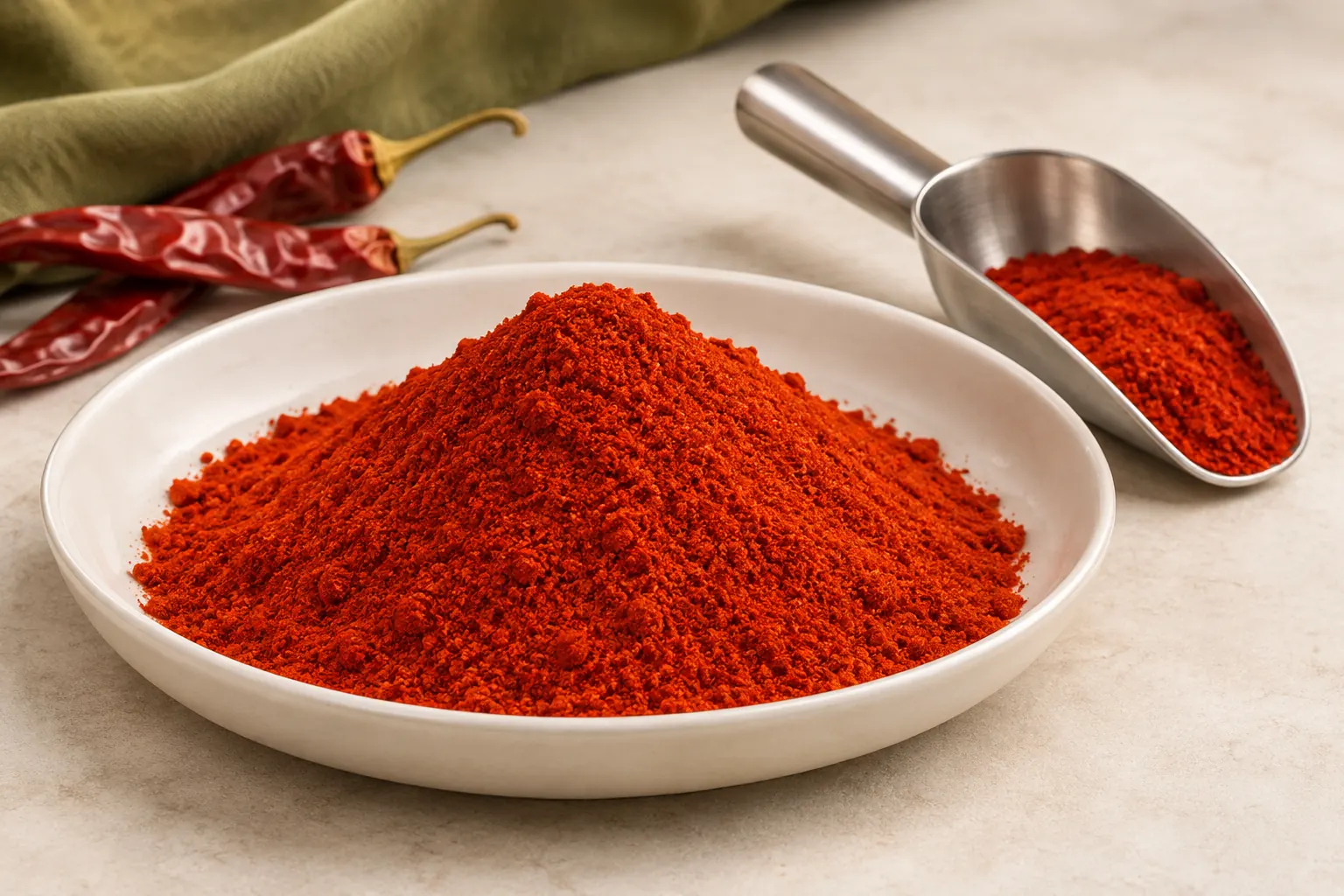
Two Requirements in the Same Product
Our hot pure red chili powder declares 100% dried red chili together with the stated heat and mesh. The listed applications include kimchi, hot pot, chili oil and sauces. Keep that complete selected-product identity with the ingredient specification.
These are catalogue declarations for this product. Keep the actual sample or lot identifier with any result used for purchase approval.
| Selection field | Declared value | Purchase follow-through |
|---|---|---|
| Ingredient | 100% dried red chili | Match the agreed composition |
| Heat | 20,000–30,000 SHU | Agree method and acceptance |
| Particle label | 60–80 mesh, fine powder | Define sieve requirements |
| Style | Dried, raw processing | Review your intended food process |
Product reference: View the declared product specification
A Heat Range with an Agreed Acceptance Basis
A 20,000–30,000 SHU range leaves room for meaningful heat variation. If your recipe needs a narrower working target, state it before sampling instead of assuming every point in that range will taste the same in your food.
Record how the sample is identified, the heat measurement method, who evaluates it and the acceptance range your team needs. A catalogue range does not replace a result for the material being approved.
A Fine Grind with a Defined Sieve Requirement
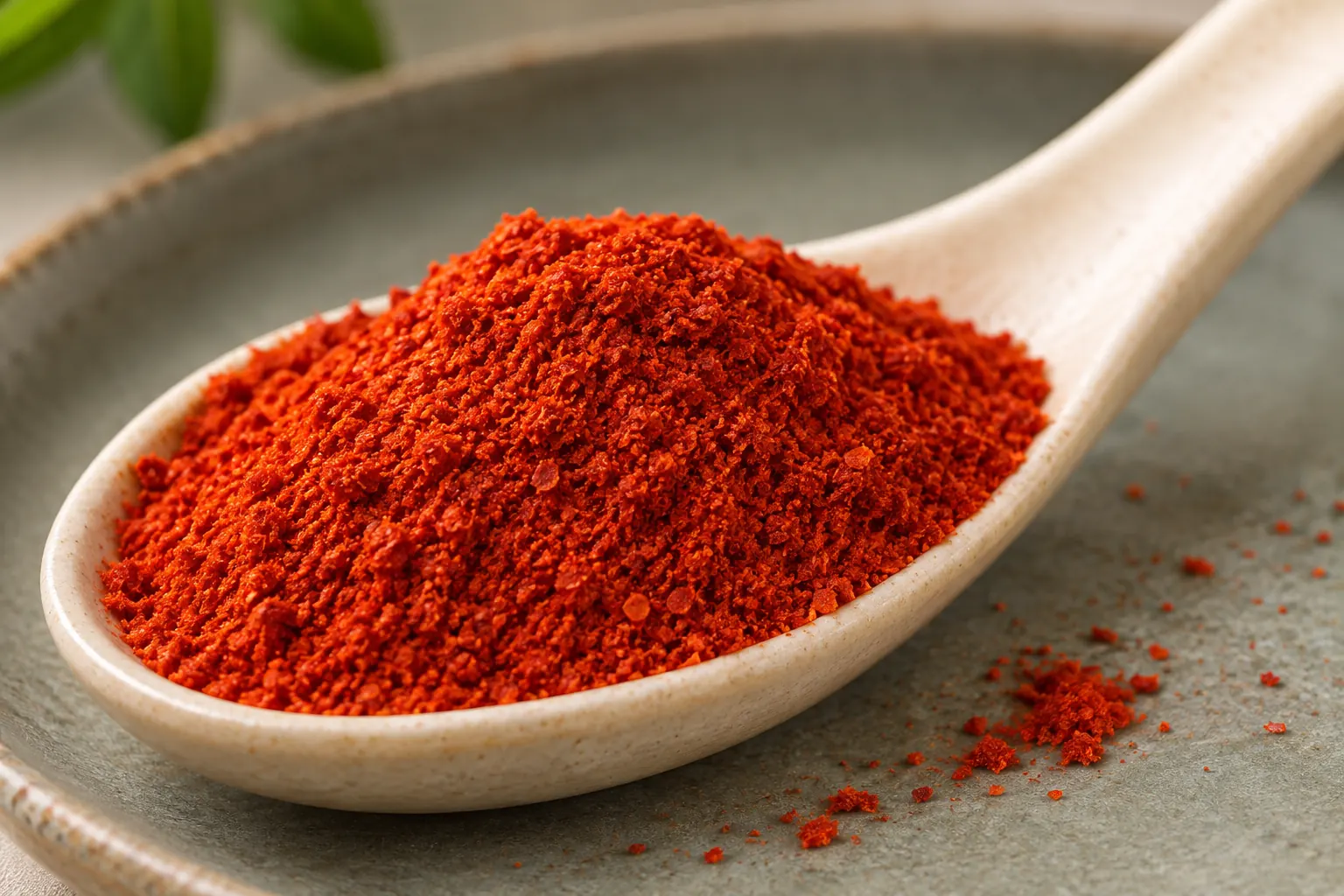
The 60–80 mesh entry is useful for finding a candidate, but it does not give your team a complete particle distribution. Specify the sieve standard and the passing or retained fractions that matter to your dosing and finished texture.
For a smooth sauce, compare visible particles after your actual mixing and cooking steps. For a dry seasoning, check how this powder distributes in the blend and how it behaves through your own filling equipment.
A Recipe Trial That Keeps the Comparison Useful
We can start with your current ingredient and a sample of the proposed powder. Use the same food base, addition point, inclusion rate and preparation conditions for the first comparison, then record heat, texture and colour together.
If the formula needs adjustment, change one factor at a time and retain the trial record. Passing a powder specification alone does not establish an equal-dose replacement for an existing ingredient.
Heat and Colour as Separate Purchase Decisions
This product is described as bright red, but the listing does not provide a numerical colour result for the selected lot. The stated SHU range describes pungency; it does not establish an ASTA colour value.
If colour is a release condition for your sauce or dry blend, add a separate requirement. Use consistent lighting for visual comparisons and agree the reporting method for any instrumental colour figure.
| Attribute | Available starting point | Add when required |
|---|---|---|
| Heat | 20,000–30,000 SHU | Sample or lot result with method |
| Texture | 60–80 mesh | Agreed sieve distribution |
| Colour | Bright-red description | Colour target and measurement basis |
Pure Chili as a Distinct Ingredient
The declared composition is 100% dried red chili. That is a different purchasing object from a seasoning containing salt, oil or several spices, even when both products appear as red powders.
When your recipe needs direct control over salt and other ingredients, keep the agreed composition attached to the sample and quotation. Share any additional exclusion or declaration requirements so they can be reviewed for the selected order.
Product Records That Follow the Sample
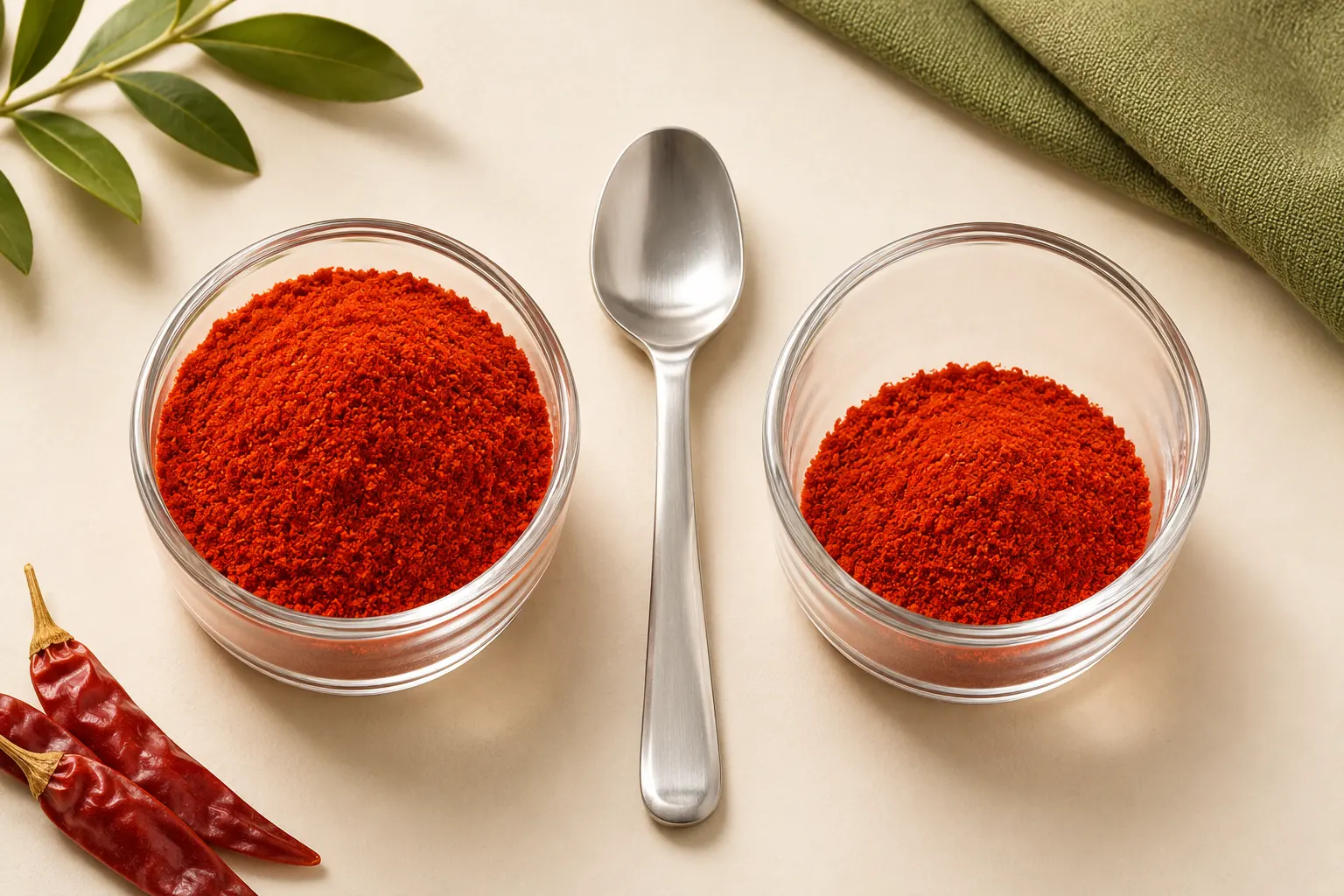
A useful approval file connects the product reference, ingredient declaration, sample identity and the results your quality team actually needs. If you require certificates or treatment records, request the relevant scope for the chosen material.
This product is listed with raw processing. Do not infer a pathogen-reduction treatment from its dried form, fine texture or food-grade description. Review the intended use and your process requirements before approving it for finishing applications.
Packing Confirmed for the Actual Order
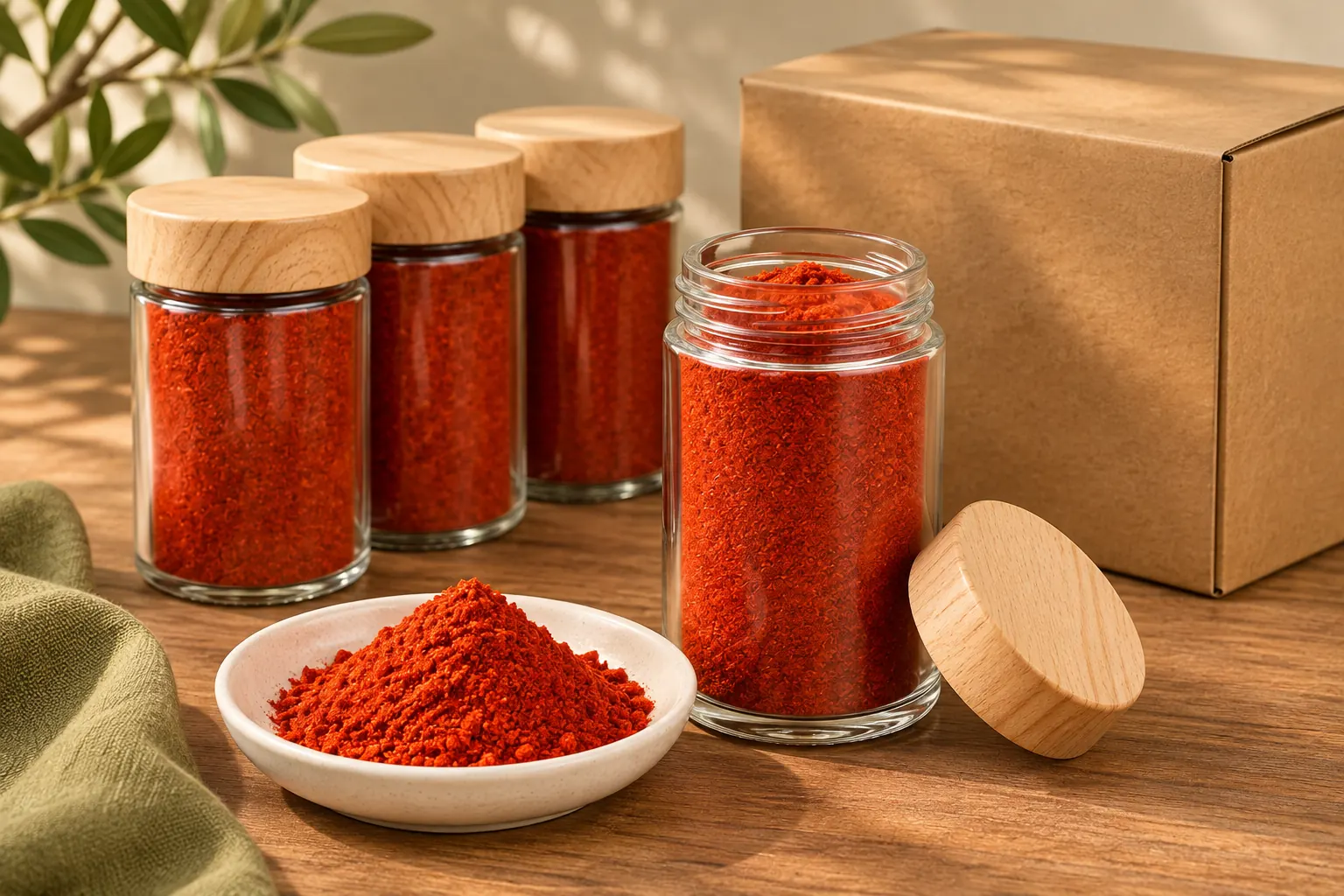
This listing includes sample and private-label service information. We can use your enquiry to discuss the ingredient alongside the packing format your production or distribution operation needs.
State the required net weight, inner pack, outer pack, destination and order quantity. Keep those details in the quotation rather than treating a retail pack shown in a catalogue as a confirmed bulk supply arrangement.
A Brief That Leads to a Comparable Quotation
Send us your 20,000–30,000 SHU and 60–80 mesh requirement with the food application, quantity, destination and packing preference. Include any narrower heat target, sieve conditions and documents needed for approval.
We can discuss the candidate powder against that brief and the sample you accept. Keep the final grade, sample reference and commercial details together so your first order and repeat purchases follow the same agreed requirement.
Discuss This Powder Specification