
Cryogenic Kashmiri Chili Powder for Bulk Ingredient Selection
We offer Kashmiri red chili powder described with cryogenic processing, 40–60 mesh and moisture below 10%. This gives a buyer a defined powder category to discuss when a formula calls for Kashmiri chili identity together with a particular processing requirement.
Select the actual heat and colour grade before treating the product name as an order specification. The catalogue presents variety-dependent pungency and requirement-dependent colour options. Those options are not one fixed powder with every listed characteristic, and the cryogenic term alone does not define the processing temperature your specification may require.
Discuss a Kashmiri Powder Grade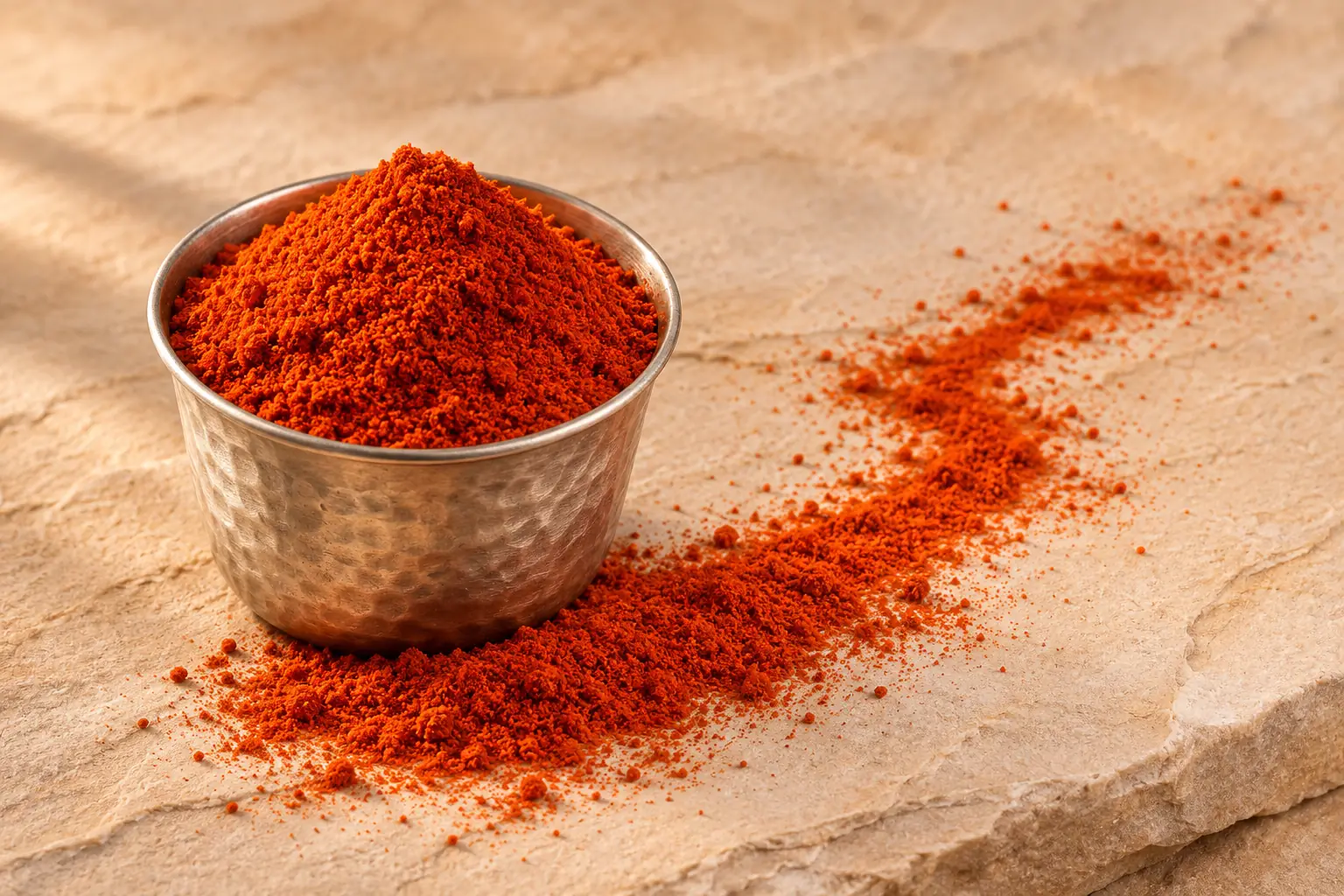
Define the Ingredient Identity Separately from the Grade
If Kashmiri identity is part of your customer specification, include the required ingredient declaration in the brief. Our Chinese manufacturing location and the ingredient’s Kashmiri name answer different questions. Where a particular raw-material origin is mandatory, request the corresponding information for the proposed supply.
Heat and colour remain separate selection fields. A familiar chili name should not replace a measured pungency target or a colour requirement. Tell us whether identity, sensory character or a customer’s existing specification controls the choice so the sample request addresses the real purchasing condition.
Read the Declared Powder Criteria Together
Both cryogenic Kashmiri powder references list fine-ground form, 40–60 mesh, moisture below 10% and nil additives. Use the chosen product reference when asking for the specification; do not combine different samples merely because their catalogue descriptions share these fields.
The supplied handling statement is below 20°C and away from direct sunlight, with an 18-month shelf-life declaration. Confirm the applicable packing and handling details for the actual supply. A storage temperature is separate from the temperature used during processing.
Additive-Free Cryogenic Kashmiri Powder · 40–60 Mesh Cryogenic Kashmiri Powder
| Field | Declared description | Order detail |
|---|---|---|
| Form | Fine-ground powder | Chosen sample and product reference |
| Particles | 40–60 mesh | Required sieve basis |
| Moisture | Below 10% | Agreed method and acceptance |
| Additives | Nil | Applicable ingredient declaration |
| Storage | Below 20°C; away from sunlight | Selected pack and handling conditions |
Give the Mesh Label a Practical Acceptance Role
The 40–60 mesh entry narrows the powder shortlist, but your application may require additional particle information. State the screen standard and passing or retained fractions your process uses if a nominal mesh description is insufficient for acceptance.
Compare visible particles and texture within the intended preparation. Keep that observation with the physical specification and sample identity. A close photograph can show the powder character, while the agreed sieve requirement remains the basis for a numerical particle decision.
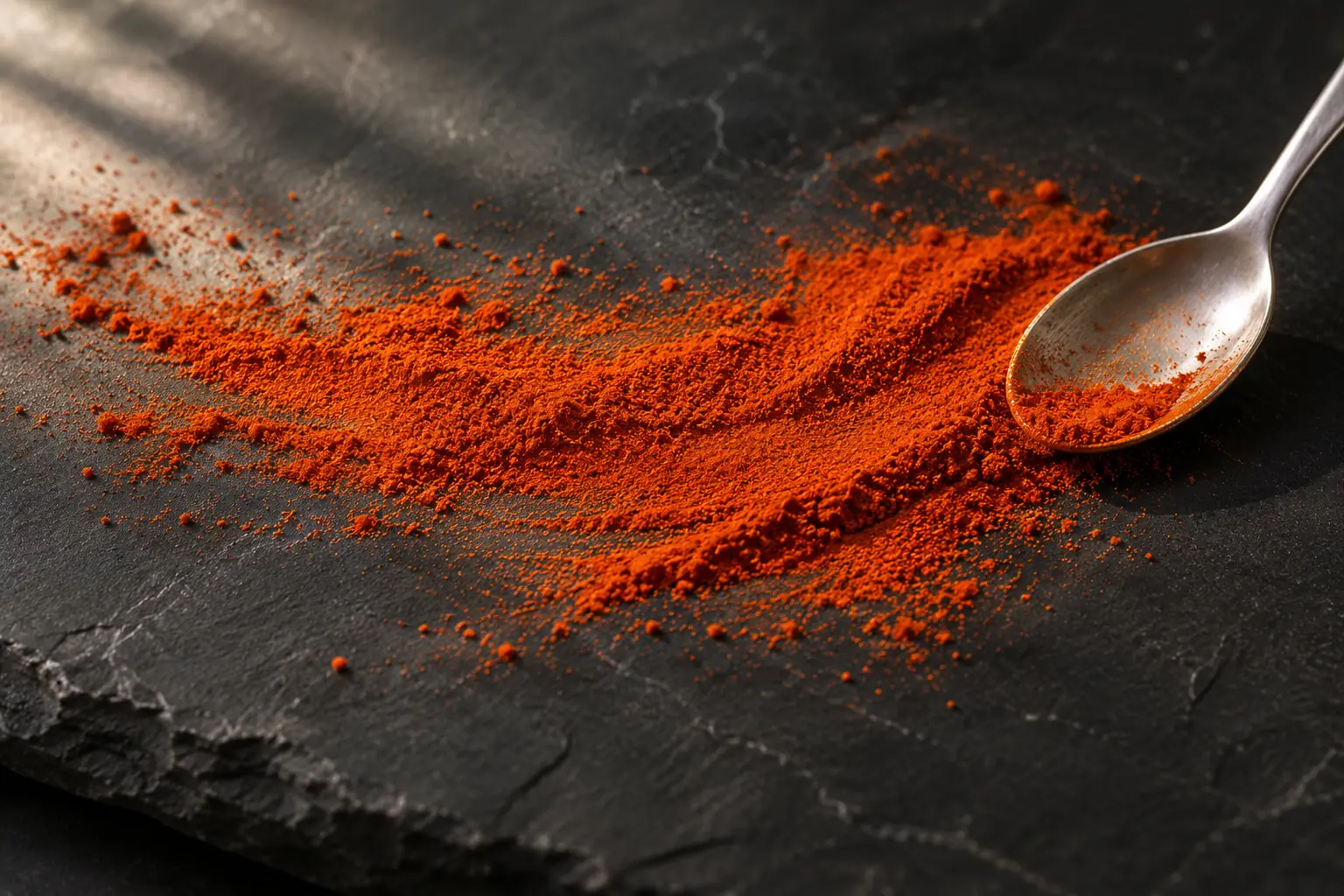
Select One Heat-and-Colour Combination
The catalogue gives a broad 1,000–350,000 SHU range according to variety and an ASTA range of 40–120+ according to requirement. These are selection-scope statements. Identify the values applicable to the material proposed rather than treating the widest ranges as a single accepted grade.
The capsaicin statement is also dependent on chili type. Use the measurement and reporting basis your quality team requires, and agree the actual selected limits. If your principal need is low heat with strong red colour, our separate low-heat powder guide provides a more focused starting point.
Clarify the Cryogenic Processing Requirement
If low-temperature processing is essential to your purchase, state the processing stage and records you need. Ask for the actual process description for the selected powder and any relevant temperature information. The term cryogenic is a starting point for that discussion, not a complete processing record.
A comparison of aroma or flavour should use identified samples under the same recipe conditions. We do not assign a flavour-retention percentage or nutritional improvement from the processing name. Approval should follow the attribute your food actually needs and the evidence relevant to the selected material.
Evaluate Kashmiri Character in the Complete Preparation
Use your intended food base, addition point and starting dose for the first comparison. Keep the preparation conditions constant and record colour, pungency, aroma and texture together. A powder that meets one numerical field may still need a recipe adjustment.
If you change the addition level, preserve the original trial and record the revised version. This helps your purchasing team distinguish an ingredient difference from a formula change and gives repeat orders a useful reference beyond the Kashmiri name.
Keep Sample Identity Through the Bulk Enquiry
The additive-free cryogenic reference lists sample availability with sample shipping borne by the buyer. Confirm the actual sample arrangement and the selected grade when contacting us. Connect that sample to the specification and trial record used for approval.
For bulk supply, carry forward the same ingredient identity, processing scope, particle requirement and accepted heat-and-colour combination. Record any requested change explicitly so a different grade is not substituted merely because its product name sounds similar.
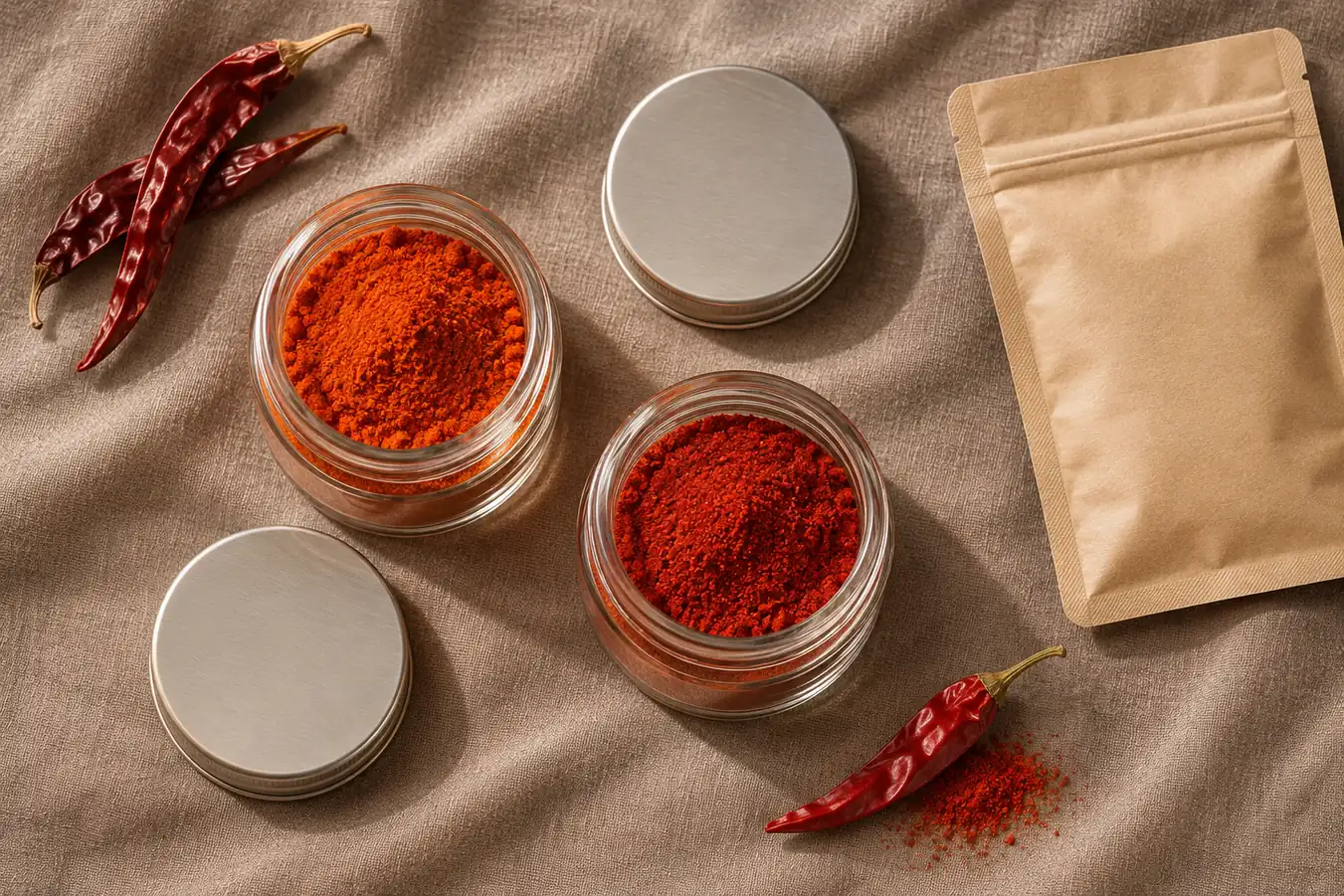
Send a Grade-Specific Kashmiri Powder Brief
Send the Kashmiri ingredient requirement, desired heat and colour, particle criteria and cryogenic-processing needs. Add the food application, sample evaluation conditions and any required raw-material origin information. Include quantity, packing, destination and the documents needed for approval.
We can discuss the two powder references against that brief and identify the details to confirm for the proposed supply. For recurring purchases, retain the accepted grade and sample criteria so lot comparisons remain tied to the ingredient your formula uses.
Send a Kashmiri Powder Specification