
Chili-and-Salt Powder as a Base for Further Blending
A chili-and-salt base is worth discussing when your seasoning recipe needs both components and you want to add the remaining spices yourself. We offer a dried chili-and-salt blend reference for a focused ingredient enquiry. Decide on it after confirming composition, salt contribution and performance in your complete formula.
If your recipe needs independent control of every gram of salt, a pure chili ingredient is a different starting point. Choose that route deliberately rather than assuming a red powder contains no salt.
Discuss a Chili-and-Salt Base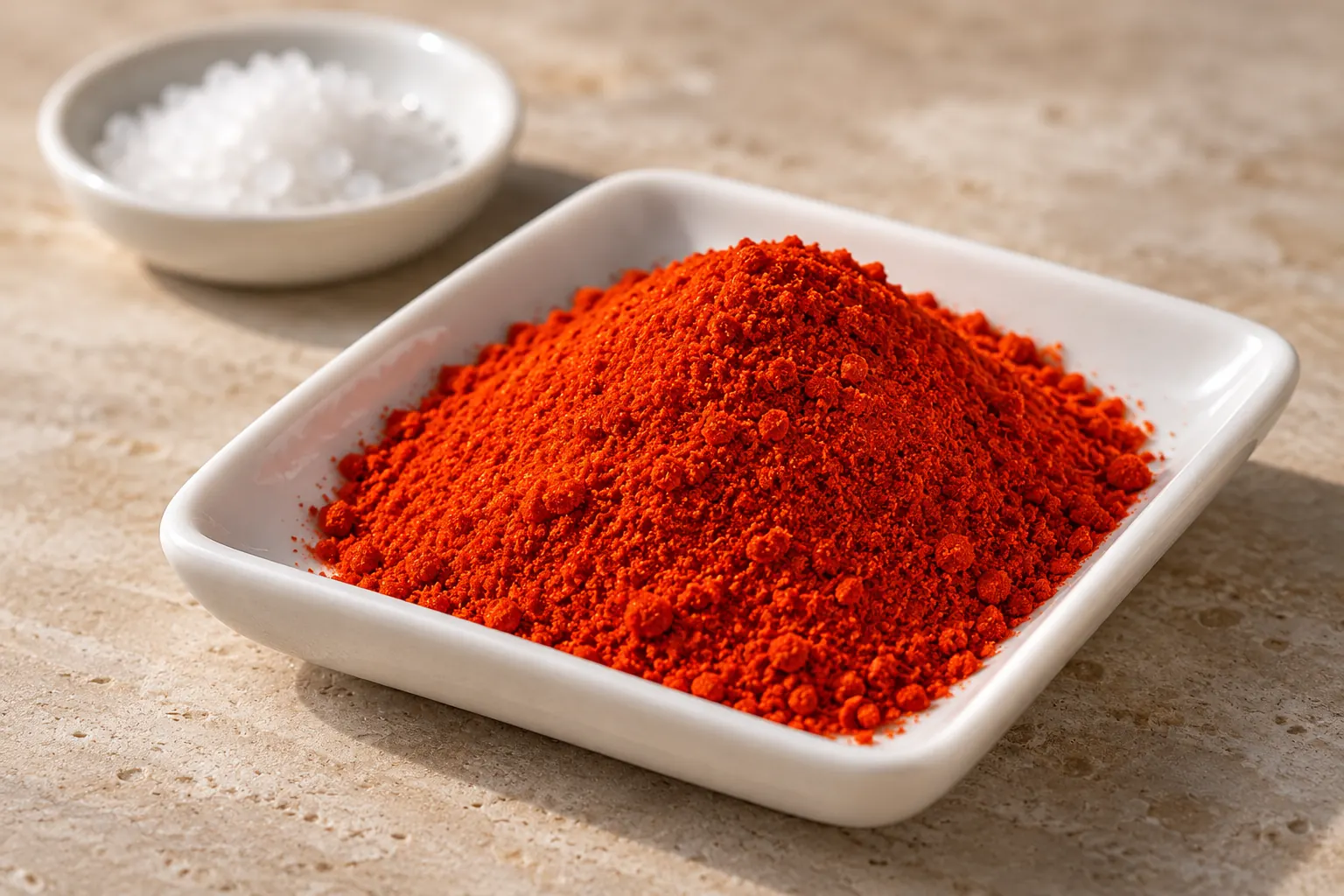
Define What the Base Is Allowed to Contribute
Our chili-and-salt rub reference names chilli and salt, but does not give their proportions. Request the complete selected declaration and the compositional information needed by your formulation team. Do not derive the ratio from ingredient order or powder appearance.
A second dried blended seasoning reference names salt and describes chili-powder content. It can support a discussion, while its full declaration still needs agreement. Treat either as a selected compound ingredient with its own identity before adding it to another formula.
Chili-and-salt seasoning base · Salt-and-chili cooking blend
| Candidate | Starting information | Needed for your recipe |
|---|---|---|
| Chili-and-salt rub | Chilli and salt named; 454 g presentation | Complete composition and relevant proportions |
| Salt-and-chili cooking blend | Salt named; chili-powder content; bag format | Complete selected declaration and base criteria |
Calculate the Salt Contribution from Confirmed Data
Keep salt supplied by the base separate from salt added later. The calculation is straightforward once the selected base's salt fraction is agreed: base mass multiplied by that fraction gives the salt mass contributed. Add contributions from other ingredients to understand the complete formulation.
No salt percentage is supplied for these candidates, so this is a planning calculation rather than a result for either product. Ask for the relevant specification and reporting basis before using a number in your production recipe.
Compare Identified Base Samples
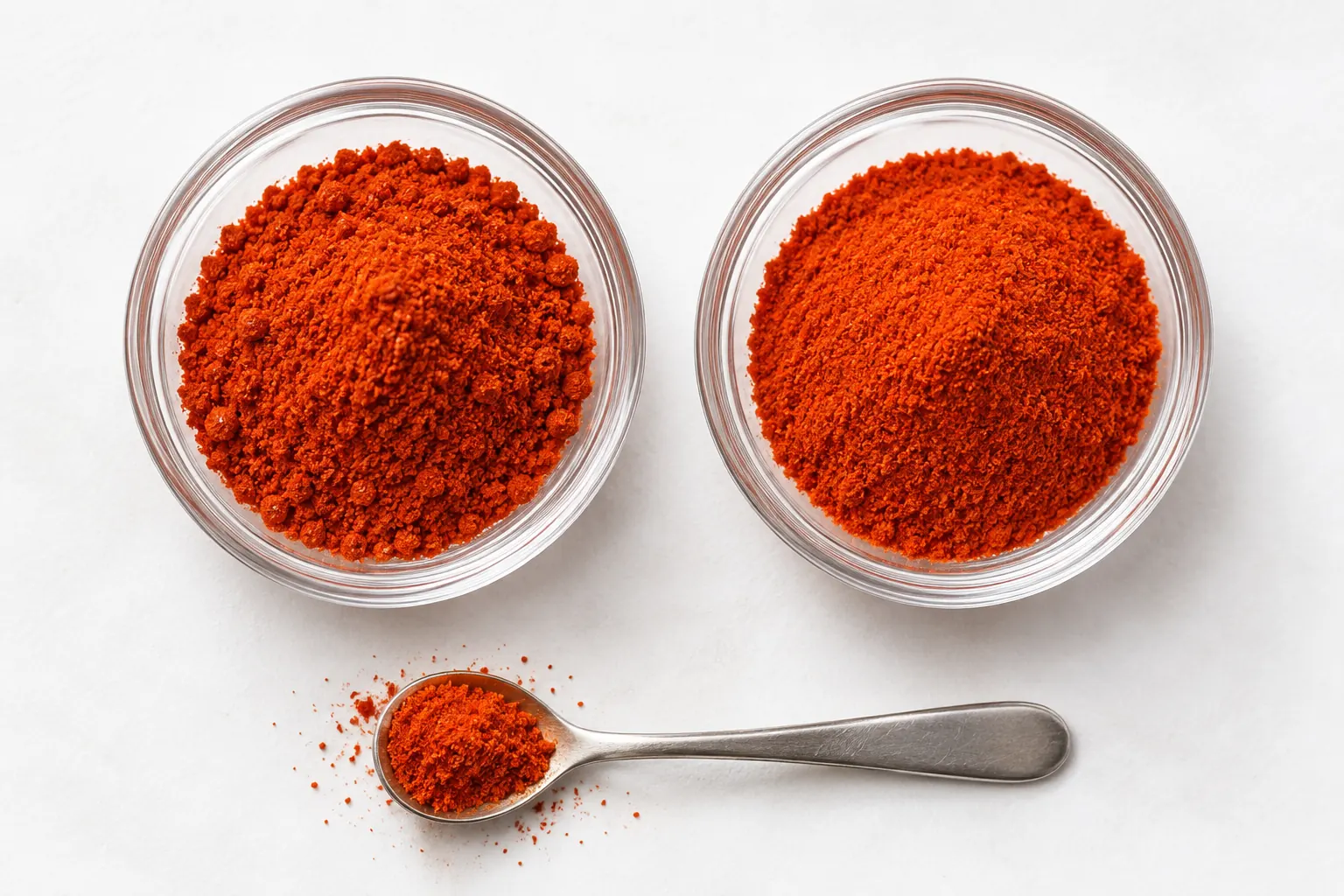
Give each sample a reference and keep its selected formula information with it. Record the chili heat, red appearance and particle texture your recipe needs. A base that is acceptable as a meat rub does not automatically have the same role within your further-blended seasoning.
Compare candidate material against your current base using the same initial formula. Keep other ingredients and the mixing route consistent so that any observed difference has a useful context for the next discussion.
Keep Added Spices Distinct from the Purchased Base
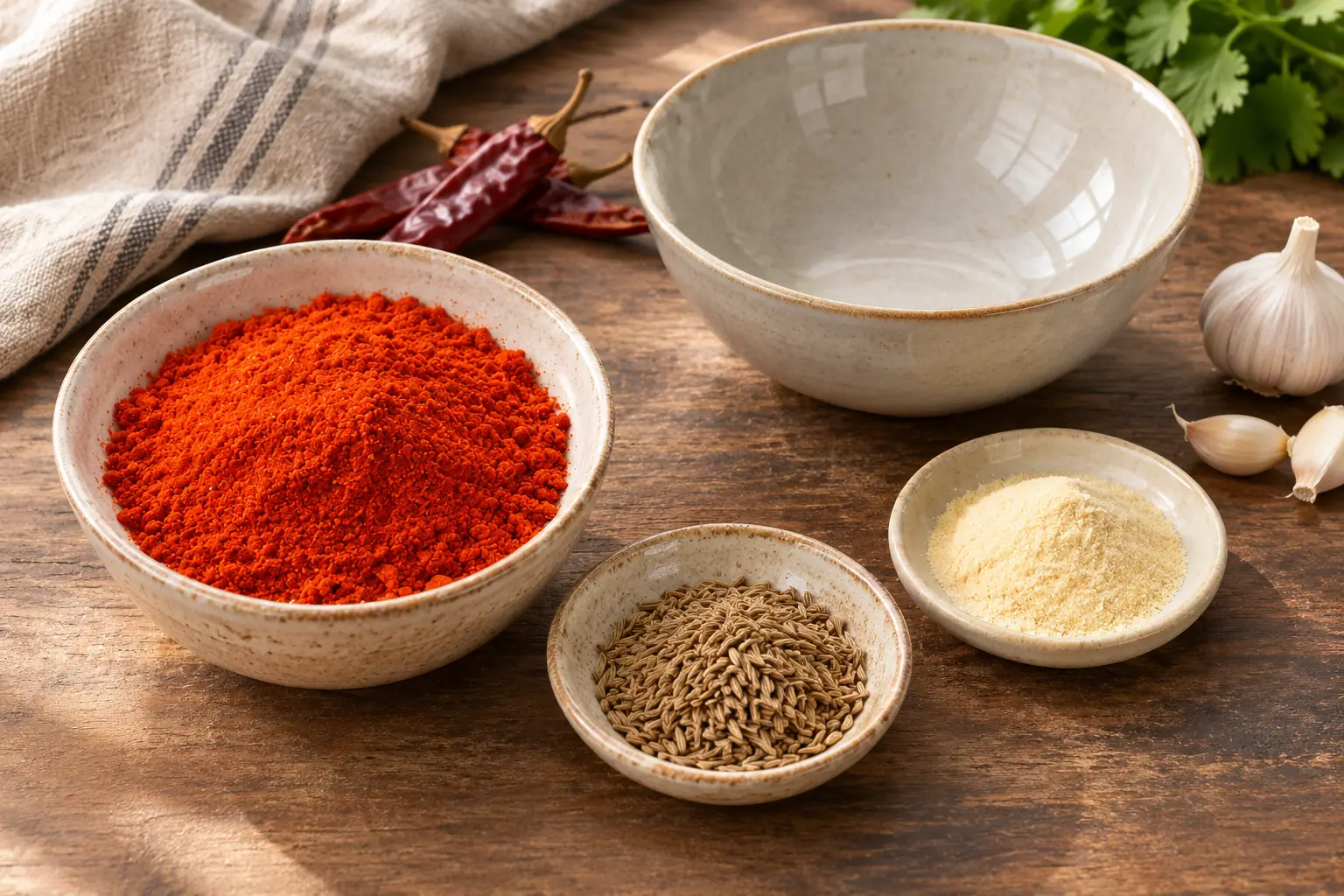
Write down which flavour work belongs to the base and which belongs to your other ingredients. Cumin, garlic or another added spice should appear in your own recipe record rather than being presumed present in a product described broadly as a barbecue rub.
This separation helps when adjusting flavour. If the trial needs a different cumin note, your team can review that addition without changing the base specification unnecessarily. If it needs different heat, revisit the chili requirement with the base's salt contribution still in view.
Assess Physical Compatibility in the Complete Blend
Agree a useful particle specification for the base and compare it with the physical requirements of the other powders. The shared powder form is only a starting description. Use your actual mixing, discharge and packing route to assess the selected material.
Record relevant observations from defined sample locations and packed units. A visually fine base does not establish a uniform finished seasoning by itself. Retain the accepted material specification together with the blend-trial version that your team approved.
| Stage | Buyer control | Acceptance observation |
|---|---|---|
| Ingredient | Base composition and agreed particle criteria | Identity and relevant material specification |
| Mixing | Same recipe and addition route | Distribution in chosen sample positions |
| Packing | Actual handling and presentation | Selected packed-unit comparison |
| Food use | Same preparation and initial amount | Salt, heat and added-spice balance |
Adjust the Formula with the Trade-Off Recorded
Changing the amount of a chili-and-salt base changes more than chili intensity. Review the confirmed salt contribution whenever your team changes the base dose. If the desired heat and salt targets cannot be reached together, discuss a different base specification or a pure-chili route.
Record the final recipe revision and the reason for the selection. We can discuss the candidate against that evidence, while the accepted complete seasoning remains the practical basis for choosing the purchased ingredient.
Confirm Pack and Storage around Your Usage
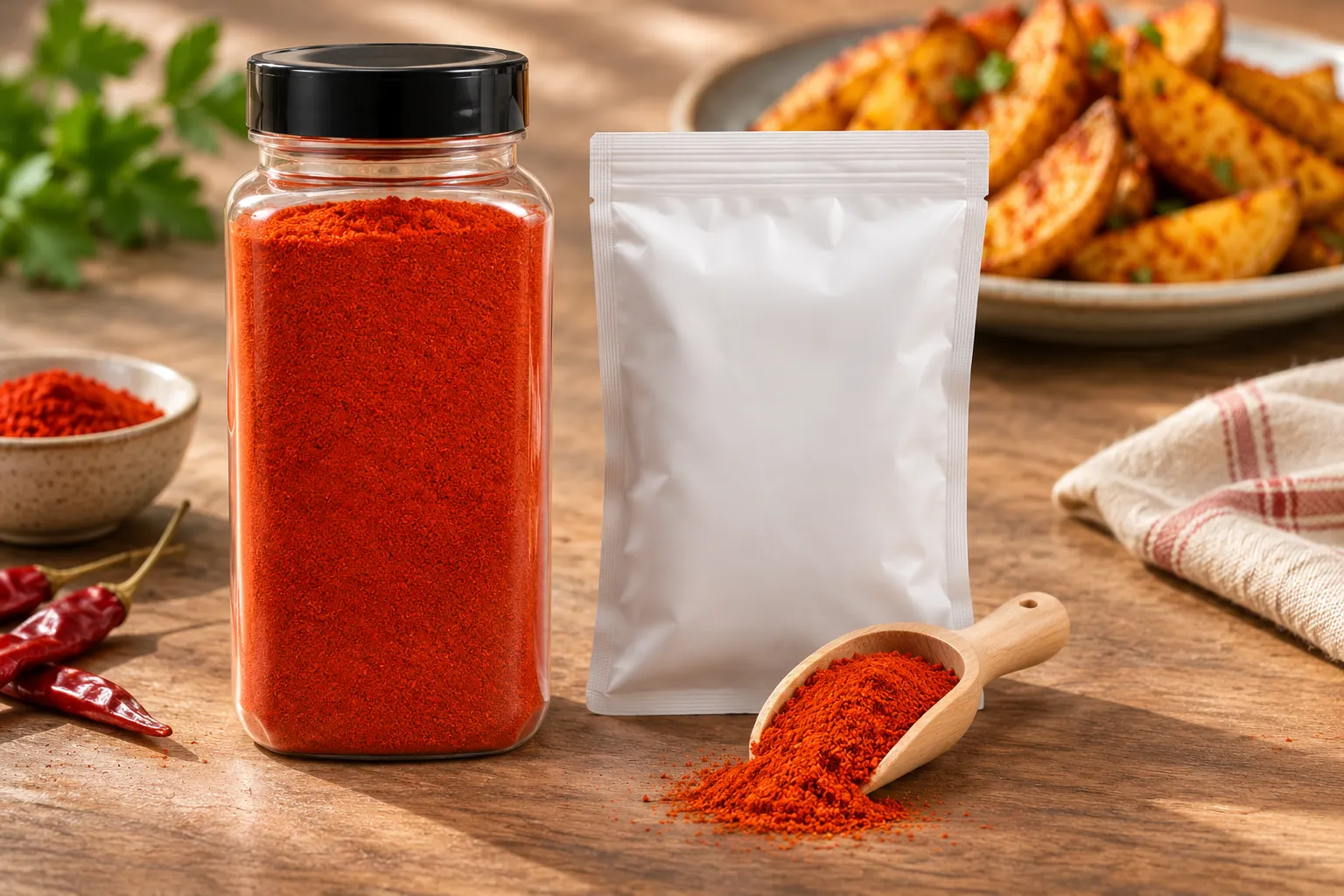
The chili-and-salt reference shows a 454 g presentation and describes custom-bottle and bulk enquiries. The alternate cooking blend lists 20 g × 200 bags. Confirm the actual pack for your production requirement rather than choosing by a package photograph.
Ask for the temperature, moisture and closure guidance applicable to the selected material and pack. Both references state two-year shelf life, but the agreed conditions and dates still belong in the offer and the receiving record.
Send a Brief with Salt and Chili Requirements Together
Send us your intended further-blended seasoning, the role of the chili-and-salt base and the ingredient boundaries your formula needs. Include the desired heat, texture, compositional data, trial quantity, packing format and destination.
We can discuss the selected base and the information required for the comparison. Keep the accepted complete declaration, salt basis and blend-trial revision together so that the purchase identifies the ingredient your team actually approved.
Request a Base-Ingredient Discussion