
Chili Powder, Flakes and Whole Dried Chilies in One Sourcing Brief
We manufacture chili ingredients in China and offer powder, crushed flakes and whole dried pods through this catalogue. For a combined purchase, begin with our red chili powder, no-additives crushed red chili and a selected whole-pod option from the multi-format dried chili range.
One conversation can cover the three forms while each keeps its own specification. Your production needs may call for different heat levels, seed states, treatments and packs. Put those differences into separate line items so we can discuss a clear bill of materials rather than a single general request for chili.
Discuss a Combined Chili Enquiry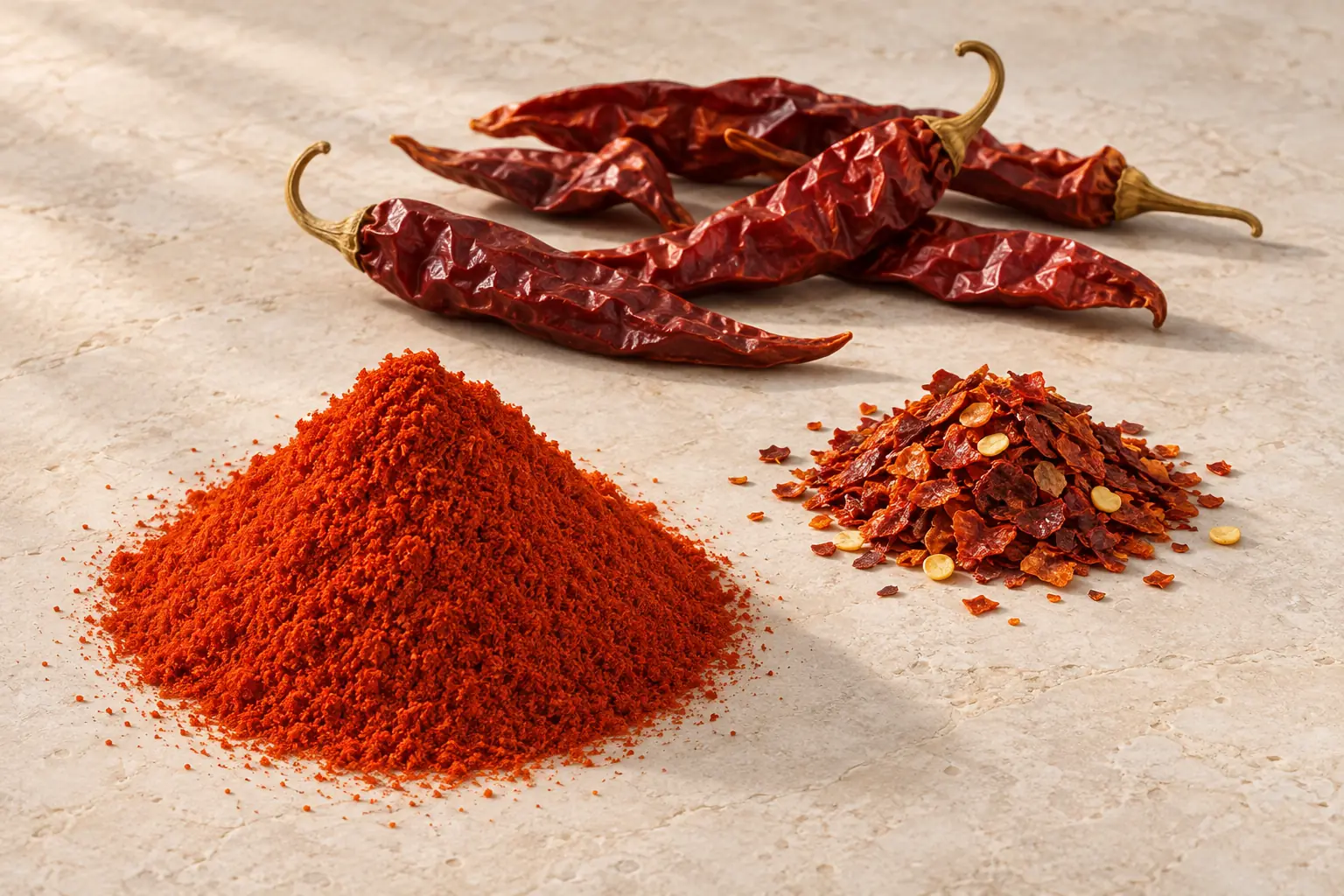
Match Each Form to Its Production Job
Powder is a starting point when your formula needs a ground chili ingredient throughout a sauce, marinade or dry mixture. Flakes bring visible pieces into the food. Whole pods suit preparations that keep the pod appearance or operations that carry out their own cleaning and milling.
The same red colour across the samples does not make the forms interchangeable. Describe the role of each ingredient and the preparation that follows delivery. A requirement for an intact pod needs different receiving checks from a requirement for fine powder.
Build a Shortlist with Real Product References
Our red chili powder names Red Chilli as its ingredient. The crushed red chili lists flakes/crushed form, raw AD processing, a 5–25 mesh specification and a separate 3–5 mm/customized size entry. Keep both descriptions visible until the actual cut is agreed.
The multi-format dried chili listing includes whole pods at 3–5 cm and 5–7 cm. Select one whole-pod option explicitly; its powder and flake entries are different choices. Do not transfer a powder mesh label to the whole chilies on the same product page.
Red Chili Powder · Raw AD Crushed Red Chili · Whole-Pod and Other Dried Chili Options
| Line | Reference | Selection still needed |
|---|---|---|
| Powder | Red chili powder | Heat, particle size and colour requirement |
| Flakes | Crushed red chili | Actual cut and mesh basis; selected heat |
| Whole | Whole-pod option | 3–5 cm or 5–7 cm; seeds and stems |
Resolve Flake Size Before Comparing Offers
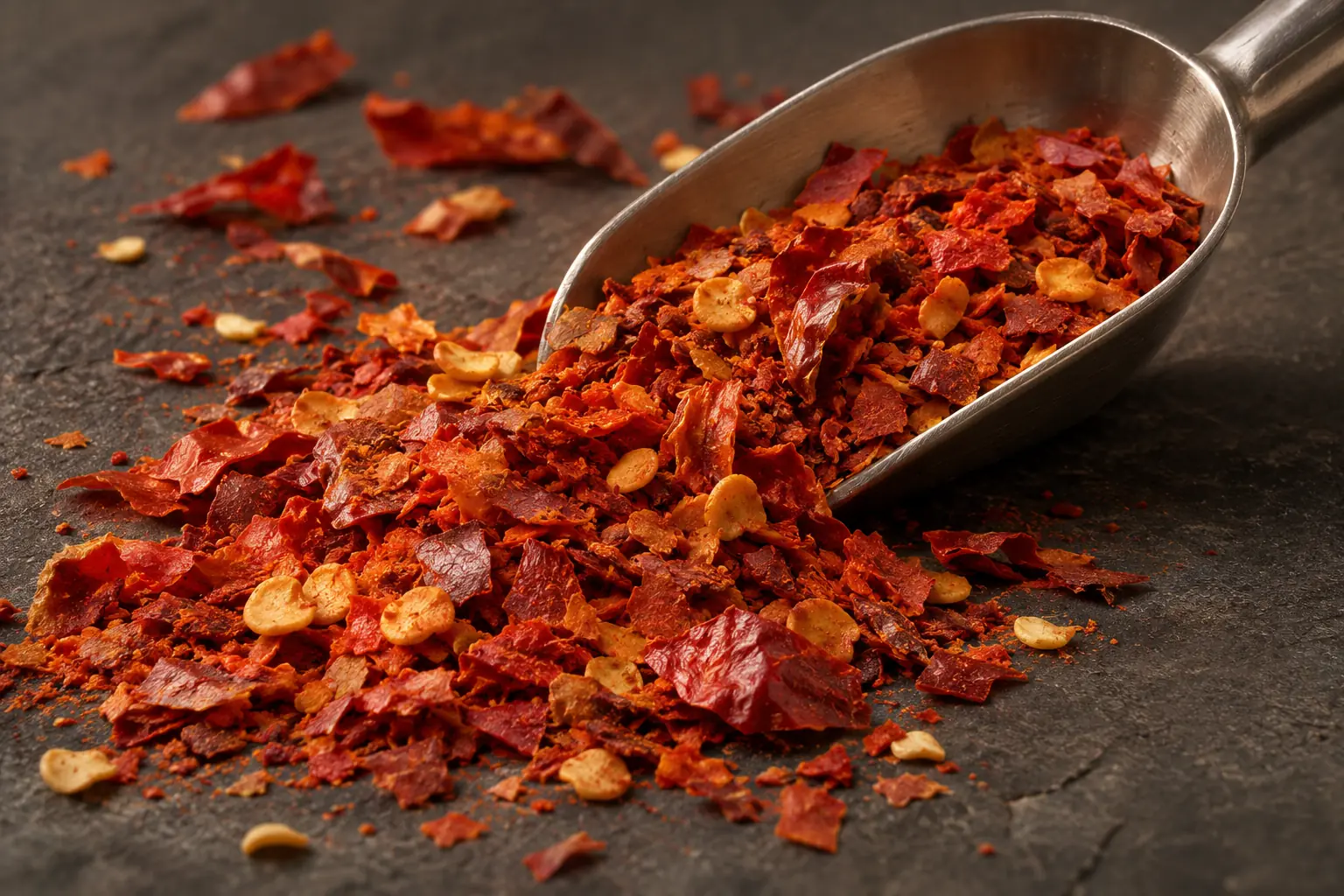
The crushed chili catalogue gives 5–25 mesh and 3–5 mm/customized as separate descriptions. These entries are useful enquiry starting points, but they are not a conversion table or a complete particle distribution. State which physical appearance and screen requirement your food needs.
Its heat entry is 30,000–50,000 SHU with customization wording, and moisture is listed at no more than 12%. Ask for the selected flake grade in the quotation. Those declarations belong to this crushed product and should not be copied onto the powder or pods.
Keep Heat, Composition and Treatment Independent
Your sauce powder and table flakes may serve different heat targets even when ordered together. Specify heat independently for every item that needs a numerical limit. For whole pods, confirm the actual chili selection rather than choosing a value from a list of unrelated options.
Composition and treatment also stay with the chosen material. The crushed product carries a no-additives declaration and raw processing description. That does not establish the composition or treatment of another line. State any required treatment and relevant ingredient declarations separately.
Define the Whole-Pod Receiving Condition
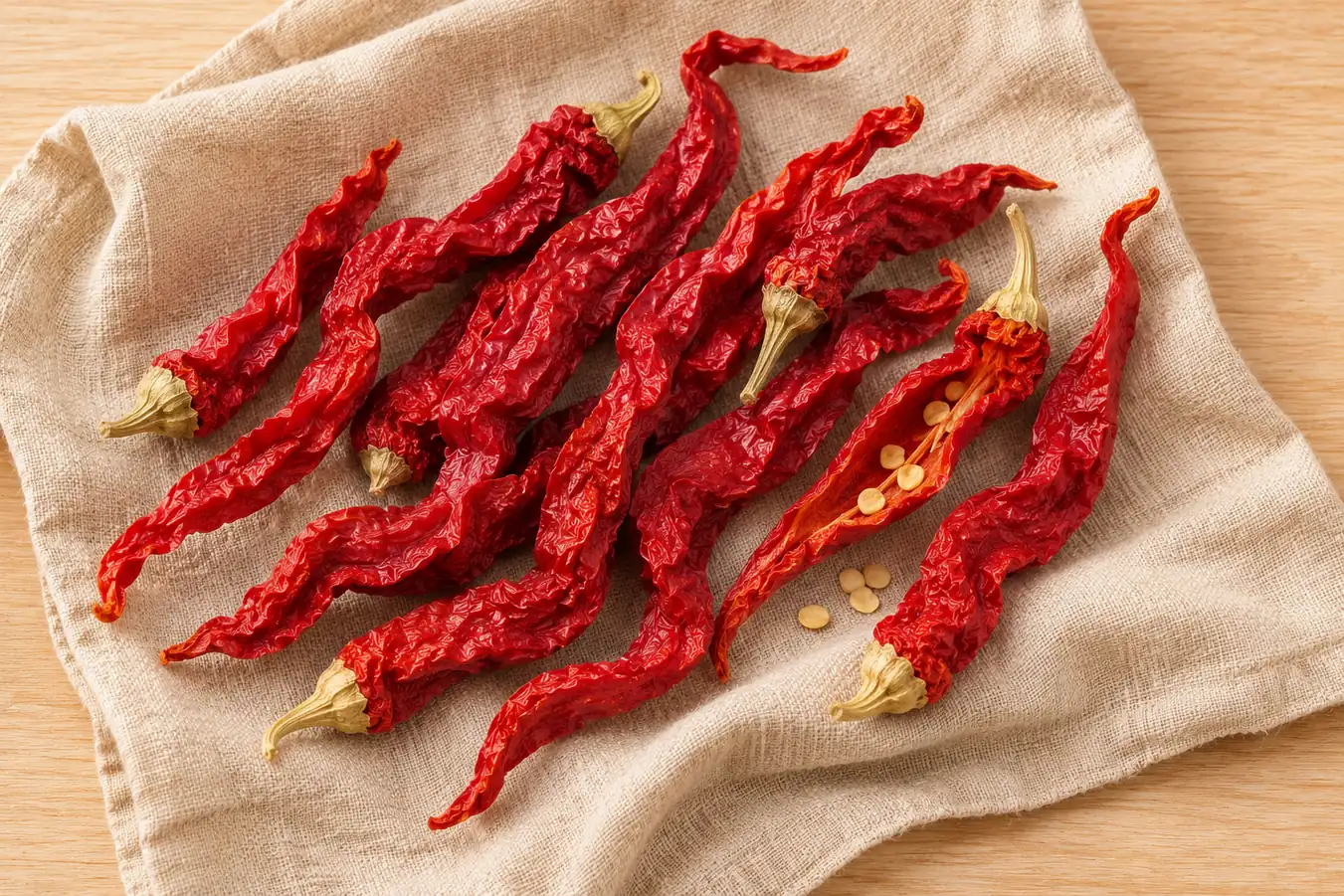
With the whole-pod choice, decide whether seeds and stems remain and whether pod length affects your handling. The multi-format entry lists seed/seedless and stem/stemless options; the order needs one agreed state, not the entire options list.
If you will mill the pods yourself, add your receiving and preprocessing requirements. Compare the proposed sample with what your own preparation can accept.
Maintain a Separate Approval Record for Every Material
Keep a sample code and specification for each powder, flake and whole-pod line. Your quality team can then connect the required results to the material actually evaluated. A document for one chili form should not be used to approve every item in the combined request.
Where treatment, certification or analytical records are required, identify the scope needed for each selected product. Our documentation guide helps organize those requests without turning the combined purchase into three unrelated email chains.
Coordinate Packs Without Merging Material Identity
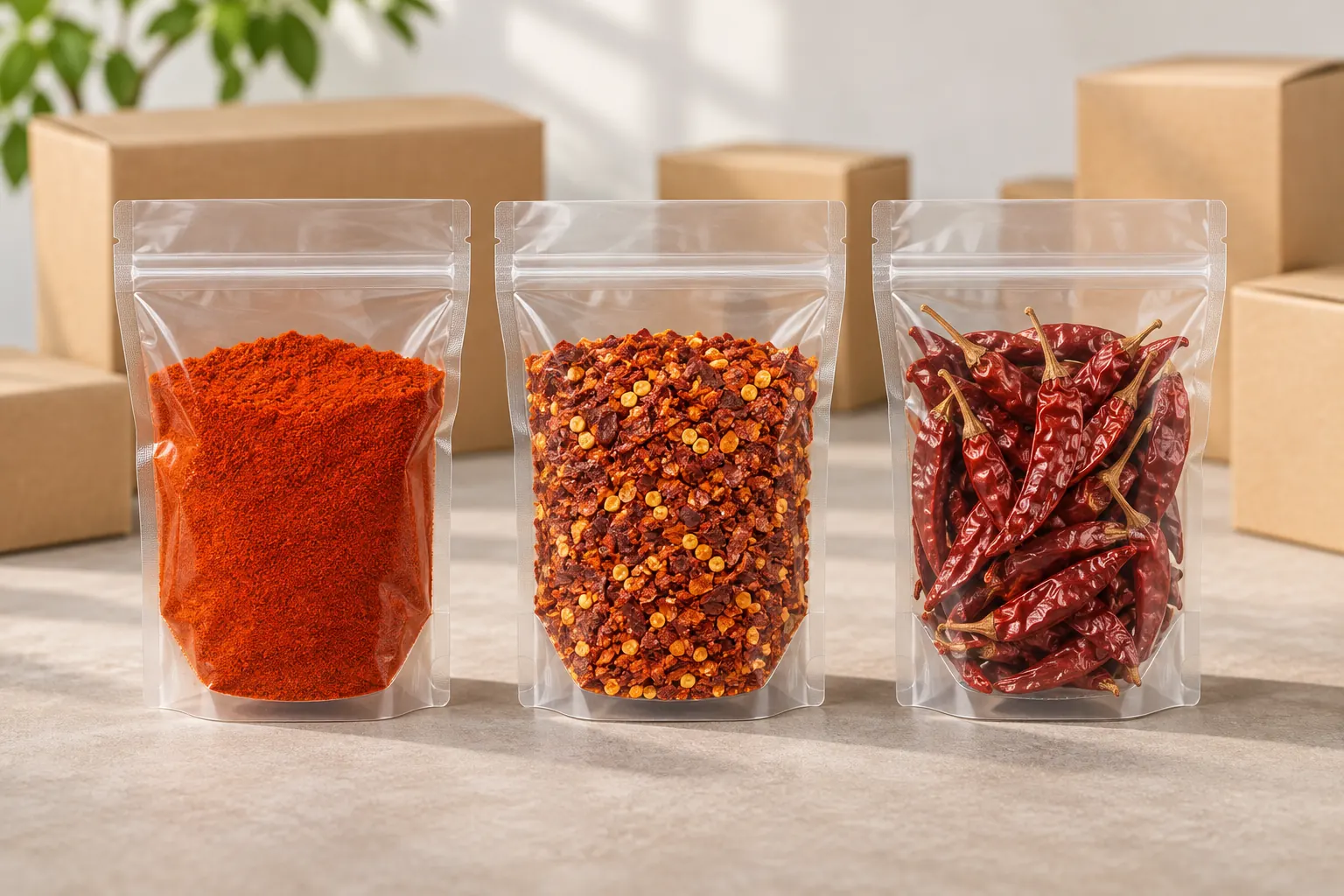
Powder, flakes and pods can require different inner packs, closure details and handling space. Provide your preferred net weight and outer packing for each line, together with destination and receiving constraints.
Ask us to confirm the possible combination, minimum quantities, supply timing and shipping arrangement for the actual request. A shared manufacturer does not automatically mean one minimum order quantity, one storage instruction or an agreed mixed shipment.
Use a Purchasing Schedule That Makes Gaps Visible
A compact schedule lets your team prioritize the materials that matter most. Enter a quantity for each form and distinguish an urgent requirement from a later replenishment. Leave supply commitments open for a specific response rather than assuming every item will be ready together.
For repeated purchases, retain the selected specifications and revise only the fields that change. This makes a new request comparable with the last accepted material and keeps a change in pod state or flake cut from passing unnoticed.
| Material | Buyer provides | Supplier confirms |
|---|---|---|
| Powder | Application, quantity, particle and heat target | Selected grade, sample, pack and supply terms |
| Flakes | Visible cut, seeds, quantity and use | Actual cut/mesh, heat option and packing |
| Whole pods | Length option, seeds/stems and preparation | Selected whole-pod condition and delivery terms |
Send One Enquiry with Three Defined Lines
Send your powder, flake and whole-chili requirements together, with the intended use, quantity and pack for each. Include the sample acceptance points and any delivery priority. We can use that brief to discuss suitable catalogue options and the commercial arrangements that need confirmation.
For a more focused selection, continue with whole dried chilies for your own milling or seedless crushed chili specifications. Keep those detailed choices linked to the combined request so the final quotation names every selected material.
Send Your Three-Line Requirement