
Shichimi Togarashi Chili Powder with a Defined Ingredient List
We can discuss shichimi togarashi-style chili seasoning references for your foodservice or branded seasoning project. Begin with the full ingredients of the selected blend, then compare its flavour and particle texture in the food you intend to serve. The style name is a useful direction for the enquiry.
It is not a substitute for the actual recipe. We recommend approving one identified formula rather than assuming every product carrying shichimi or togarashi wording has the same seven components, ratios or heat.
Discuss a Shichimi-Style Blend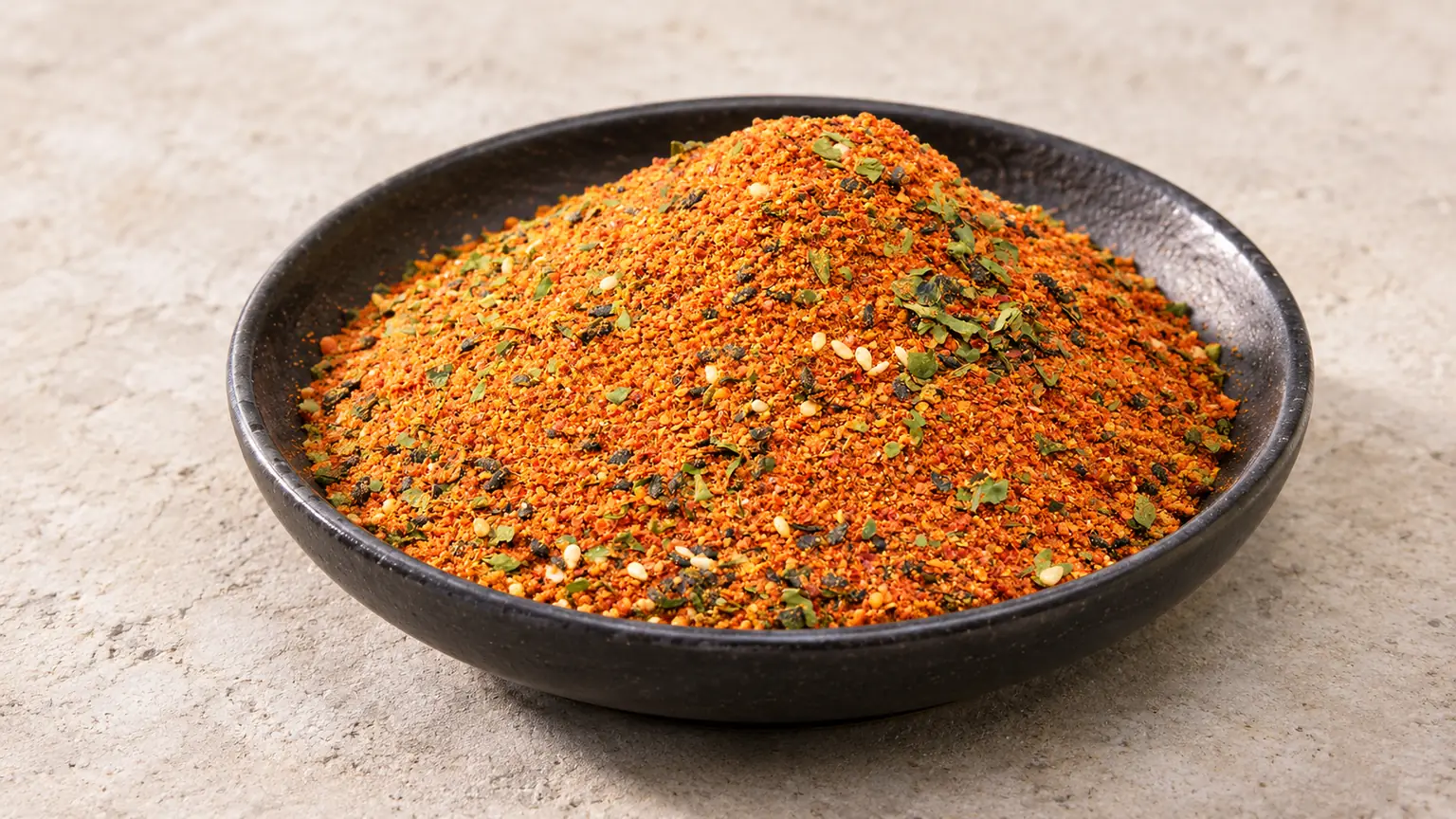
Make the Full Ingredient Declaration the First Decision
Ask for all ingredients in the selected material, including relevant compound components and the allergen information your team needs. Check your required inclusions and exclusions against that declaration before using the seasoning in a menu or brand project.
A photograph of visible seeds or flecks can help describe appearance but cannot identify the complete recipe. Likewise, a familiar Japanese-style name should not lead your team to add ingredients to an approval record that the selected supplier declaration has not established.
Compare the Available References by Their Specific Data
Our red shichimi-style seasoning reference describes blended powder, hot-spicy taste and a 300 g pack entry. A separate togarashi powder reference supplies a 0.5 mm particle entry and customer packing requirements. Confirm how that physical specification applies to the chosen blend.
Another hot-spicy shichimi reference describes blended AD-dried powder and maximum moisture of 10%. Keep that value attached to that reference rather than assigning it to the entire range. All three still need a complete selected ingredient declaration.
Red shichimi-style seasoning blend · Togarashi powder with particle specification · Hot-spicy shichimi powder
| Reference direction | Specific listed detail | Next confirmation |
|---|---|---|
| Red hot-spicy seasoning | Blended red powder; 300 g presentation | Selected formula, heat and actual pack |
| Togarashi powder with particle entry | 0.5 mm; customer packing discussion | Particle basis, selected colour and formula |
| AD-dried hot-spicy blend | Moisture 10% maximum | Selected formula and applicable material record |
Specify the Visible Finish and Eating Texture
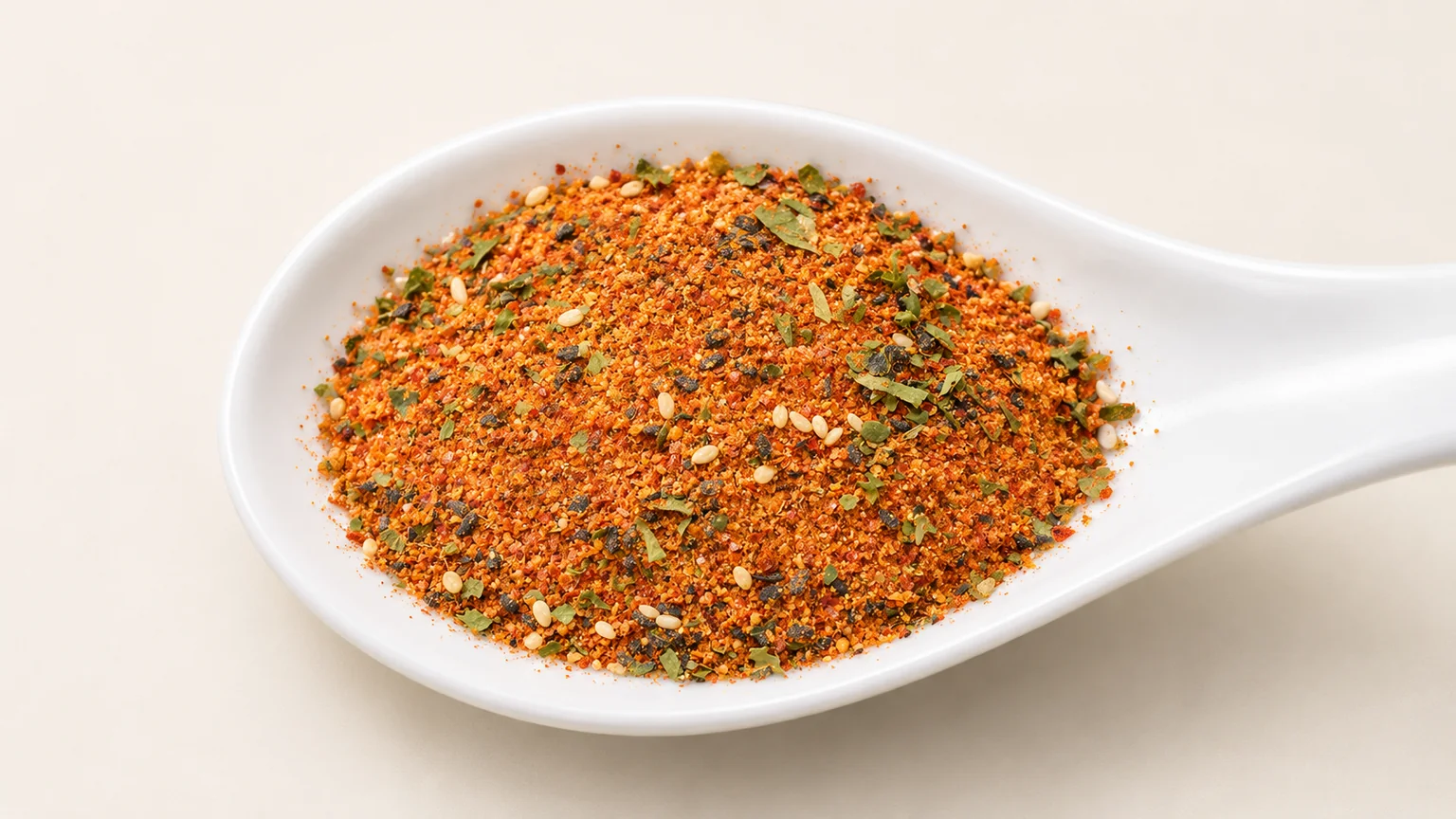
Describe the visual finish your food or retail seasoning needs. Tell us whether fine powder should dominate or whether visible contrasting particles are important. Use an accepted seasoning sample or food image to explain the target without treating appearance as proof of ingredient identity.
If a particle measurement is important, agree its standard and acceptance basis. A single dimension such as 0.5 mm does not by itself disclose the distribution of every component in a mixed seasoning.
Use the Intended Dish for the Flavour Decision
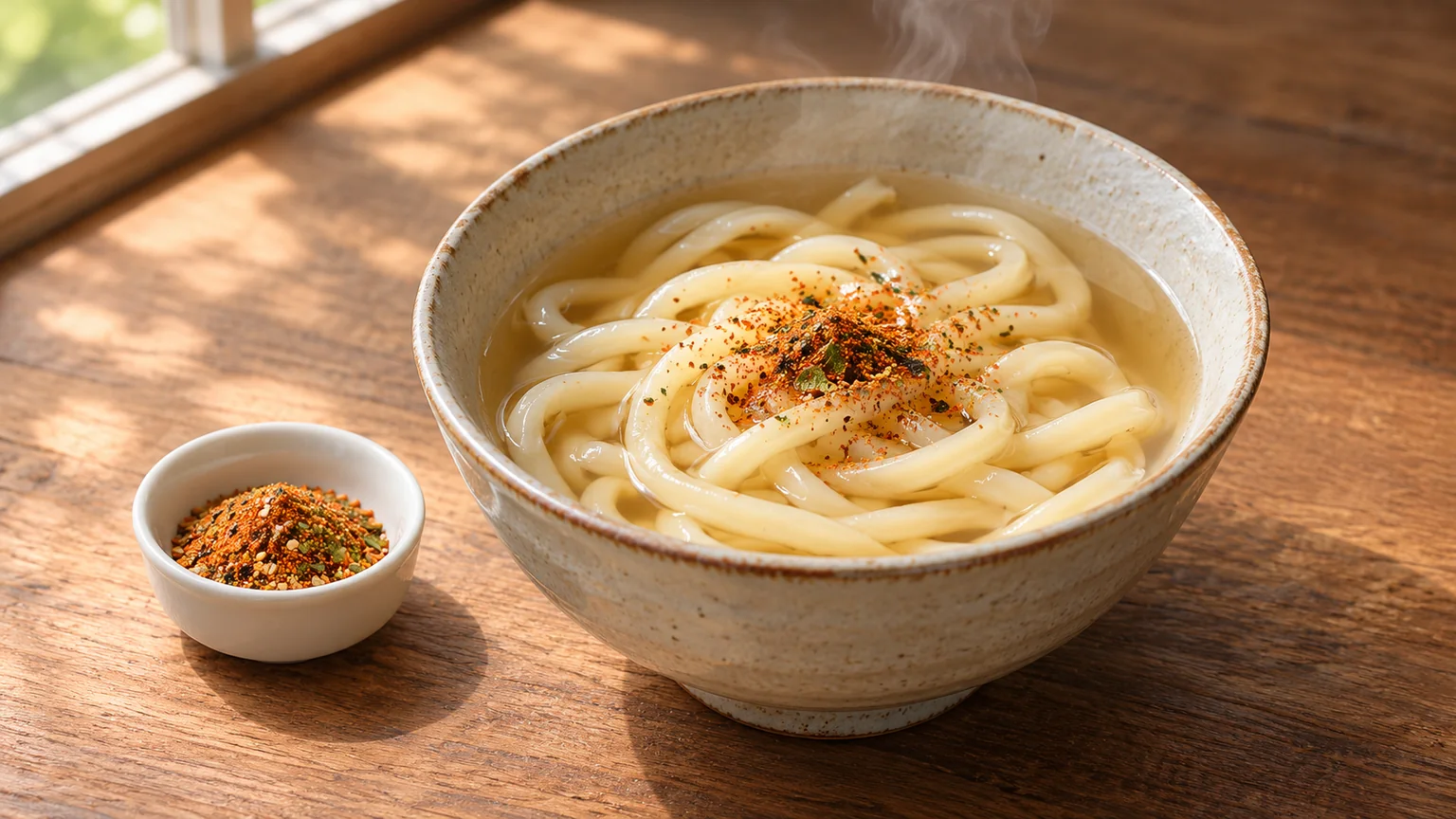
Choose a representative noodle, soup or other dish from your actual project. Record its recipe, seasoning amount and point of addition for the initial comparison. Evaluate chili impact, the overall aromatic balance, particles and appearance in that complete preparation.
The hot-spicy description does not supply an exact numerical pungency target. State a measured heat requirement separately if your project needs one, while retaining the food-based comparison that determines whether the selected blend suits your service.
Separate Recipe Changes from Serving Changes
If the first sample needs adjustment, describe whether the issue is flavour, physical texture or the amount used in the dish. Keep the starting recipe and serving condition consistent while exploring the relevant change. Each new formula should have a separate sample reference.
Do not use a changed serving amount to imply that two different formulas are identical. Your team can accept a practical difference, but the approved record should say which blend and amount produced the desired food result.
| Observation | Clarify before revising | Retain |
|---|---|---|
| Heat differs | Ingredient target or serving amount | Sample and accepted dose |
| Aroma differs | Desired profile against the reference | Formula revision |
| Texture differs | Physical target and component appearance | Agreed specification |
| Appearance differs | Food context and viewing conditions | Accepted finished-food reference |
Keep Documents Specific to the Blend
Request the quality and composition documents needed for your selected seasoning. If your project requires certification coverage, review the applicable scope for the material and supply arrangement rather than extending a general catalogue description to every version.
The references describe dried or AD-dried material. Those descriptions do not themselves establish a pathogen-reduction validation. Keep any treatment requirement connected to your point of use, especially for seasoning added after the food's cooking step.
Match the Bottle or Bag to the Approved Seasoning
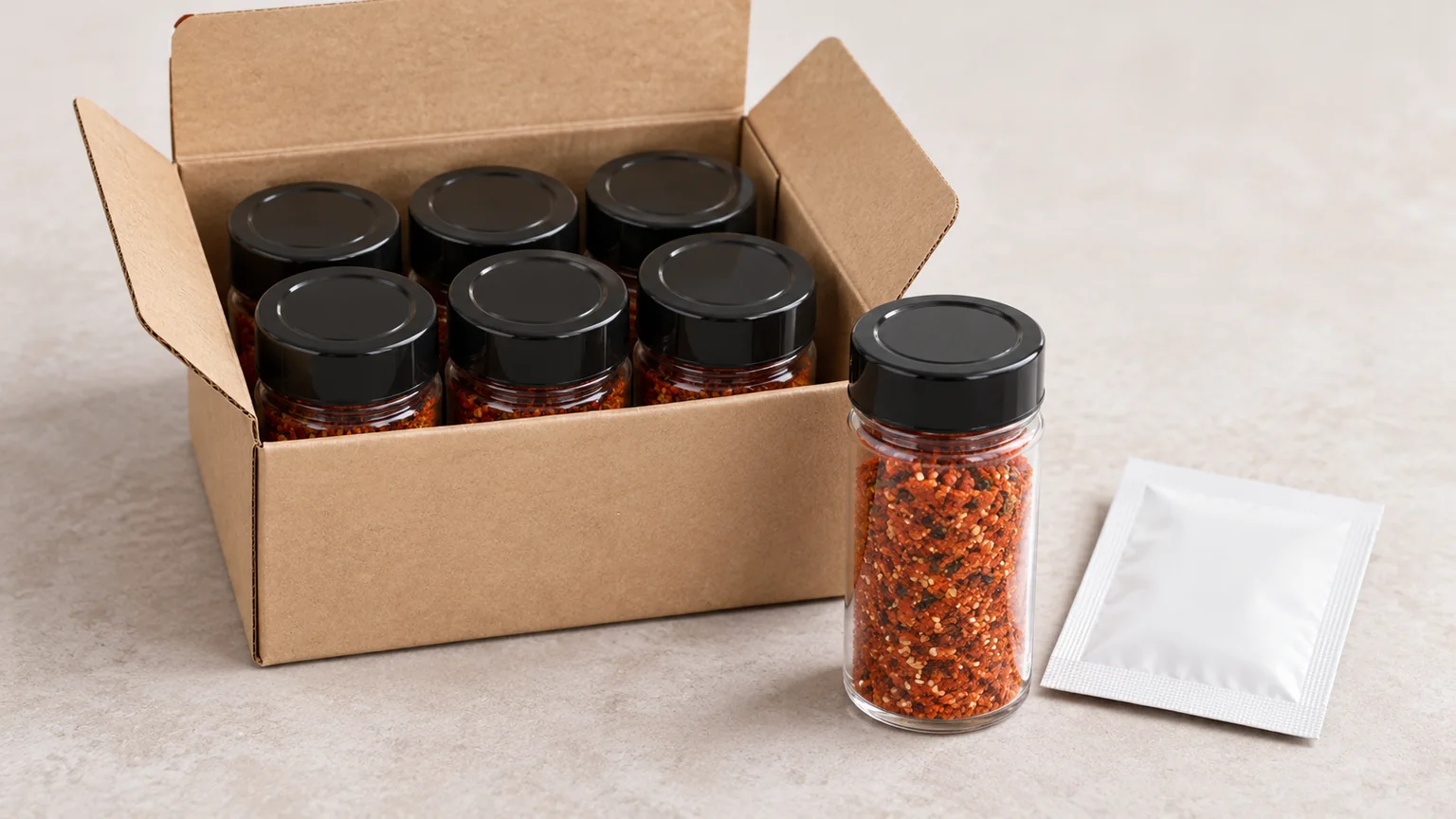
A bottle used at the table and a bag handled in a kitchen require different presentation discussions. Confirm the selected net weight, dispensing arrangement and outer count. A visible mixed seasoning also needs a handling review with the proposed closure and service routine.
The references state twenty-four-month shelf life with their own dry or cool-storage guidance. Confirm applicable conditions and dates for the actual pack. Keep a brand presentation discussion attached to the formula your team has approved.
Send the Style Brief with Ingredient Requirements
Send us the intended dish or channel, your reference seasoning and the full ingredient requirements. Include the desired heat, particle texture, appearance, sample quantity and documents needed for approval. Add the destination and bottle or bag preference.
We can discuss the appropriate shichimi-style reference and the information still needed for the selected formula. Carry its complete declaration, accepted food trial and actual pack into the quotation and repeat-order specification.
Request a Defined-Formula Discussion