
Seedless Chili Powder for a Defined Sauce Texture
Our seedless red chili powder lists without-seeds content and 60 mesh, with chili sauce as a named use. It is a focused starting point when your sauce brief calls for a ground red chili ingredient with seeds removed.
We also offer a seedless raw AD dried red chili powder as a second candidate. Select the required seed state and particle specification together, then evaluate the powder in your own sauce. Seedless describes a material choice; it does not by itself establish the smoothness of every finished sauce.
Discuss Seedless Powder for Sauce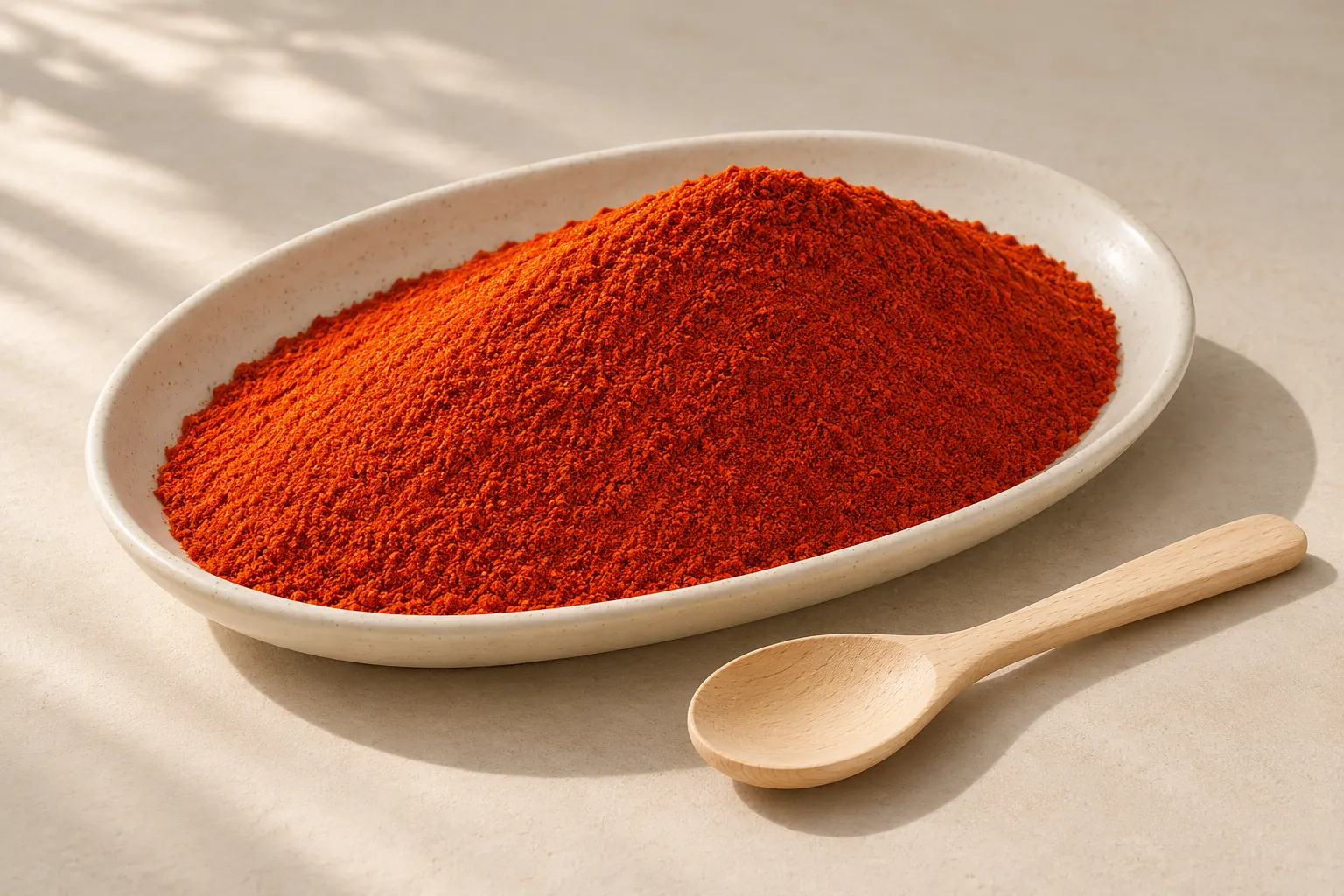
Define Smoothness in Terms Your Team Can Evaluate
Describe the sauce base, the visible-particle appearance and the mouthfeel your product needs. Include whether later mixing, cooking or refinement forms part of the process. This makes the seedless request a useful physical specification rather than a broad preference for fine powder.
Use an accepted sauce or the current ingredient as the comparison reference. Identify which visible particles or texture differences would affect approval. The seed requirement should stay explicit, even if another powder looks equally fine in a dry photograph.
Start with the Declared 60-Mesh Seedless Powder
The sauce-focused reference identifies raw, dried powder with no additives, without-seeds content and a 60-mesh specification. Its product description gives a 10,000 SHU heat direction. Keep that candidate’s heat, seed state and physical specification together when requesting the proposed grade.
If your formula requires a narrower heat condition or another colour requirement, add it to the brief. Do not assume that removing seeds defines a fixed pungency or a numerical colour value. The accepted powder needs to match the full ingredient requirement for your sauce.
60-Mesh Seedless Red Chili Powder · Seedless Raw AD Dried Red Chili Powder
| Candidate | Declared starting point | Add for your sauce |
|---|---|---|
| Sauce-focused seedless powder | Without seeds; 60 mesh; 10,000 SHU direction | Actual acceptance limits and sample |
| Seedless AD dried powder | Seedless offering; AD; raw; powder | Complete composition, particles and heat |
Evaluate the Powder After Your Actual Preparation
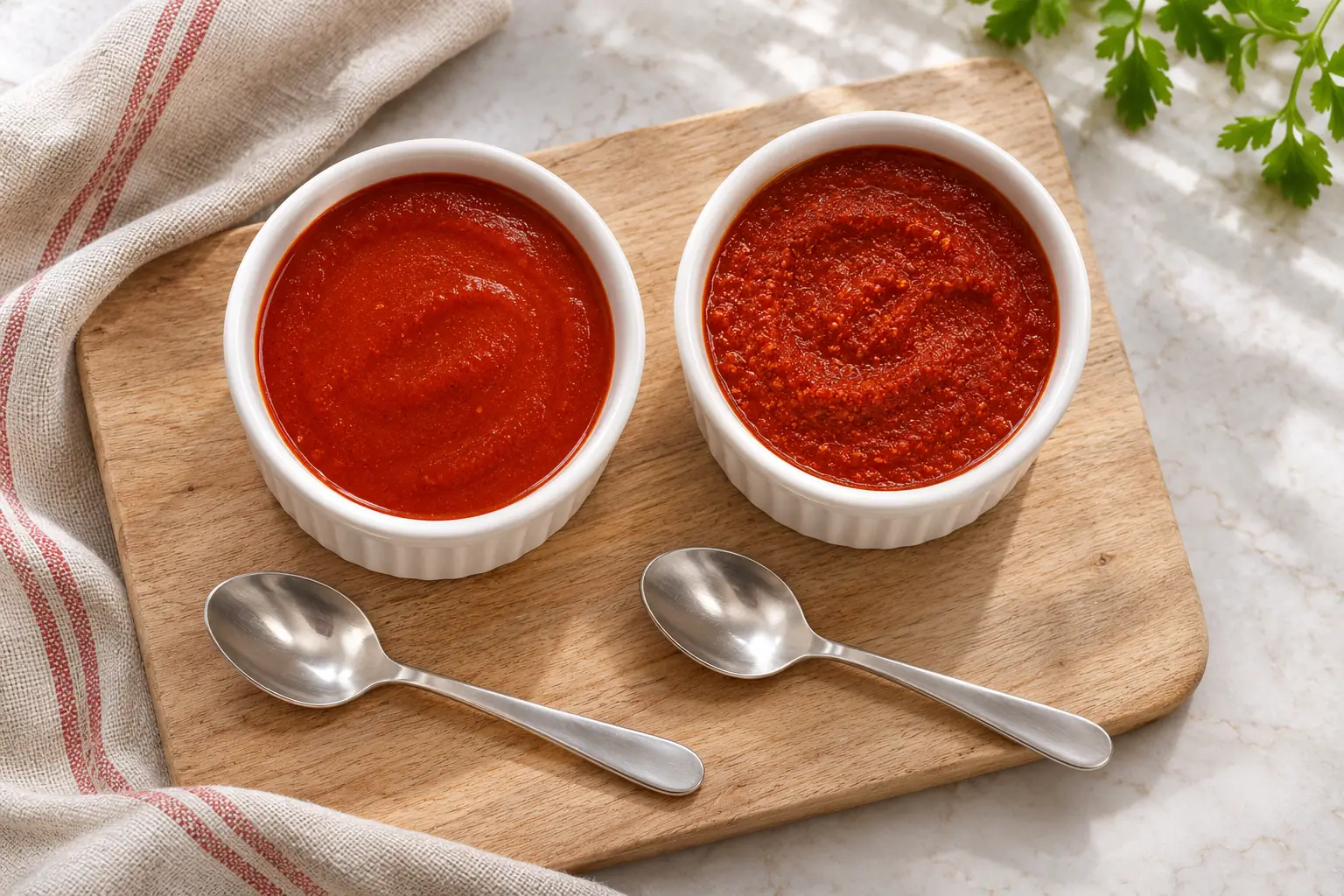
Prepare the baseline sauce and candidate sauce with the same food base, starting dose and processing conditions. Observe the sauce at the stage your team normally approves, rather than judging only the dry sample before it enters the recipe.
Record visible particles, mouthfeel, red appearance and heat together. If the candidate changes one of those attributes, keep the observation specific.
Add a Sieve Requirement When Mesh Alone Is Insufficient
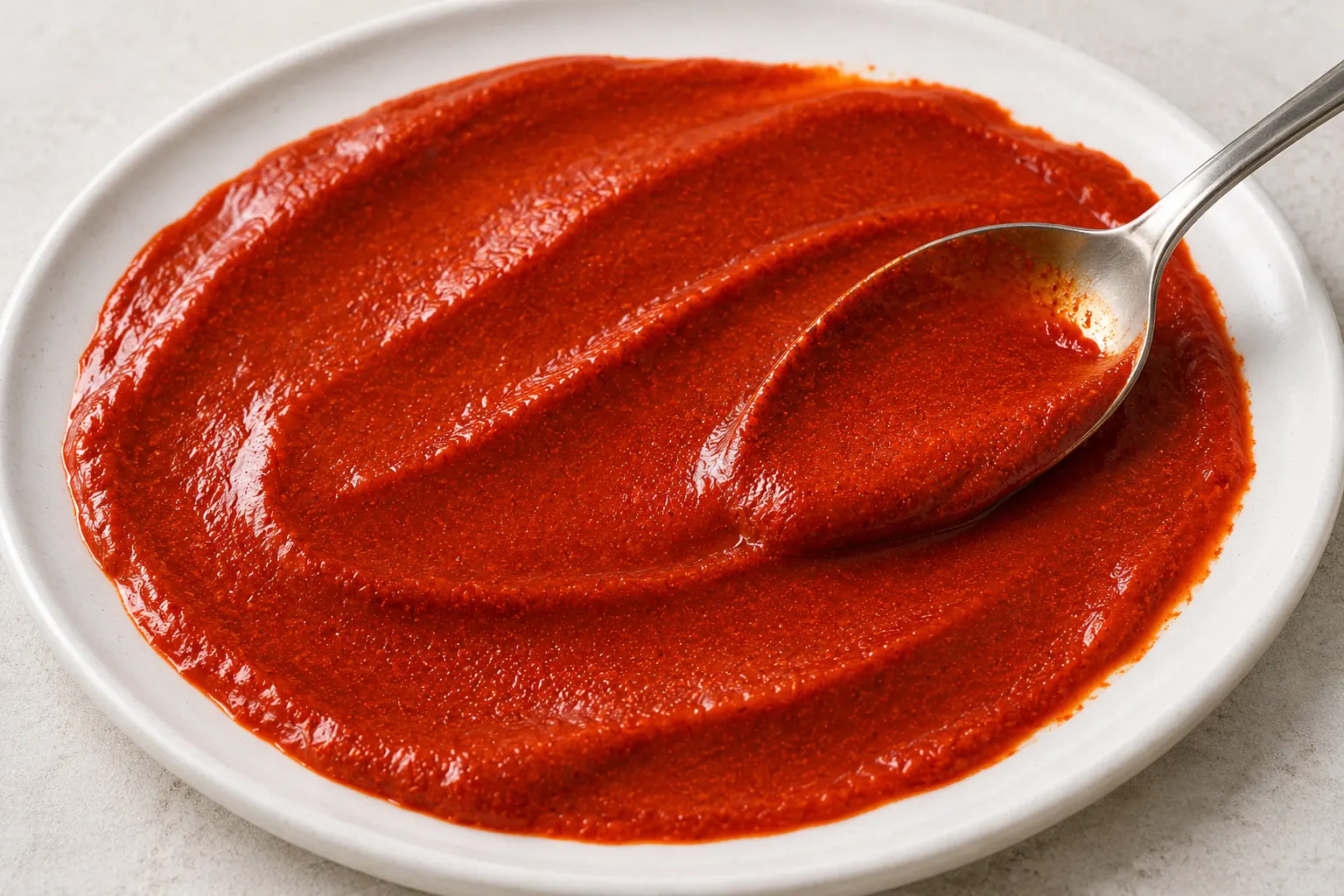
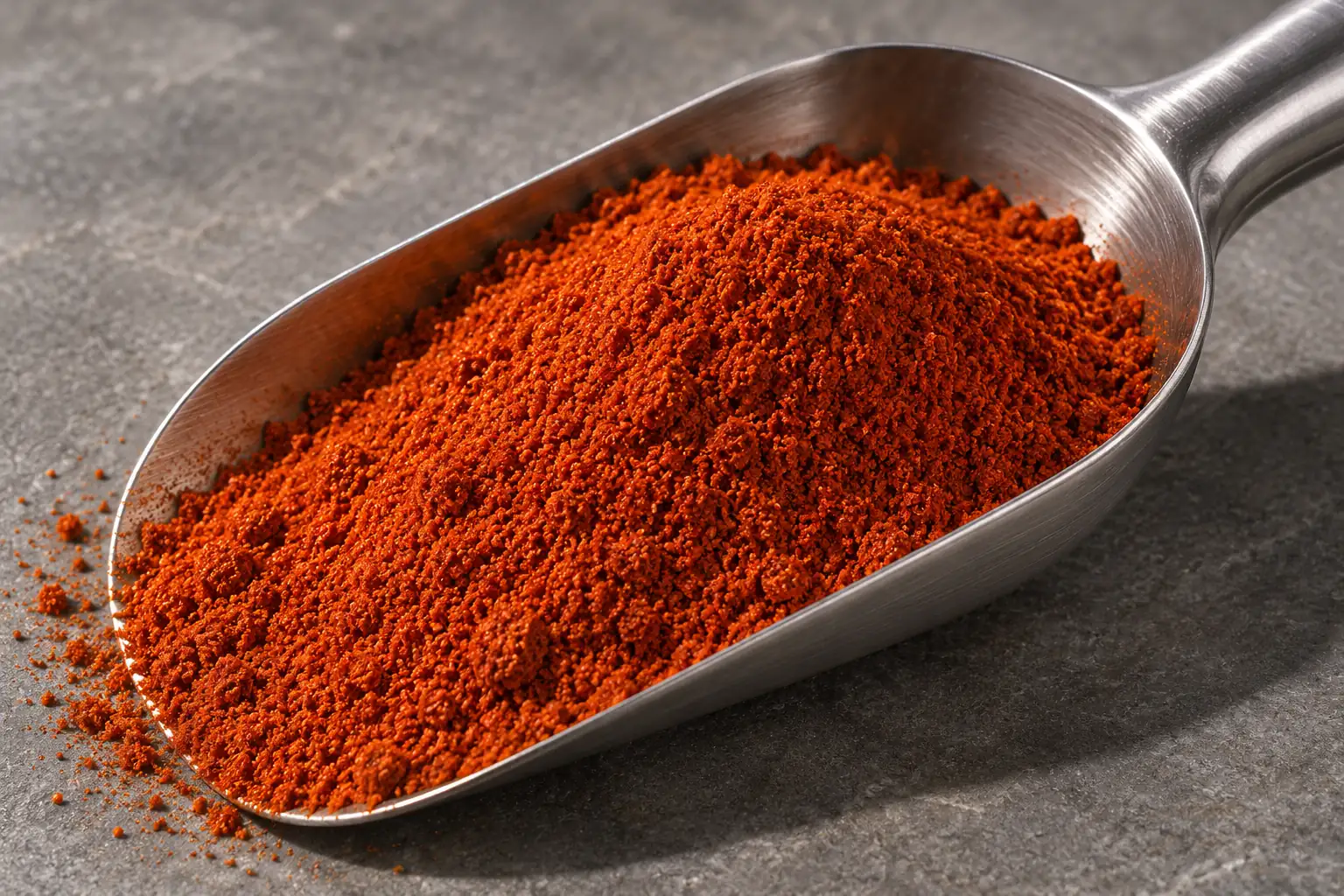
A nominal 60-mesh label may be enough for the first shortlist, while production acceptance may need a defined distribution. Agree the sieve standard and the passing or retained fractions that matter to your sauce texture.
ASTA lists Method 10.0 specifically for particle-size distribution by sieve analysis. It provides a recognized method reference to discuss with the laboratory; it does not show that a catalogue sample has already been tested. Keep the method and the result for the selected material together.
Technical reading: ASTA Particle-Size Distribution Method
Use the AD Candidate with Its Own Specification
The second seedless red chili powder reference lists raw processing, AD drying and powder form. It does not provide the same numerical particle and heat combination as the sauce-focused reference. Request the specific texture and pungency needed before making it a direct replacement candidate.
Keep the complete ingredient declaration with that enquiry too. The useful comparison is between identified materials under agreed acceptance conditions, rather than between two products that both carry the word seedless. A selected powder sample can then address the sauce brief with fewer open assumptions.
Record Material Approval and Recipe Adjustment Separately
If the first trial does not meet the sauce target, change one controlled factor and preserve the earlier version. An inclusion-rate adjustment and a change in powder fineness answer different questions, so keep them visible in the trial record.
Retain the candidate identity, preparation conditions and accepted texture notes. This helps your purchasing team request the material used in the successful version and gives production a reference for a later sample.
Connect Seed State, Treatment and Handling to the Order
The seedless sauce reference lists a 12-month shelf life and dry, clean storage away from sunlight, with the applicable handling conditions to confirm for the selected supply. The AD seedless candidate separately lists cool, dry storage and 12 months.
Add treatment and documentation requirements appropriate to your food process, and review any requested certification for the selected product and scope. For a crushed ingredient rather than powder, use the seedless crushed-chili route so its particle requirement remains distinct from this sauce-powder enquiry.
Send a Seedless Sauce-Powder Requirement
Send your sauce type, current texture reference, required seed state, particle criteria and heat target. Include the preparation conditions, sample quantity and acceptance documents your team needs. Add order quantity, destination and preferred packing for the commercial discussion.
We can start with the 60-mesh seedless reference or discuss the AD candidate against that requirement. Keep the accepted sample and sauce-trial version with the final powder specification so repeat purchases follow the same physical and flavour decision.
Send Your Seedless Powder Brief