
Sesame and Peanut Chili Dipping Powder for Hot-Pot Foodservice
We offer chili dipping blends that name sesame, peanut and salt alongside chili powder. For a hot-pot or barbecue operation, start with the desired dry-dip flavour and your serving arrangement, then choose a larger bag or an individual-portion discussion.
Our catering reference lists 2.5 kg × 8 bags. A separate small-format reference lists 2 g × 1,000 bags. Keep the selected recipe and actual packing unit together; the printed portion entry is not a recommended amount for every served food.
Discuss a Foodservice Dipping Blend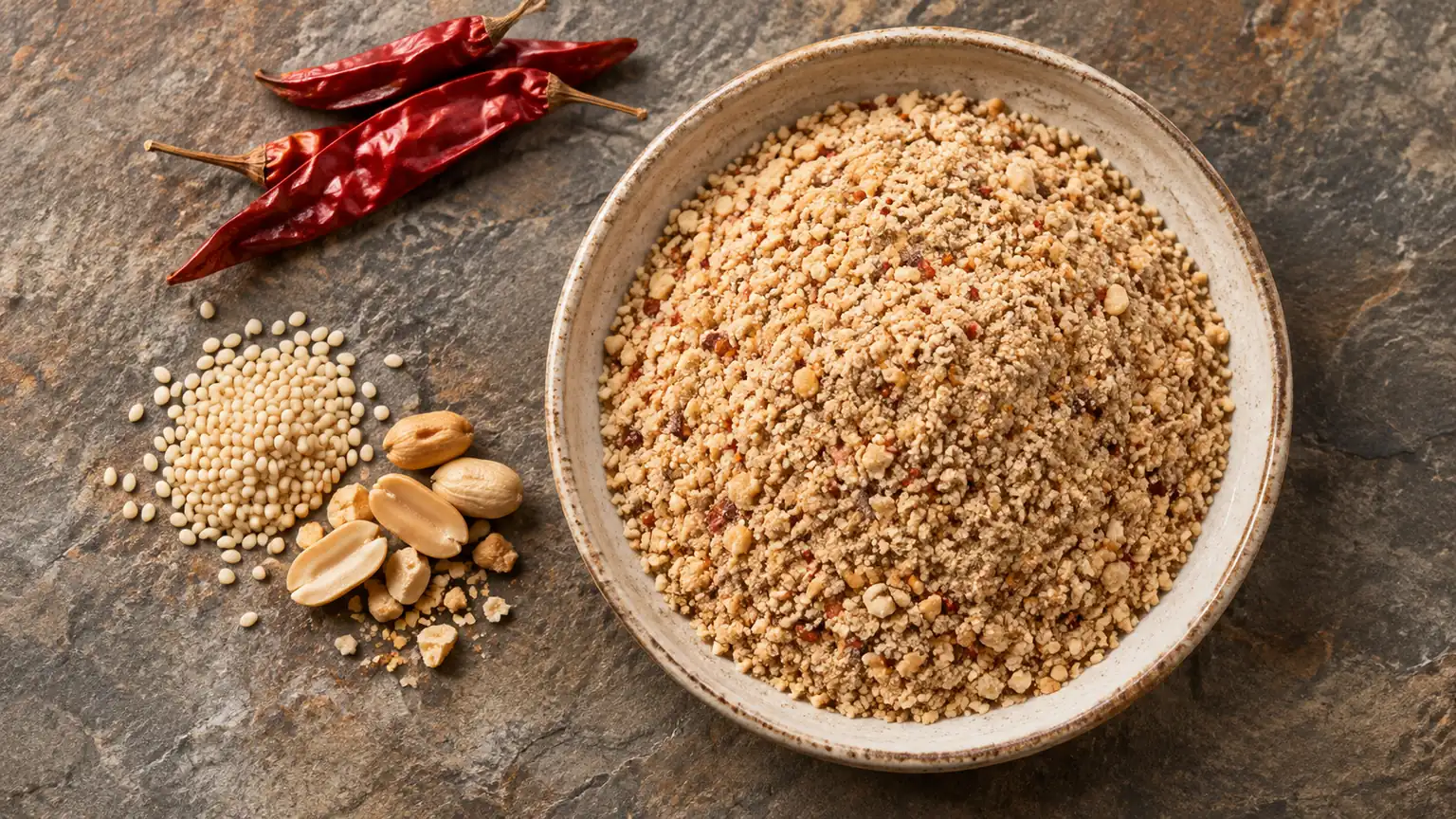
Keep Sesame and Peanut in the Ingredient Review
Request the complete selected ingredient declaration and relevant allergen information before approving the blend. A familiar chili-dip name does not mean the powder is only chili, and the short ingredient entry should not substitute for your formula review.
For U.S.-bound products, FDA identifies peanuts and sesame among the major food allergens. Give your quality team the actual selected declaration and destination requirement. Keep ingredient communication connected to the material used by the outlet, including any later formula or pack revision.
Technical reading: FDA Food Allergies
Compare Texture as Part of the Dry-Dip Experience
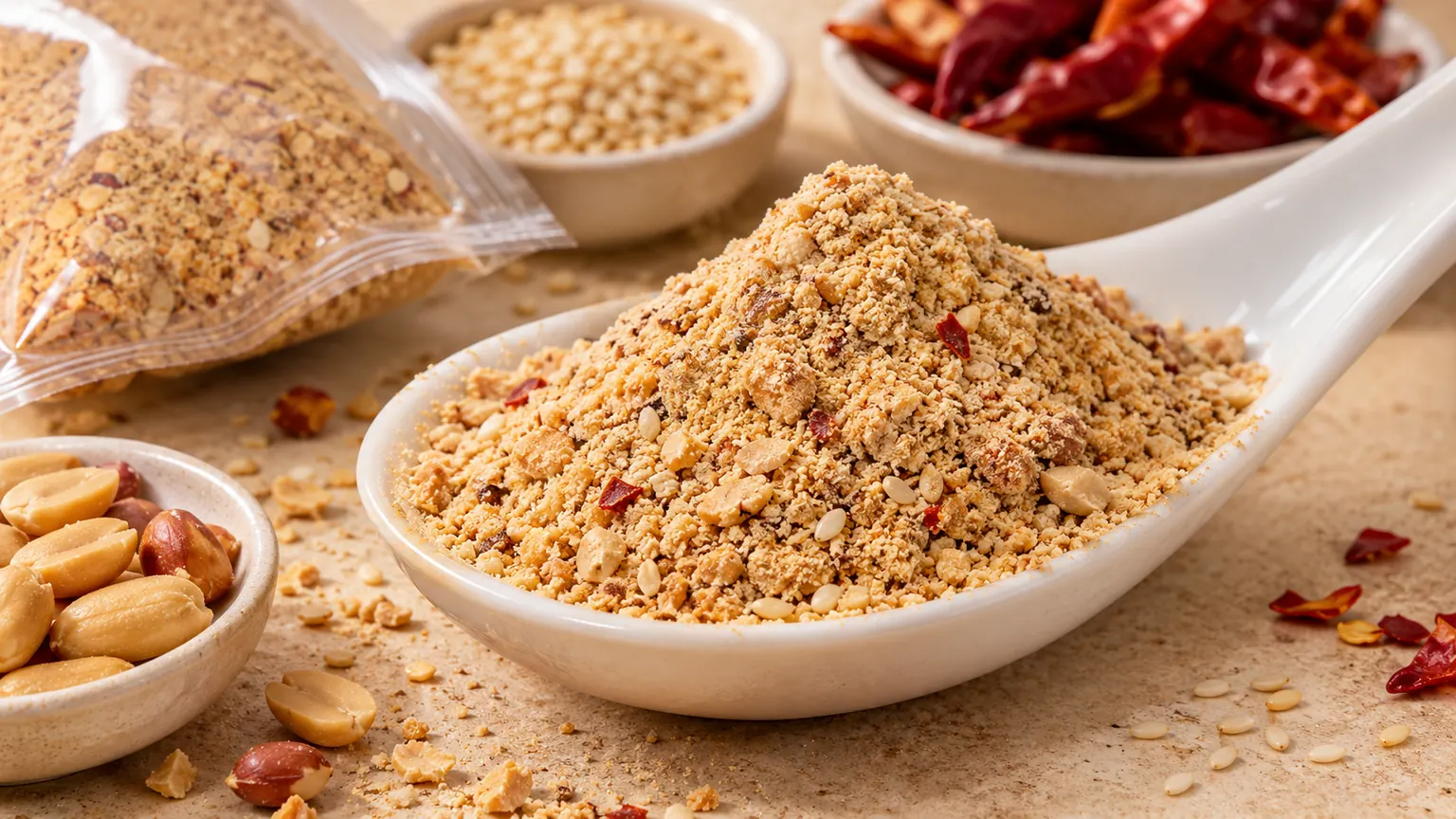
The sesame-and-peanut blend should be evaluated for particles and eating texture as well as heat. Describe whether your operation wants a fine coating or a more visible mixed-particle dip. Request the physical specification applicable to the sample instead of reading it from a photograph.
Use your current accepted seasoning as a reference where available. Record the aromatic impression and the balance of chili, sesame, peanut and salt in the complete food, so a new sample can be assessed against a concrete target.
Choose the Portion Route around the Outlet Routine
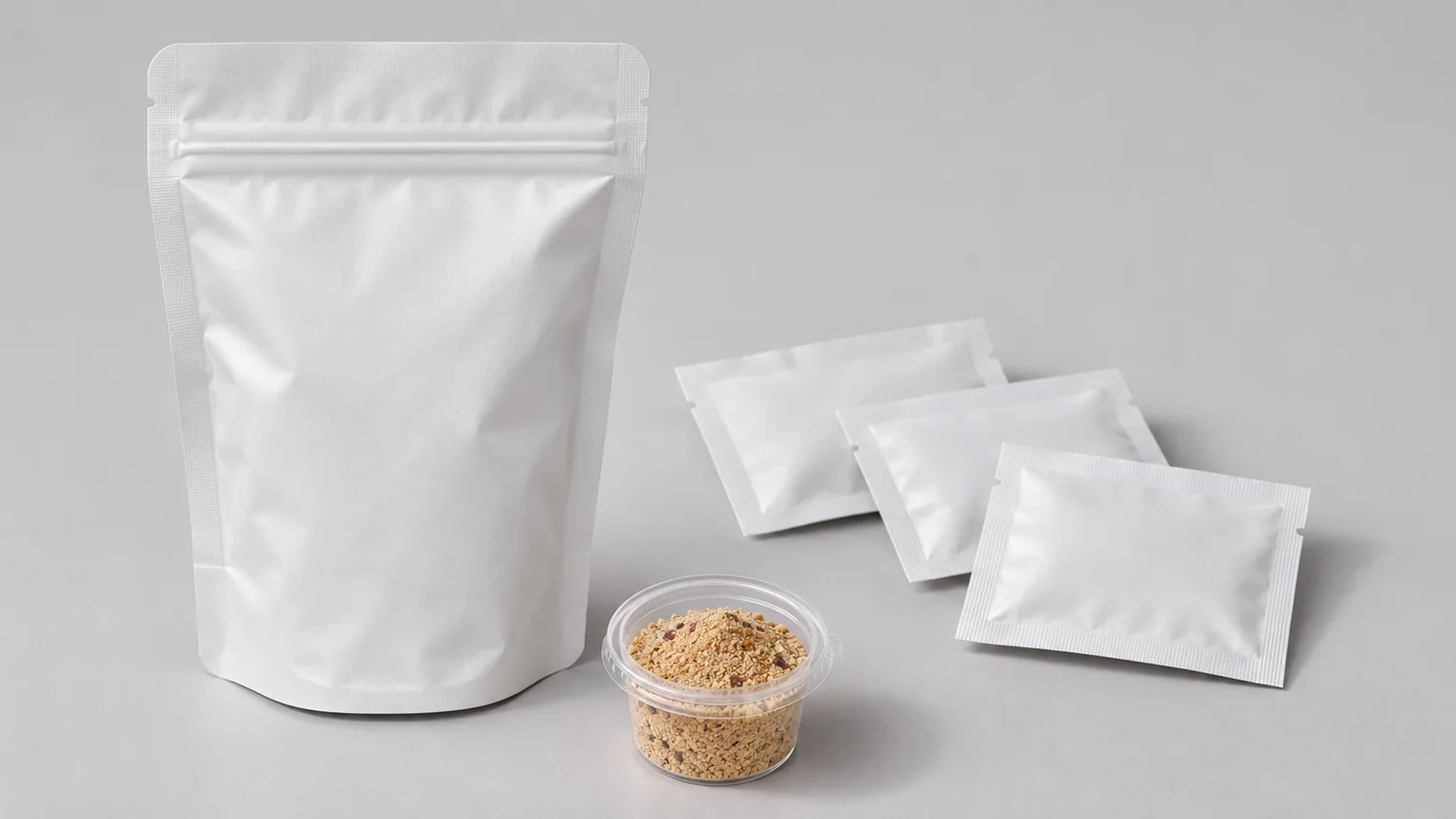
A larger bag requires a defined outlet portioning and handling routine. Individual bags require confirmation of net weight, count, opening and presentation. Compare the two routes against the service you actually run rather than assuming the smaller format automatically produces the right serving.
The two product references share named ingredient categories, but your approval should identify each selected formula. We should confirm flavour, texture and packing for the actual proposal rather than treating similar catalogue wording as proof of interchangeable supply.
Catering sesame-peanut chili dip · Individual-bag chili dipping blend
| Route | Listed starting point | Confirm with the offer |
|---|---|---|
| Catering bag | 2.5 kg × 8 bags | Selected blend, bag net weight and outer count |
| Individual bags | 2 g × 1,000 bags | Actual portion weight, count and presentation |
| Outlet portioning | Buyer routine | Serving amount and handling instruction |
Evaluate the Dip with Representative Hot-Pot Foods
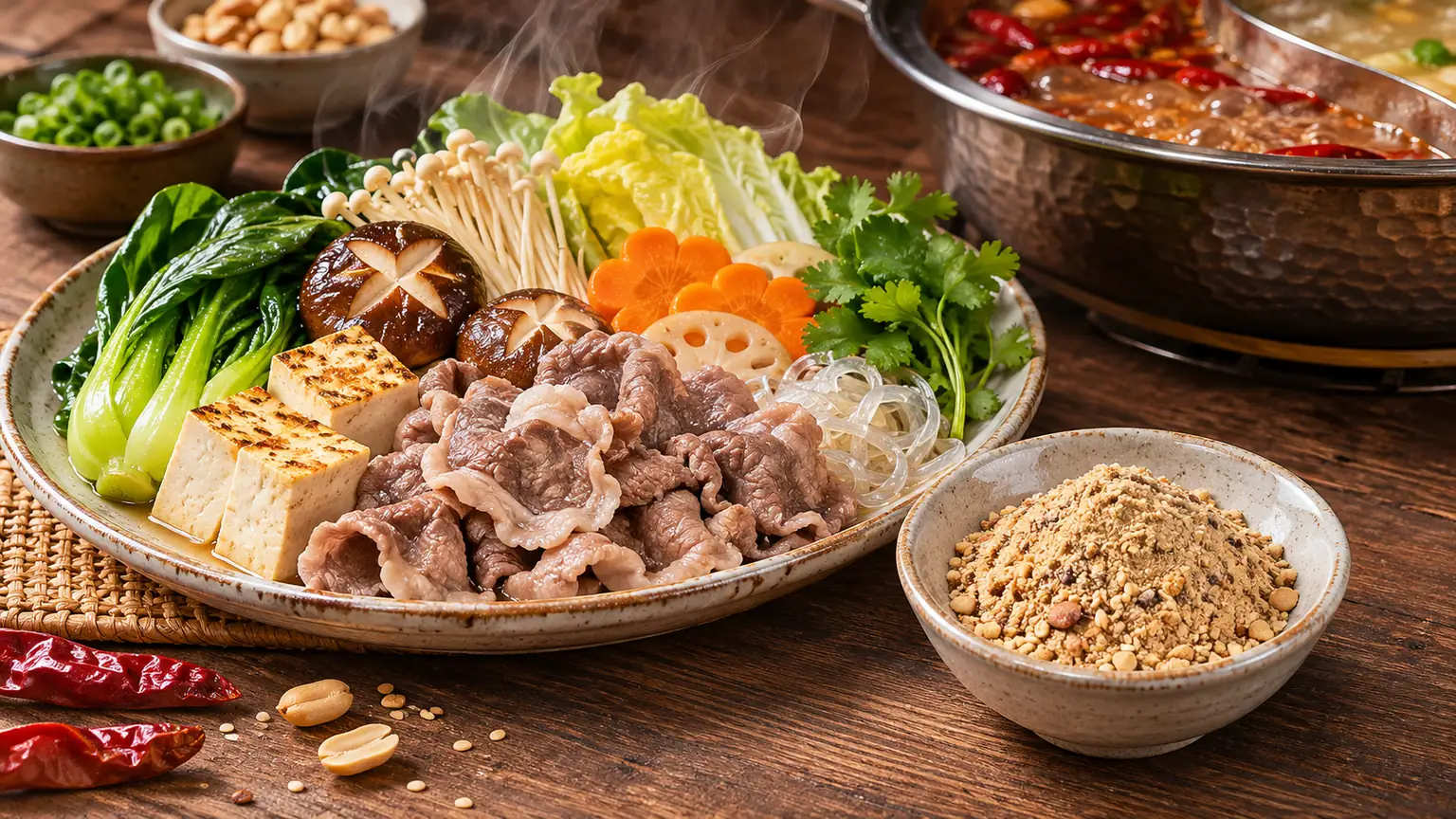
Select foods that represent the menu and prepare them consistently. Record the dip amount and serving method for the first comparison with your current seasoning. Assess flavour balance, particle sensation and the appearance on the food.
If your menu also uses the blend with barbecue, evaluate that preparation separately. Food, surface condition and serving routine belong in the trial record. We do not claim the same dry seasoning amount will give the same eating result across every food.
Record Usage before Comparing Pack Economics
Once your team accepts a serving amount, record it with the menu item and chosen blend. Compare offers using that actual usage and the confirmed net quantity, rather than comparing a carton price without its bag count or formula.
Keep planned consumption separate from a purchase commitment. A practical enquiry can include expected outlet numbers and a quantity range so that packing and commercial conditions are discussed on a clear basis, without assuming a published small-bag count defines your order.
Match Handling Requirements to the Service Use
These references describe dry room-temperature storage and a 365-day shelf life. Confirm the actual dates, pack conditions and instructions relevant to opening and portioning. Keep those instructions with the chosen presentation in the outlet record.
For direct dipping, ask your quality team which treatment and microbiological records it needs. FDA's spice-safety material distinguishes contamination controls and treatment considerations; a dried appearance alone is not the evidence for a validated pathogen-reduction step in a selected seasoning.
Technical reading: FDA Spice Safety
Confirm the Physical Presentation before Reordering
Request the actual pack arrangement for the chosen formula, including bag or sachet material, net weight and outer count. Review a pack sample when presentation and handling are important to your outlet routine. Plain package illustrations do not establish those commercial details.
Keep the approved blend, portion route and pack version on the purchase record. If a later order changes from a catering bag to individual portions, confirm the selected material and its declaration again rather than updating only the carton description.
Send a Menu and Portioning Brief
Send us the hot-pot or barbecue foods, desired heat and aroma, particle preference and ingredient restrictions. Add the preferred serving route, expected quantity, destination and required documents. Tell us whether the sample should represent a catering bag or an individual-portion proposal.
We can discuss the sesame-and-peanut blend and the pack details needed for your operation. Carry the accepted food trial, complete declaration and confirmed packing unit into the offer and repeat-order discussion.
Request a Dipping-Powder Offer