Mala Chili Powder for Dipping and Cooking
For a numbing-spicy chili seasoning, we recommend comparing a declared mala formula with your actual dipping or cooked-food reference. Our roasted mala powder names chili peppers, salt and Sichuan peppercorn powder, together with additional seasoning components. It is a compound powder rather than a plain ground chili.
Tell us the balance you want between roasted chili, chili heat, numbing character and savoury taste. We can discuss a candidate against that brief without reducing the purchase to a generic mala name.
Discuss a Mala Seasoning Sample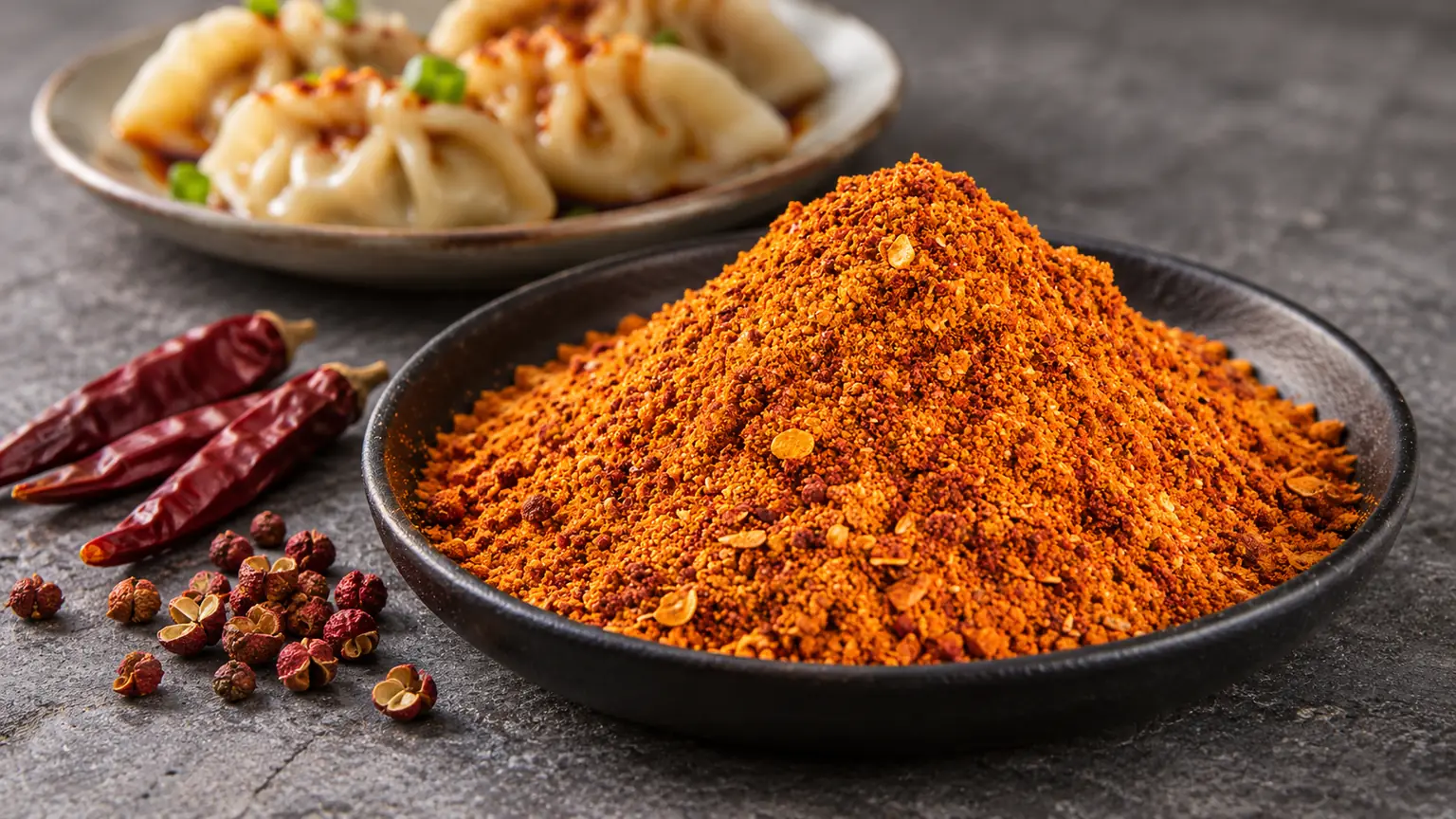
Describe Chili Heat and Numbing Character Separately
A strong chili impact does not tell us the numbing character your menu needs. Give each its own description and, where possible, an accepted food or seasoning reference. Also identify the roasted note, salt balance and physical texture that matter to your customers.
We can use these separate targets to discuss a sample more precisely. A heat figure, if required for the project, still needs its own agreed basis and cannot serve as the complete sensory specification for a multicomponent mala blend.
Review the More Explicit Roasted Mala Formula
Our roasted mala dipping-and-cooking reference lists chili peppers, salt and Sichuan peppercorn powder. Its additional declarations include monosodium glutamate, spices, chicken essence and pea. Keep those components in the approval brief and request the complete selected declaration, including the relevant compound-ingredient details.
This formulation is not a basis for an MSG-free or vegetarian claim. If your business has ingredient restrictions, state them before sampling so the proposed formula can be reviewed against the actual requirement.
| Field | Available description | Purchase follow-through |
|---|---|---|
| Main ingredient entry | Chili peppers, salt, Sichuan peppercorn powder | Confirm complete selected declaration |
| Additional components | MSG, spices, chicken essence, pea | Review restrictions and compound ingredients |
| Use | Dipping or cooking | Approve each actual food route |
| Presentation | 200 g × 12 bottles | Confirm selected pack and order terms |
Keep the Seasoning Identity Attached to the Sample
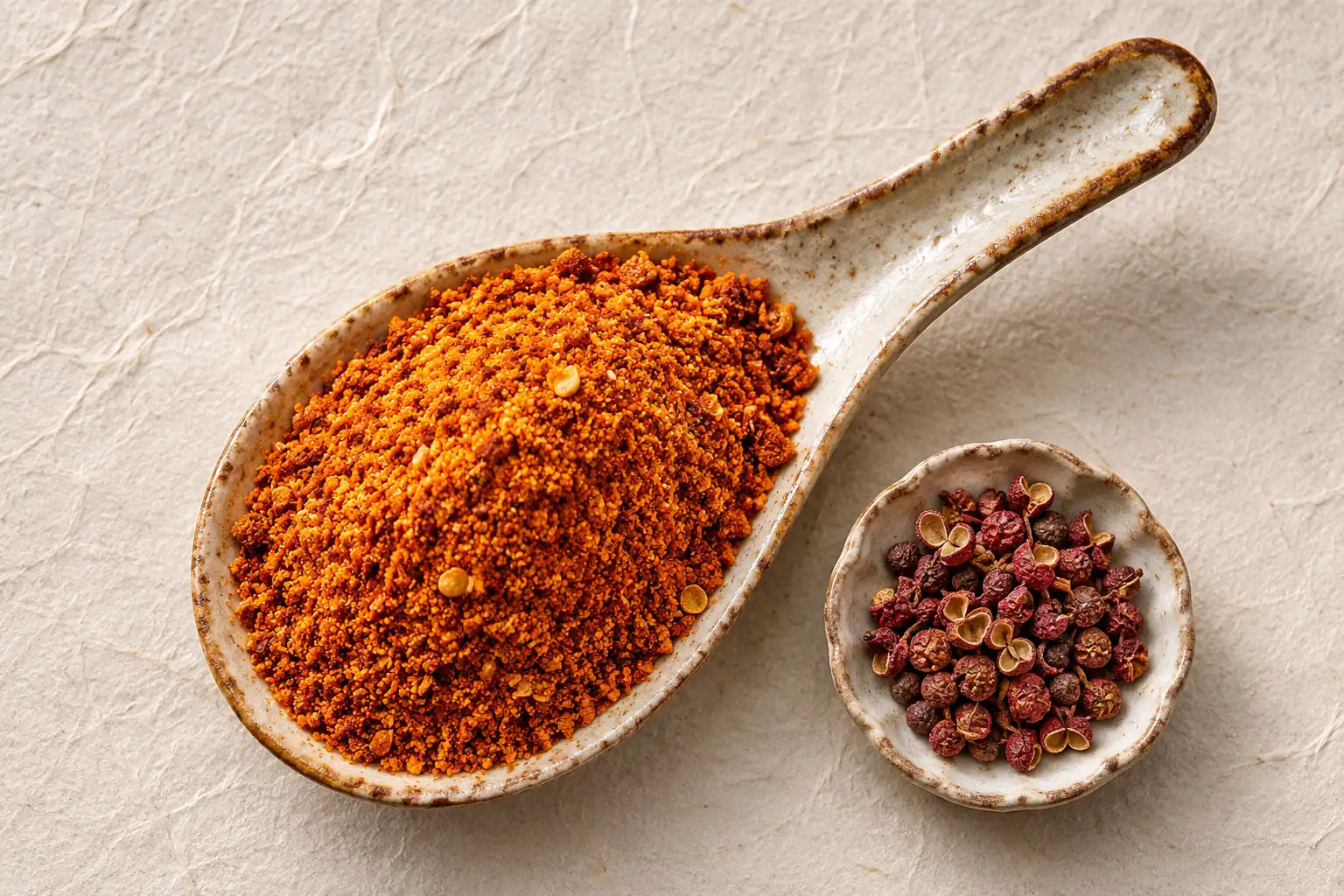
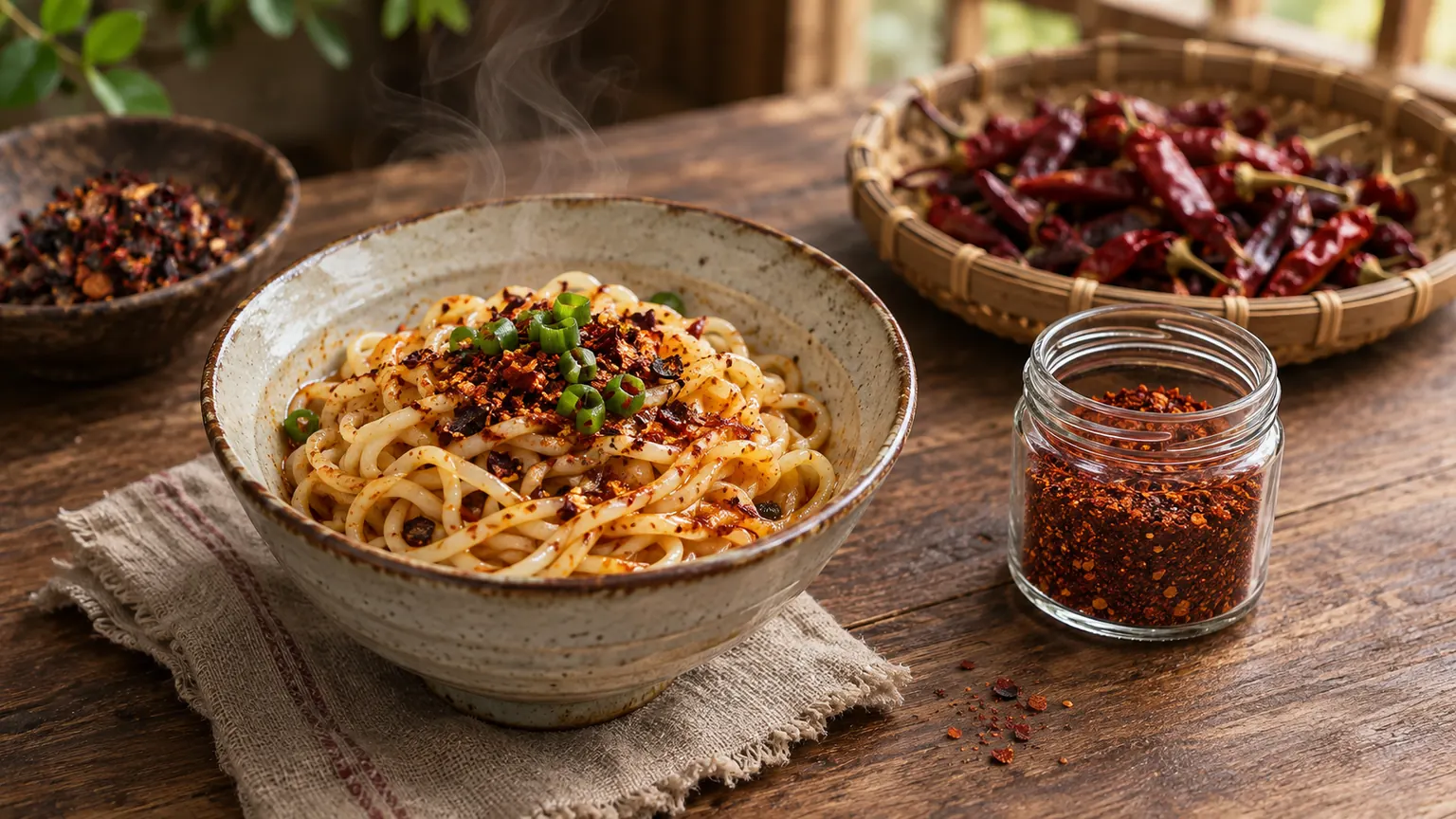
A roasted red powder and a peppercorn dish can help explain the flavour direction, but appearance does not disclose the recipe. Connect the proposed powder sample to its ingredient statement before deciding that it matches your current mala seasoning.
Our alternative roasted chili-and-pepper blend describes a numbing-spicy profile and dipping or cooking use. Ask for its complete formulation as a separate candidate. We do not infer that it has the same components or proportions as the more explicitly described blend.
Evaluate the Dry Dipping Use with the Served Food
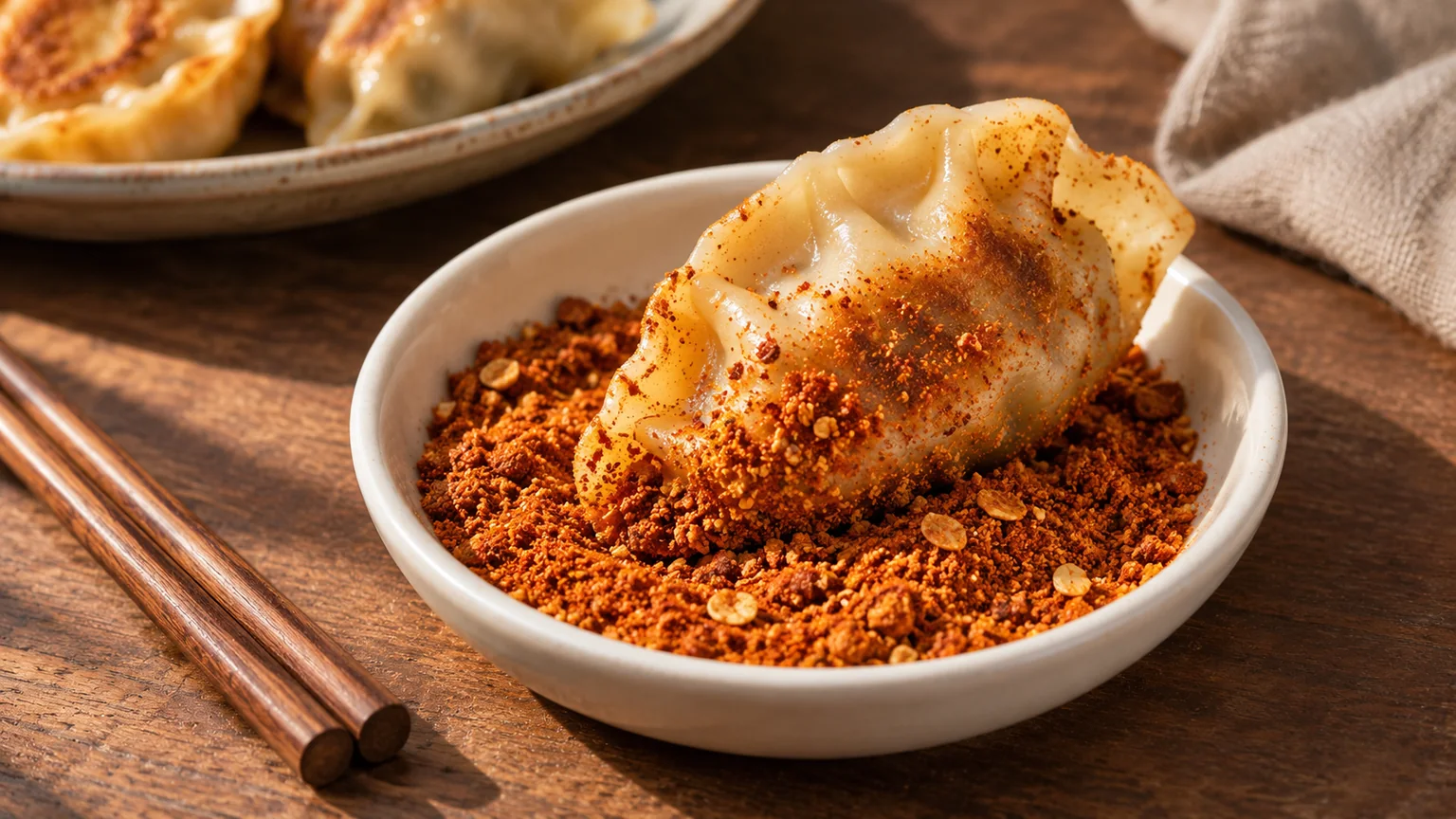
Choose a representative food and keep its preparation consistent. Compare the current seasoning and proposed powder at a recorded starting amount, then describe the balance of heat, numbing character, salt and roasted aroma. Observe the particles on the food as well as in the dry dish.
After the first comparison, your team may choose a different serving amount for the candidate. Record that as a revised trial rather than presenting it as equal-dose equivalence. Retain the accepted dipping instruction with the sample identity.
Treat Cooking as a Separate Approval Route
For a cooked application, tell us the base recipe, addition stage and relevant cooking or holding conditions. Keep those variables the same for the initial comparison. A dry dipping result does not establish the balance after the seasoning enters a sauce, stew or noodle preparation.
Use the buyer's normal eating stage for evaluation and record any necessary recipe adjustment. We can discuss the powder against those observations, while your accepted trial defines the selected use and the flavour balance your operation needs.
| Decision | Dry dipping | Cooking |
|---|---|---|
| Reference | Served food and dry seasoning | Complete recipe and prepared food |
| Control | Food and initial serving amount | Recipe, addition stage and process |
| Observe | Adherence, particles and flavour balance | Finished-food flavour and texture |
| Approve | Dipping instruction and sample | Recipe revision and sample |
Use a Food Record That the Next Trial Can Follow
Retain a description of the finished preparation with the seasoning reference. A noodle topping, a seasoning mixed into a sauce and a powder served separately are different approval objects, even when the product can be discussed for all three.
A clear record lets your team distinguish a formulation change from a change in the food or handling route. Keep any photographs as supporting context and use your actual observations and agreed specifications for acceptance.
Request Formula and Packing Records for the Selected Version
Ask for the complete ingredient statement and the quality documents your buyer team requires. Any treatment or certification request should identify the chosen seasoning and its scope. The roasted or dried description alone does not provide a validated treatment record.
The more explicit mala reference lists dry-place storage and a twelve-month shelf life. Its alternative also states twelve months. Confirm the actual pack, applicable dates and opening instructions with the order, alongside the approved formula rather than a range-wide assumption.
Send the Numbing-Spicy Requirement with the Application
Send us the food, the point of use, your reference flavour and the preferred balance of chili heat and numbing character. Include restrictions on MSG, chicken-derived components or other ingredients, along with pack, quantity and destination.
We can discuss the declared roasted mala candidate and the information needed for another blend. Approve the selected formula and its use trial together before treating the seasoning as a replacement or a new menu standard.
Request a Formula-Specific Offer