
Sweet-Spicy Chili Powder with Rice and Salt for Fried Snacks
We offer a sweet-spicy mixed seasoning direction with chili, rice and salt named as primary ingredients. For a fried-snack enquiry, select it as a compound seasoning and approve the complete formula in your food. It is a different purchase from pure chili powder or a simple chili-and-salt base.
Start with the balance your product needs: chili impact, sweetness, salt and particle texture. Our bagged references support discussion of cooking or direct seasoning, while your actual addition stage defines the trial.
Discuss the Sweet-Spicy Blend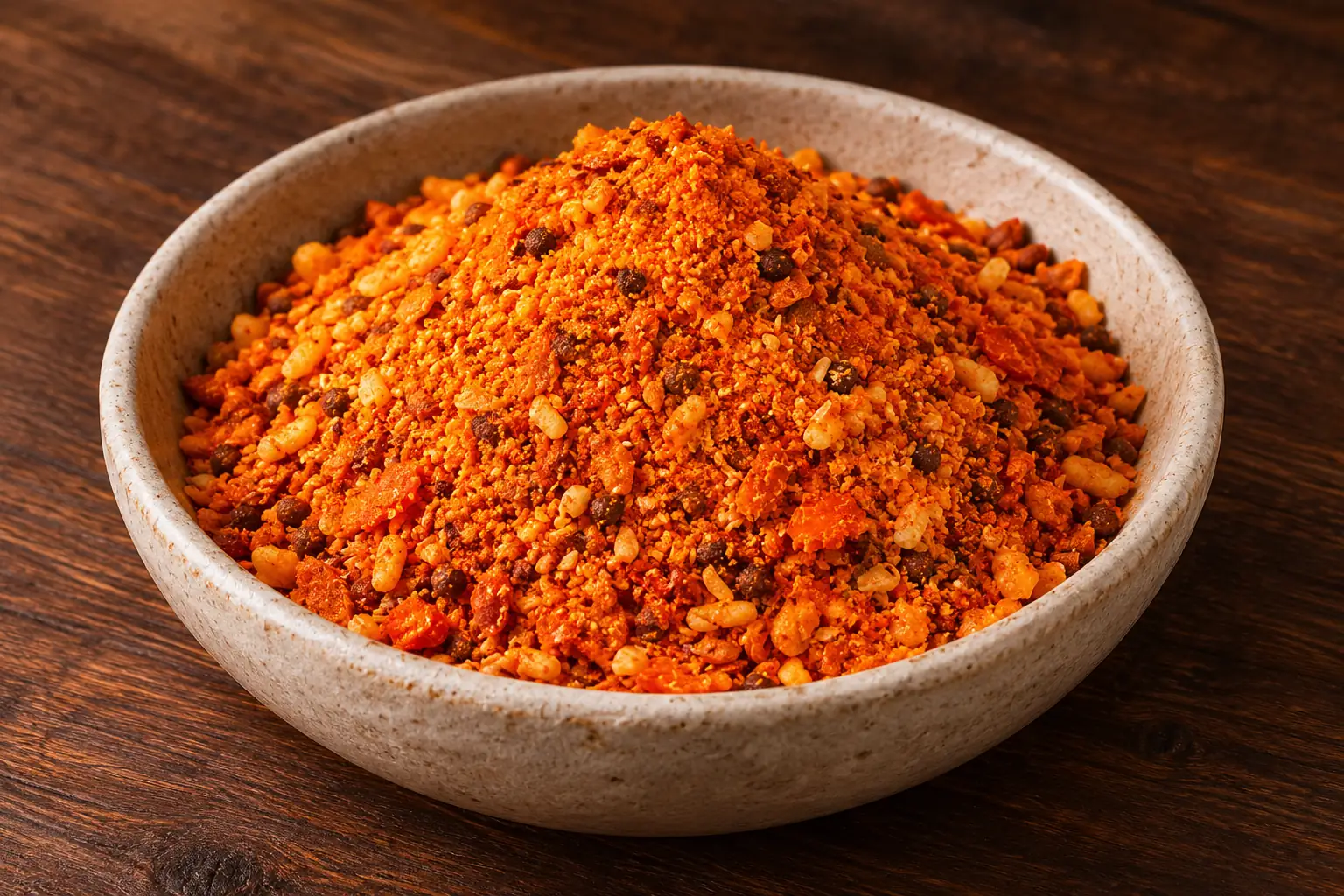
Obtain the Full Formula and Sweetness Source
The named primary ingredients identify the seasoning family. They do not disclose every component or establish where the sweet taste comes from. Request the selected package declaration, relevant compound-ingredient details and instructions before deciding that the powder fits your restrictions.
Do not assume the word sweet means a particular sugar, sweetener or inclusion level. Explain any requirement for a specified sweetening ingredient or exclusion as part of the formulation brief, then review the actual proposal against it.
Sweet-spicy cooking and finishing seasoning · Chili, rice and salt mixed seasoning
Decide the Role of the Mixed Particle Texture
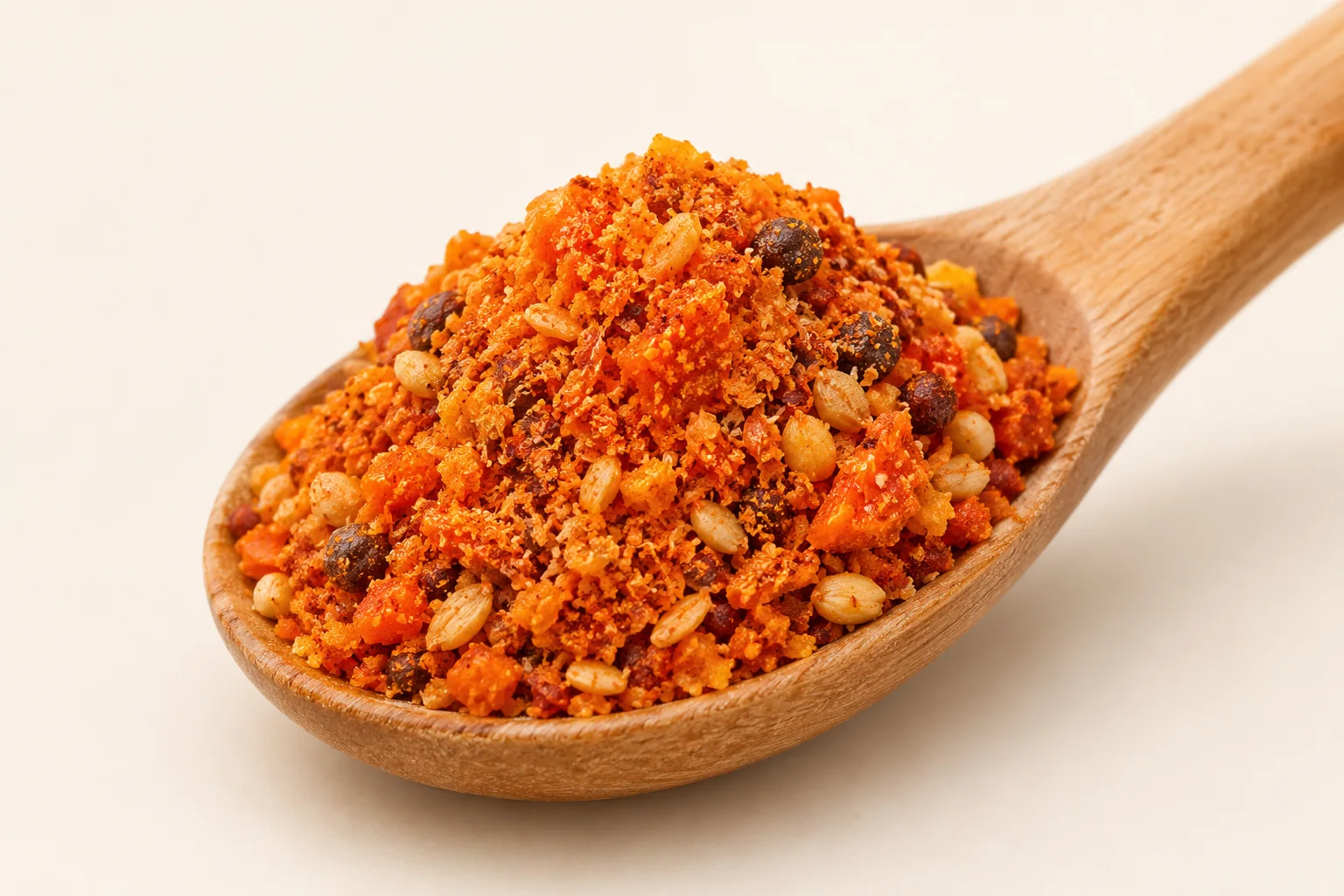
Tell us whether the finished snack should show noticeable seasoning particles or a more uniform fine finish. Ask for the physical specification of the sample you receive. Rice in a primary-ingredient list does not identify its processing form, proportion or effect on the bite.
Compare the powder on your food and record any particle sensation that affects acceptance. We do not claim that the rice component creates a particular crunch, solves adhesion or produces a measured improvement without the relevant trial.
Separate Seasoning after Frying from Cooking Inclusion
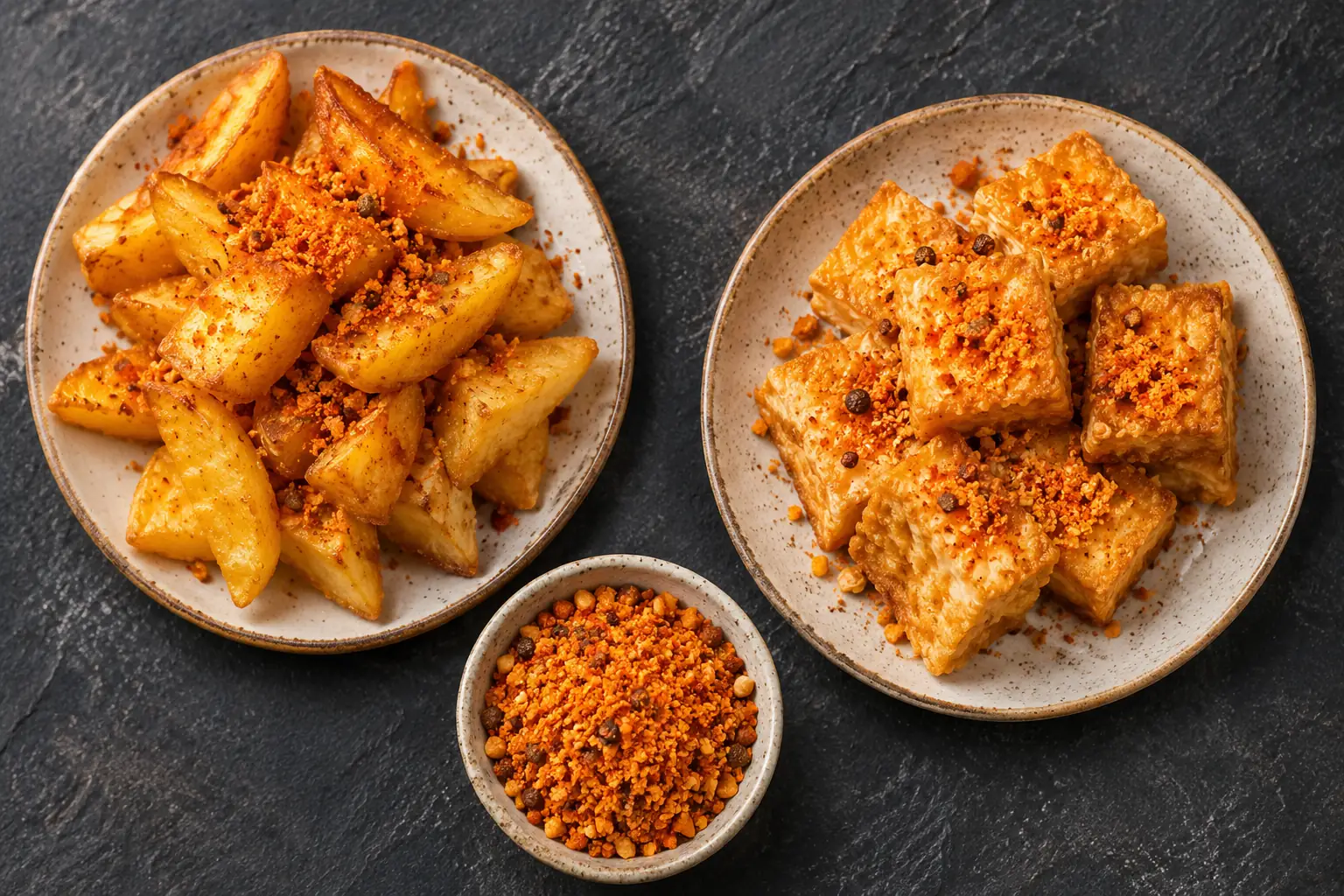
A powder applied to finished fried food and one included during preparation enter different processes. State the route first, including the food base and the point of addition. Use the same process and starting dose for the first sample comparison.
For direct seasoning, record the handling conditions relevant to your operation. For cooking inclusion, carry the actual recipe and process through the trial. The product's two broad use directions provide enquiry options rather than evidence that one trial establishes both uses.
| Route | Define in the brief | Approve through |
|---|---|---|
| Direct seasoning | Food, addition stage and handling routine | Finished snack at normal eating condition |
| Cooking inclusion | Complete recipe and processing route | Prepared food after the actual process |
| Two-route project | Separate use records | Separate accepted food trials |
Compare the Blend on Representative Fried Foods
Choose the actual fried food or a small set of representative menu items. Keep preparation, serving condition and initial amount consistent when comparing the current seasoning and the candidate. Record sweetness, heat, salt and texture separately rather than giving one overall spicy score.
If your range includes different food bases, keep an approval for each selected use. An acceptable result on potato pieces does not establish the same flavour balance on tofu, coated meat or another snack.
Give Feedback that Identifies the Needed Change
State which dimension is too high or too low against your reference. A request for less sweetness should also say whether heat, salt and particle texture should stay close to the current sample. This gives the next discussion a clear purpose.
The references describe customization and OEM/ODM enquiries. We can discuss the actual development scope from your recorded feedback, without assuming every requested ingredient change is already an available formula. Keep each proposed sample revision identifiable.
| Dimension | Useful observation | Preserve or change |
|---|---|---|
| Sweetness | Compared with the accepted food reference | Target and ingredient restrictions |
| Chili | Heat and chili character in the food | Desired impact separately from sweetness |
| Salt | Balance with the food and other seasonings | Recipe contribution |
| Particles | Appearance and eating sensation | Physical target |
Connect the Food Trial to Material Approval
Ask for the ingredient and quality records relevant to the selected use. Direct seasoning after frying should have its own material requirements; the earlier frying of the food does not document a treatment of seasoning added afterward. Review this route with your quality team.
Retain the selected sample, complete declaration and accepted application record together. The generic natural positioning in a product description is not the same as confirming every ingredient exclusion that your project may require.
Confirm the Bag for the Selected Blend
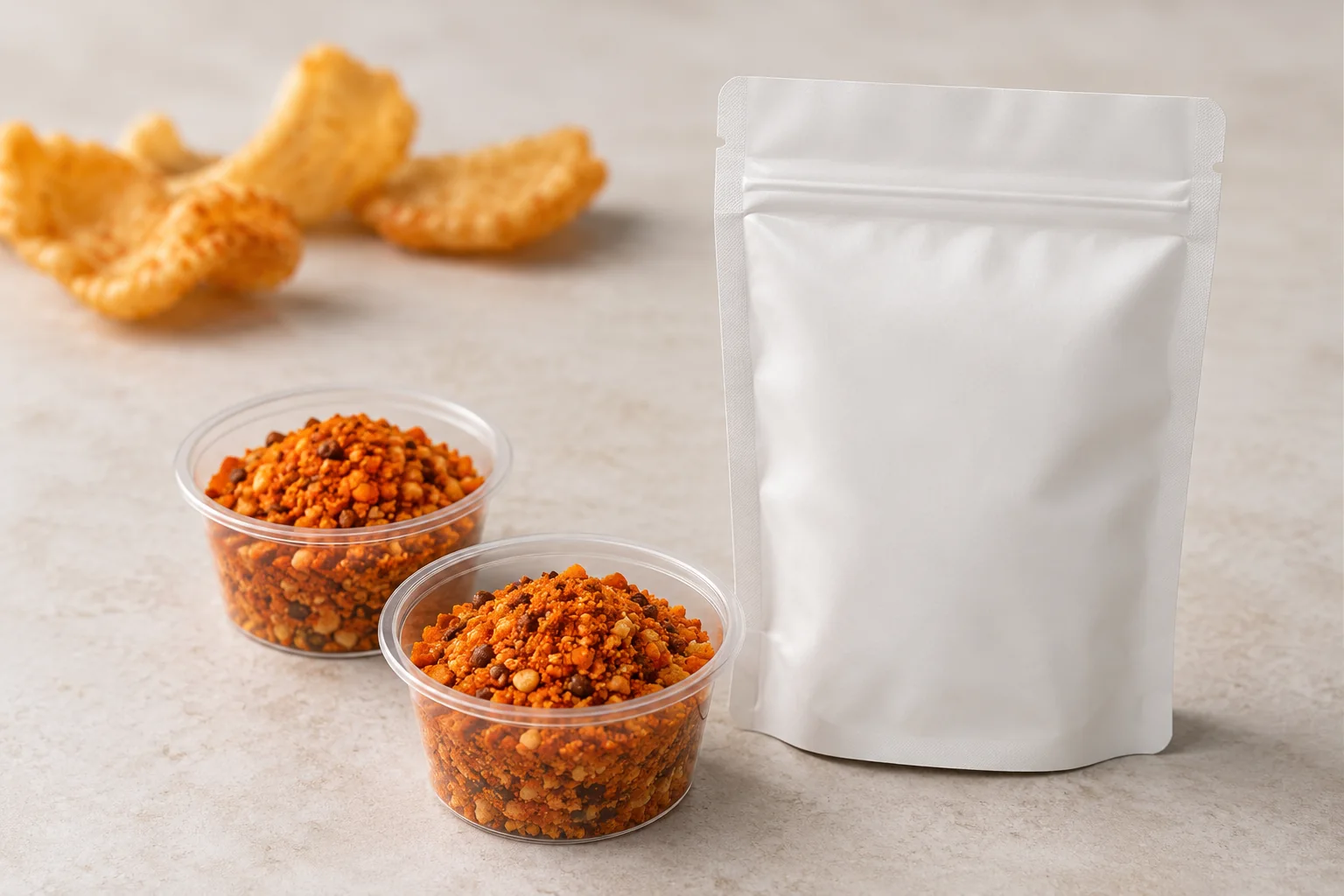
The references describe 500 g bags and customized packing discussions. Confirm the actual net quantity, outer arrangement and formula version for your offer. A bag size does not define the seasoning amount your food will need.
Room-temperature storage away from light and a twelve-month shelf life are stated. Review the applicable handling instruction, dates and opening conditions for the selected pack. Keep these details with the accepted formula so that a packing change does not obscure which seasoning was approved.
Send the Fried-Food and Flavour Brief Together
Send us the fried-food type, seasoning stage, reference flavour and your separate sweetness, chili, salt and texture targets. Include ingredient restrictions, trial quantity and the information your quality team requires. Add the destination and desired pack for the supply discussion.
We can discuss the existing chili-rice-salt direction or a defined adjustment project. Carry the accepted sample, complete formula and food trial into the quotation so that the purchase is based on the seasoning your team evaluated.
Request a Sweet-Spicy Sample Discussion