Dried Chili Rings with Defined Cut, Seed State and Heat
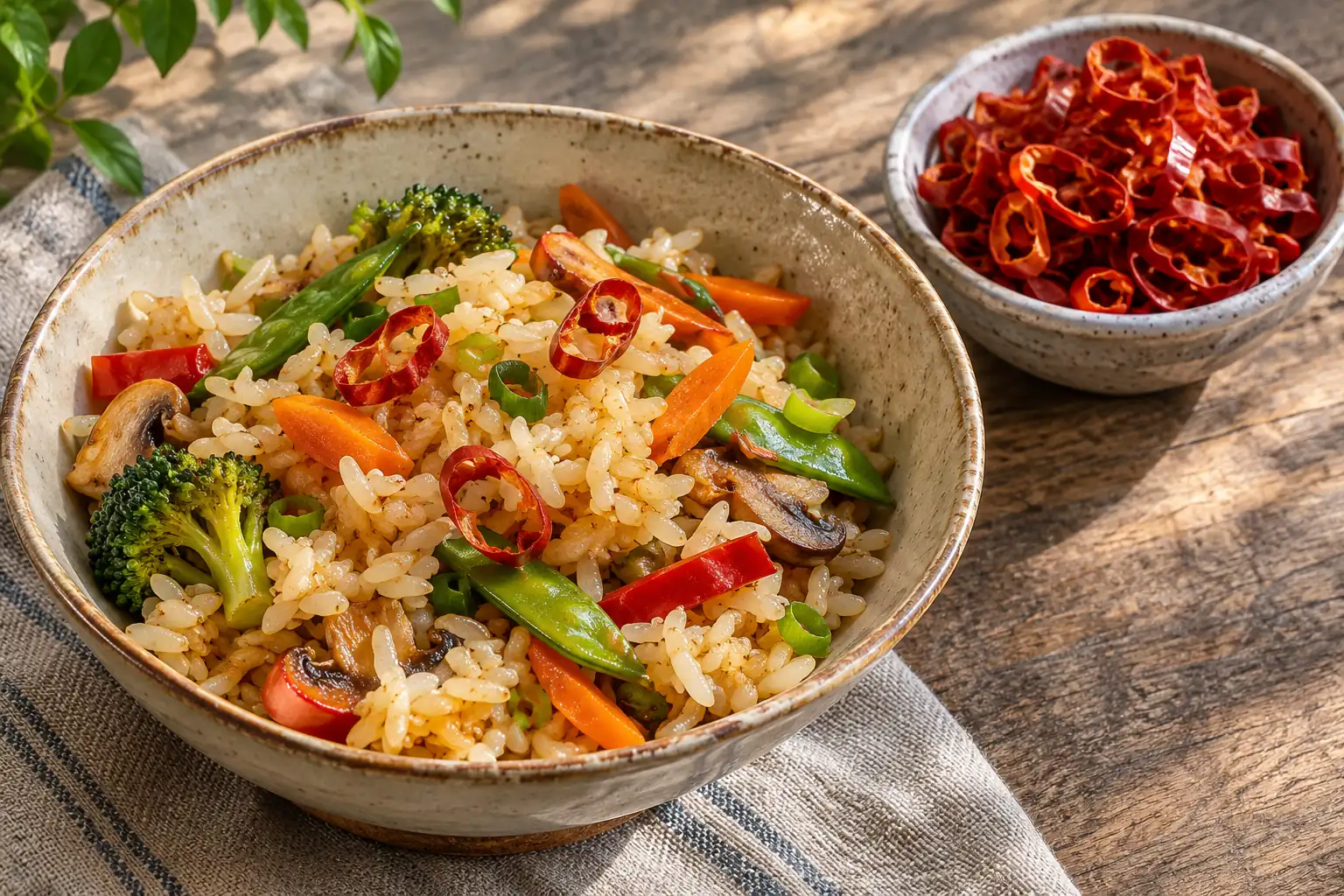
Choose dried chili rings when your food needs a recognizable circular chili cut rather than irregular flakes. Our seedless red-ring reference lists 15,000–20,000 SHU; a separate mild-spicy ring route offers 2,000–3,000 and 3,000–5,000 SHU options. The final cut dimensions and seed-state acceptance need agreement with the selected sample.
Start with the heat direction closest to your food, then define what the ring should look like after preparation. This produces a more useful purchasing brief than a request for red chili slices without a cut definition.
Define the Dimensions of the Ring
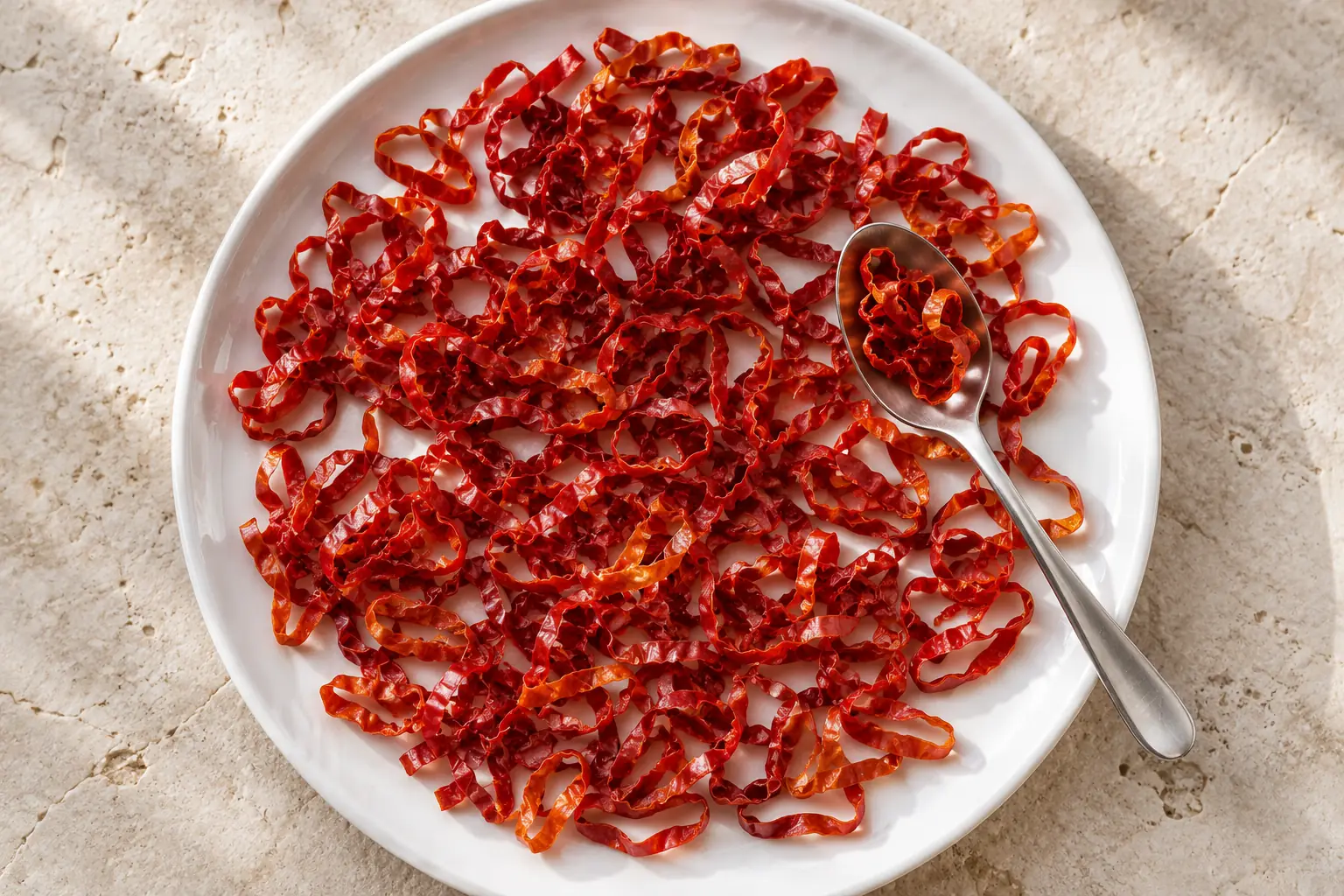
Separate the ring's cut width from its outside diameter and the natural variation of the chili pod. A narrow slice can still have a relatively large opening. State which dimension your recipe or filling operation needs to control.
Use a drawing, reference sample or clearly described measurement when agreeing the grade. Confirm the selected dimensions before treating a listed size as a ring diameter. Irregular natural rings can also include open curls, so define how much of that physical variation your food accepts.
A Hotter Seedless Ring Route
Our seedless red chili rings are described as raw AD-dried material with round form and a 15,000–20,000 SHU range. Steam treatment is optional. That combination offers a direct starting point when you want a visible ring with a stronger declared heat direction.
Ask for the selected cut specification and the actual seed condition before sampling. Keep the treatment choice separate: a ring appearance and a seedless description do not identify which processing option was applied to the supply being approved.
| Field | Catalogue starting point | Selected-order requirement |
|---|---|---|
| Form | Dried red rings | Agreed cut dimensions |
| Heat | 15,000–20,000 SHU | Sample or lot acceptance |
| Seed state | Seedless description | Defined physical condition |
| Treatment | Steam optional | Explicit choice and records |
A Mild-Spicy Ring Route for a Different Recipe
Our mild-spicy dried chili rings list natural chili ingredients, raw processing, moisture of 11% maximum and two heat ranges: 2,000–3,000 or 3,000–5,000 SHU, with an OEM discussion route. Select one heat requirement with the actual cut.
The Jinta slice-and-ring reference is another named material to discuss where that chili direction matters to the recipe. Its ring dimensions and heat need confirmation. Choose between these routes using the grade offered and your food trial rather than assuming every red ring is interchangeable.
Mild-Spicy Dried Chili Rings · Jinta Chili Slice and Ring Options
Define Seeds and Loose Fragments Separately
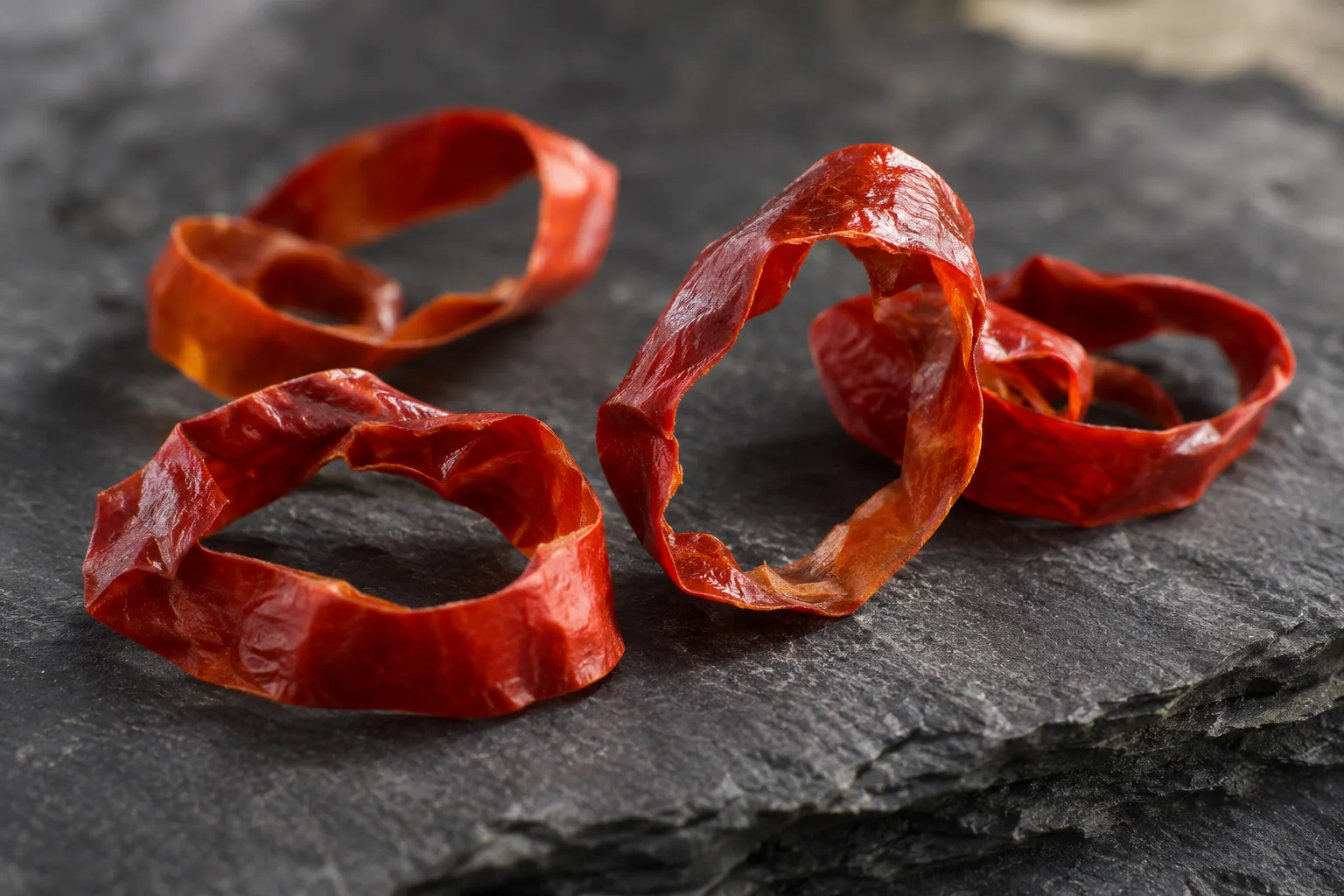
If your finished food should show mostly red ring material, include acceptable seed fragments and loose broken chili in the brief. A seedless description is useful for candidate selection but does not provide a numerical zero-seed result.
Decide how your team will inspect the incoming sample and how the accepted condition will be recorded. Keep loose seeds, ring breakage and fine material as distinct observations. A single overall appearance comment can hide which part of the cut is causing a problem in your application.
Trial the Cut Through the Real Preparation
Test the chosen rings with your actual mixing, cooking and serving conditions. Record whether the circular appearance remains suitable, whether pieces distribute as intended, and how the heat feels in the food at the chosen dose.
If the food needs a softer or less visible chili ingredient, an irregular flake or powder may be a better physical route. If it needs an acidic menu topping, vinegar-preserved slices are a separate purchasing object. Choose that change explicitly instead of treating all sliced chilies as equivalent.
Keep Composition and Treatment with the Selected Cut
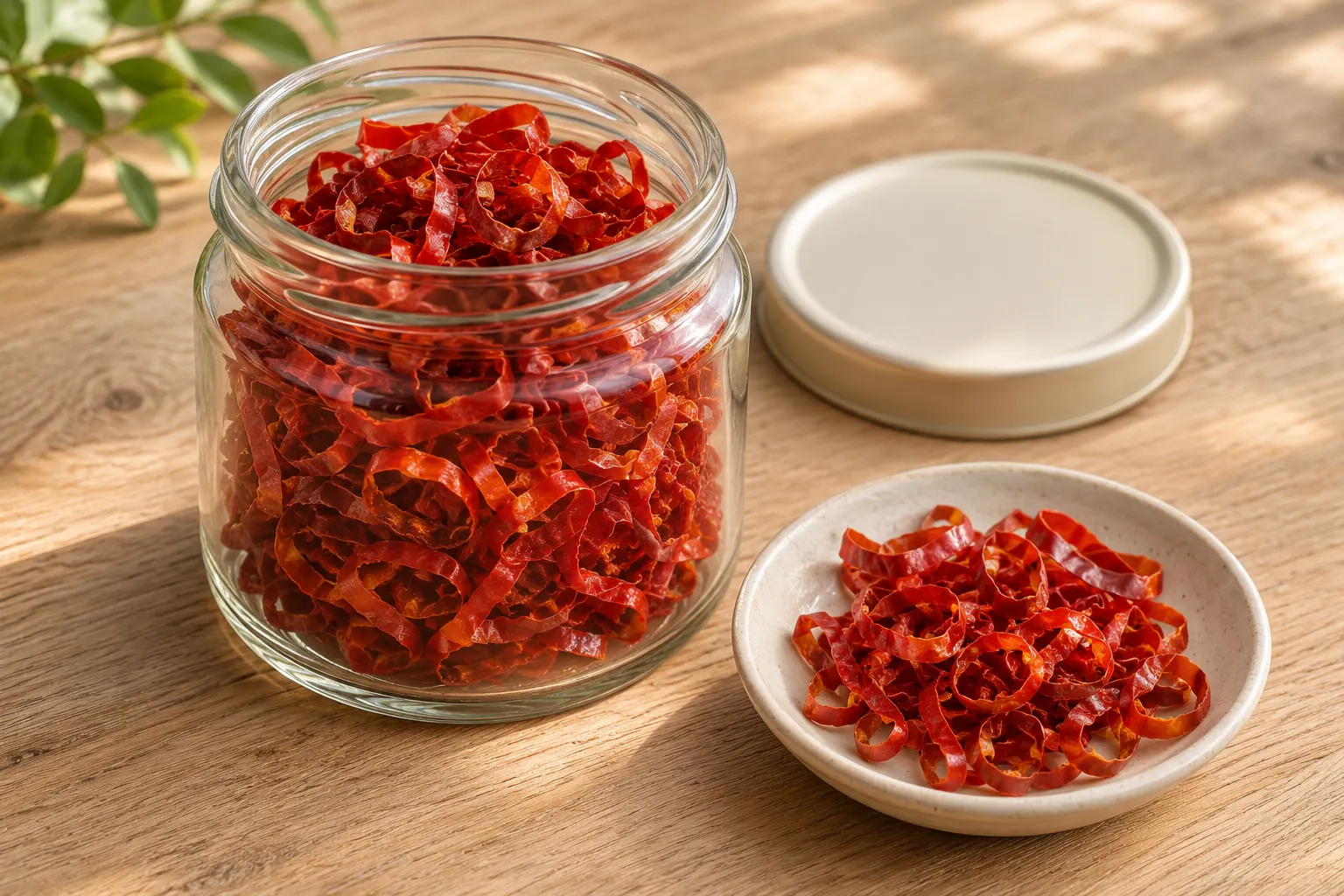
Obtain the selected ingredient statement and any treatment documentation your quality team requires. Where optional steam treatment is part of the order, agree it in the specification and connect the applicable records to the supplied material.
For cooking use, describe the intended process rather than infer a universal preparation instruction from a ring-cut name. For a finishing use, review your operation's relevant treatment requirements before approval. A dried form alone does not settle those quality decisions.
Packing Protects the Agreed Physical Standard
The ring references offer different bag, bottle and larger-pack routes. Confirm the selected net weight, inner pack and container with the quotation. Choose a format your operation can handle without losing the connection to the accepted cut.
Inspect the supplied physical condition against the agreed reference, including any breakage criterion. Keep the applicable cool dry or cool dry clean storage instructions with the selected grade and packing. Use the shelf-life conditions supplied for that actual material rather than borrow another product's duration.
An Order Description That Names the Ring Precisely
Confirm the chili grade, cut-width and diameter requirements, acceptable ring integrity, seed condition, heat range and treatment. Retain the approved physical sample and food-trial record as the reference for the quotation.
We can discuss the hotter seedless route, a selected mild-spicy option or a Jinta slice-and-ring enquiry with you. State which attributes are essential and which can vary, so the proposal addresses your food rather than a generic ring-cut catalogue category.
Discuss a Dried Chili Ring Grade