
Chili Powder for Automatic Dosing with a Defined Particle Specification
For an automatic-dosing project, use our powder options to select trial materials, then define the sieve distribution and equipment acceptance you actually need. The catalogue includes selected powder grades within 40–120 mesh and two separate 100-mesh references.
A nominal mesh entry is a shortlist criterion, not a complete distribution or a guarantee that a powder will run through your feeder. We can discuss the selected chili material and sample against a brief that connects particles, composition and your actual dosing trial.
Discuss Powder for Your Dosing Trial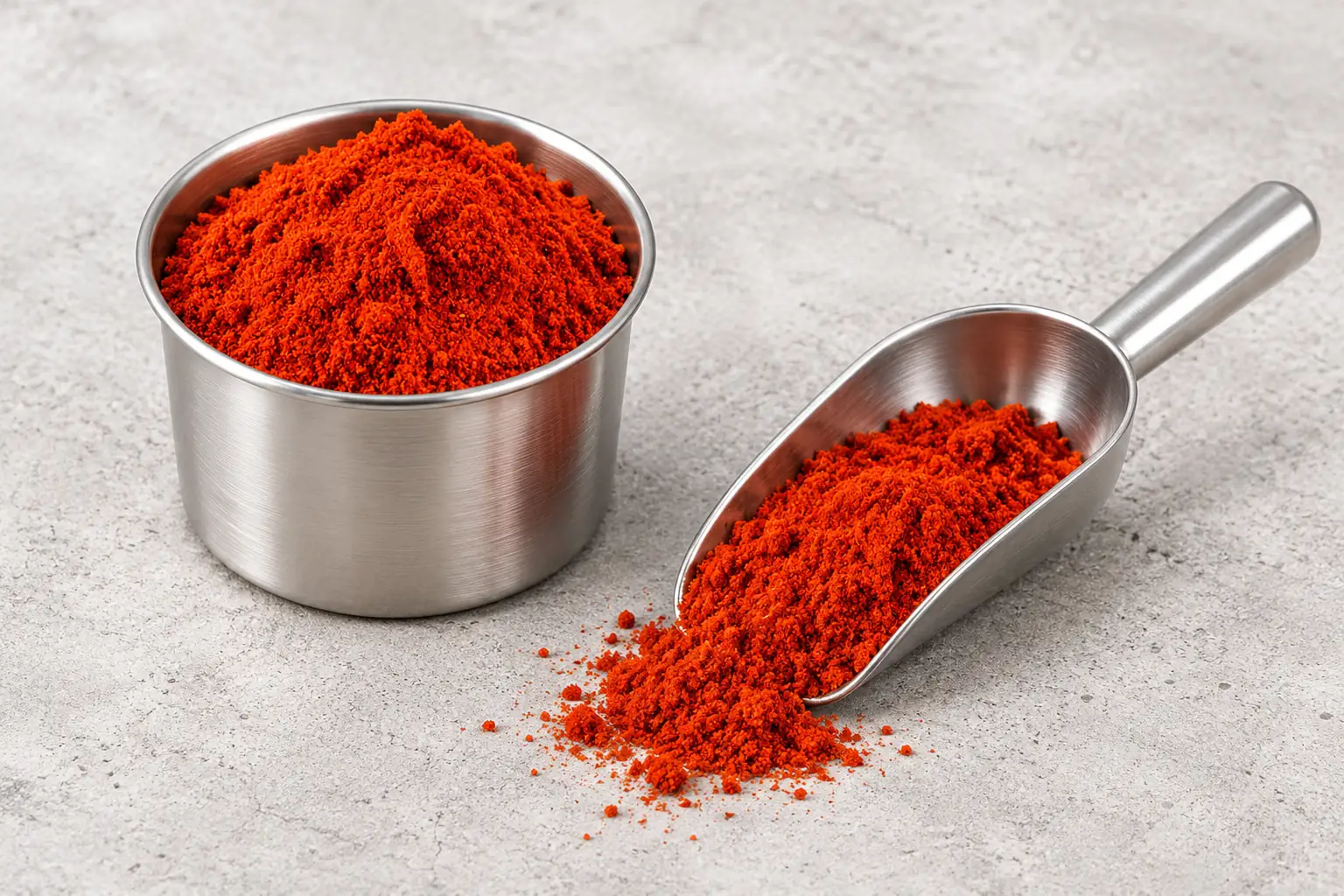
Describe the Dosing Operation Before Choosing a Grade
State the feeder or dosing arrangement used in your operation, the required addition quantity and the tolerance you need. Include how the powder is received, transferred and held before dosing. Those conditions help make a sample trial relevant to production.
Record the current material and the problem you are trying to solve, such as inconsistent dispensed mass or an interruption during feeding. Keep observations specific. A general request for free-flowing powder does not identify the operating conditions or acceptance record your team needs.
Select Nominal Powder Grades Without Combining Options
The multi-format dried chili reference offers 40–120 mesh specifically for powder, while other entries on the same page concern flakes or whole pods. Choose an actual powder grade within that offering rather than treating the whole range as a completed sieve report.
The raw AD Cayenne powder and the cayenne powder with a steam description separately list 100 mesh. Keep their own composition and treatment requirements with the selected sample. Similar mesh labels do not establish the same ingredient identity or processing history.
Selected 40–120 Mesh Powder Options · Raw AD 100-Mesh Cayenne Powder · 100-Mesh Cayenne with Steam Description
| Candidate | Particle starting point | Keep with the sample |
|---|---|---|
| Multi-format dried chili powder option | Selected grade within 40–120 mesh | Chosen powder, heat and seed state |
| Raw AD Cayenne powder | 100 mesh | Cayenne requirement and full composition |
| Cayenne powder with steam description | 100 mesh | Actual composition and treatment scope |
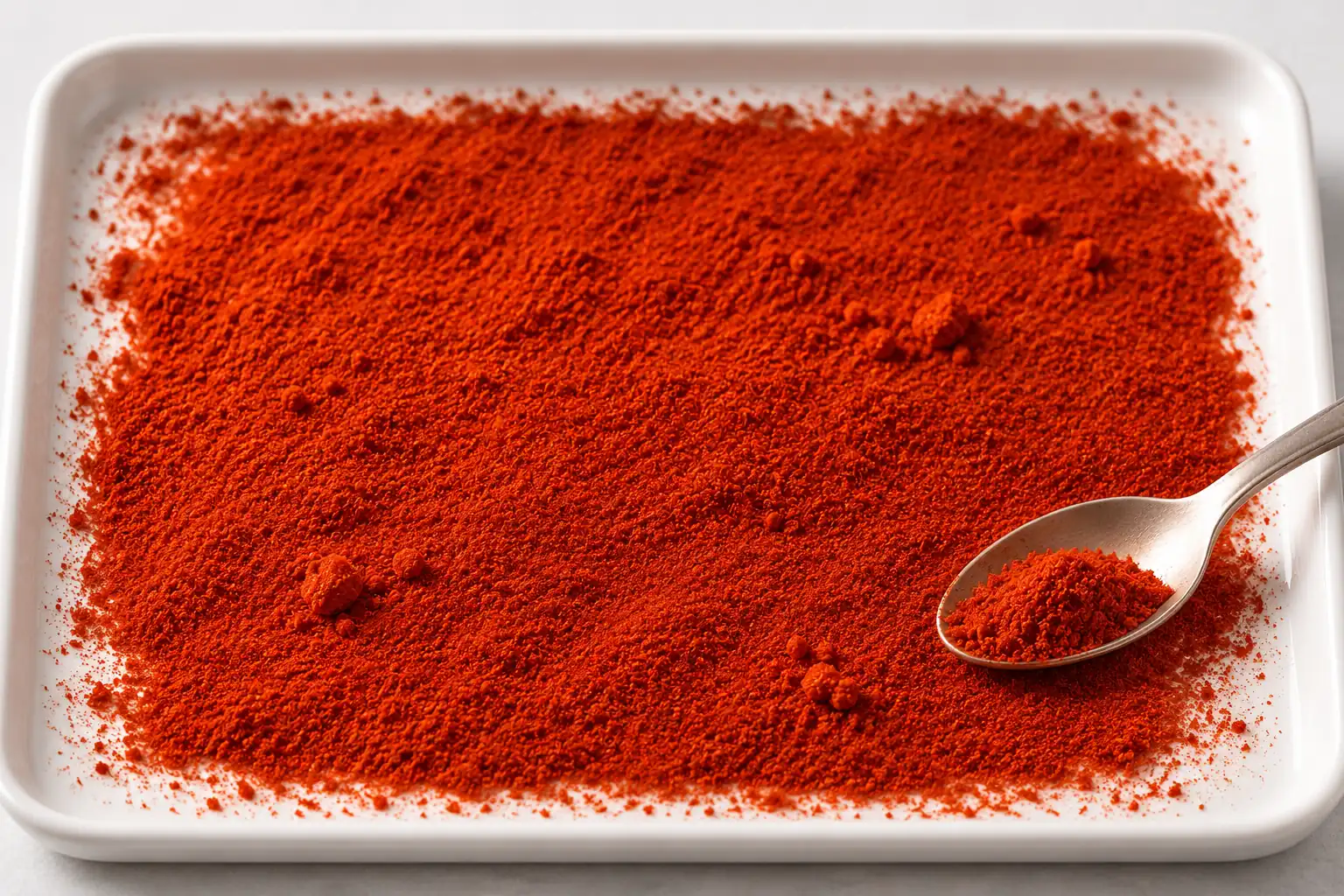
Use Visual Inspection to Identify Trial Observations
Inspect the identified sample for the appearance your receiving procedure records, including visible particles and agglomerates where relevant. Keep any observation tied to the actual sample and handling condition. An image alone cannot establish how the material will behave in a feeder.
If the sample is conditioned or prepared before the equipment trial, document that step. Avoid comparing one freshly opened material with another handled differently without recording the difference. The useful result concerns the powder under the conditions your production will use.
Specify the Sieve Distribution as an Acceptance Record
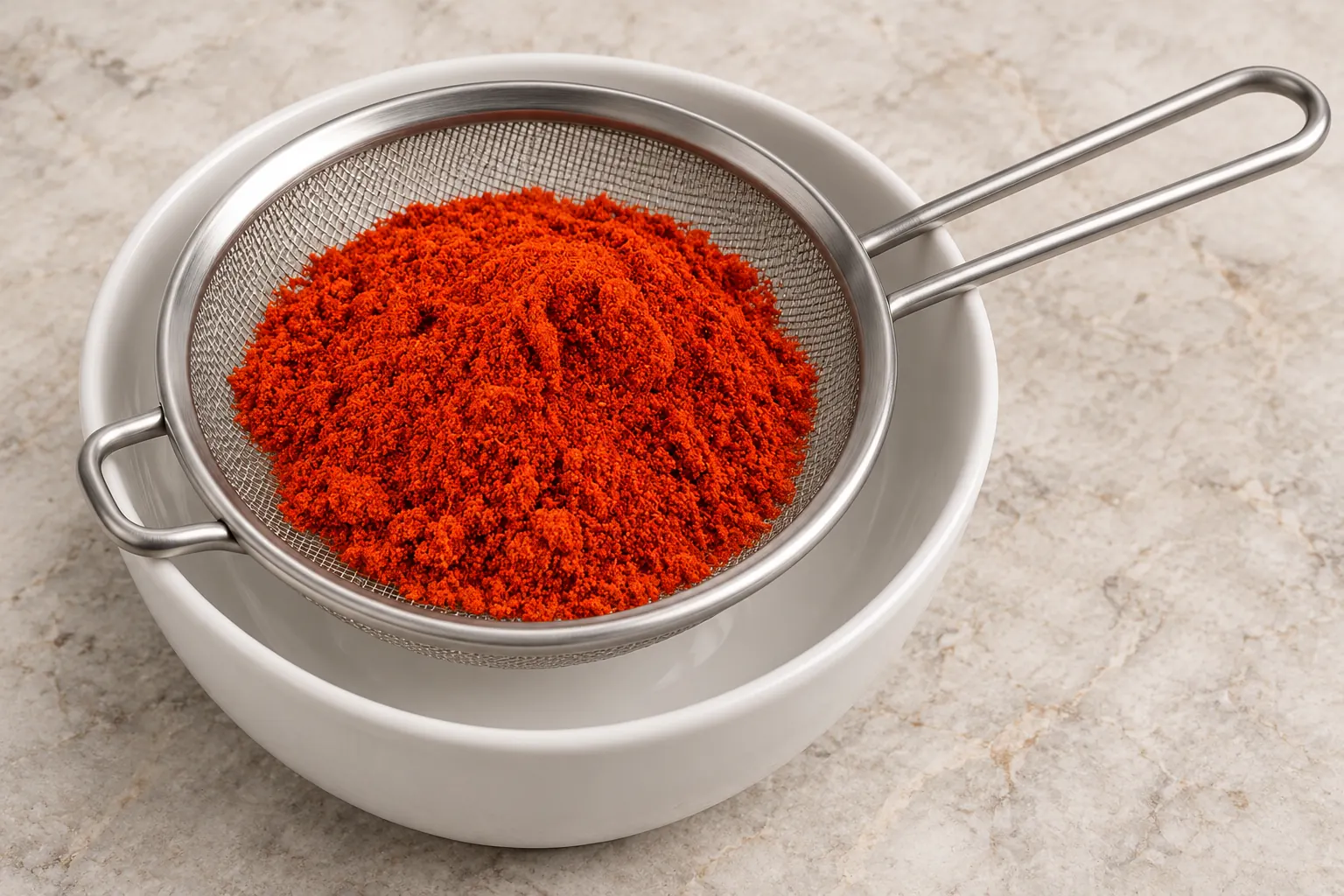
ASTA Method 10.0 is specifically a particle-size distribution method using sieve analysis. Use an agreed method and sieve standard when a distribution is needed, with the screen openings, passing or retained fractions and acceptance limits defined by your specification.
Ask for the result associated with the selected material. A 100-mesh catalogue label does not tell you every retained fraction. Agree the required passing or retained percentages with your material specification, and keep sample preparation and the reporting basis clear for comparison.
Technical reading: ASTA 10.0 Particle-Size Distribution
| Field | Record required |
|---|---|
| Method | Procedure, edition and sieve standard |
| Screens | Chosen openings and units |
| Fractions | Passing or retained mass percentages |
| Acceptance | Buyer-defined limits for the chosen screens |
| Identity | Powder grade and sample or lot reference |
Keep Sieve Evidence Separate from Feeder Performance
A sieve comparison describes particles under its agreed method. The dosing trial observes the material in your actual operation. Both can help a buying decision without one standing in for the other.
Use the sample that carries the agreed specification and record the equipment settings, handling conditions and run sequence your team needs.
Record Actual Dispensed Mass Against the Setpoint
For each recorded run, retain the target dose and actual dispensed mass, along with the relevant equipment and handling conditions. Note interruptions or adjustments rather than averaging them out of the record. Your team should define the acceptable tolerance and trial coverage.
If settings change, keep that run as a distinct version. This lets you compare whether an apparent material improvement came from the powder or an equipment adjustment. The outcome can support your selected application without becoming a universal no-blocking or accuracy guarantee.
Preserve the Material That Passed the Relevant Evaluation
Keep the accepted distribution and equipment-trial record with the ingredient declaration, heat and any other food requirements. A powder that doses acceptably still needs to provide the intended food character and meet your quality standard.
If your task is matching several powders in a dry seasoning blend, use the separate dry-blending guide as well. This page focuses on single-material dosing. Preserve the chosen sample and specification rather than approving all powder options under the same broad mesh description.
Send a Particle-and-Dosing Trial Brief
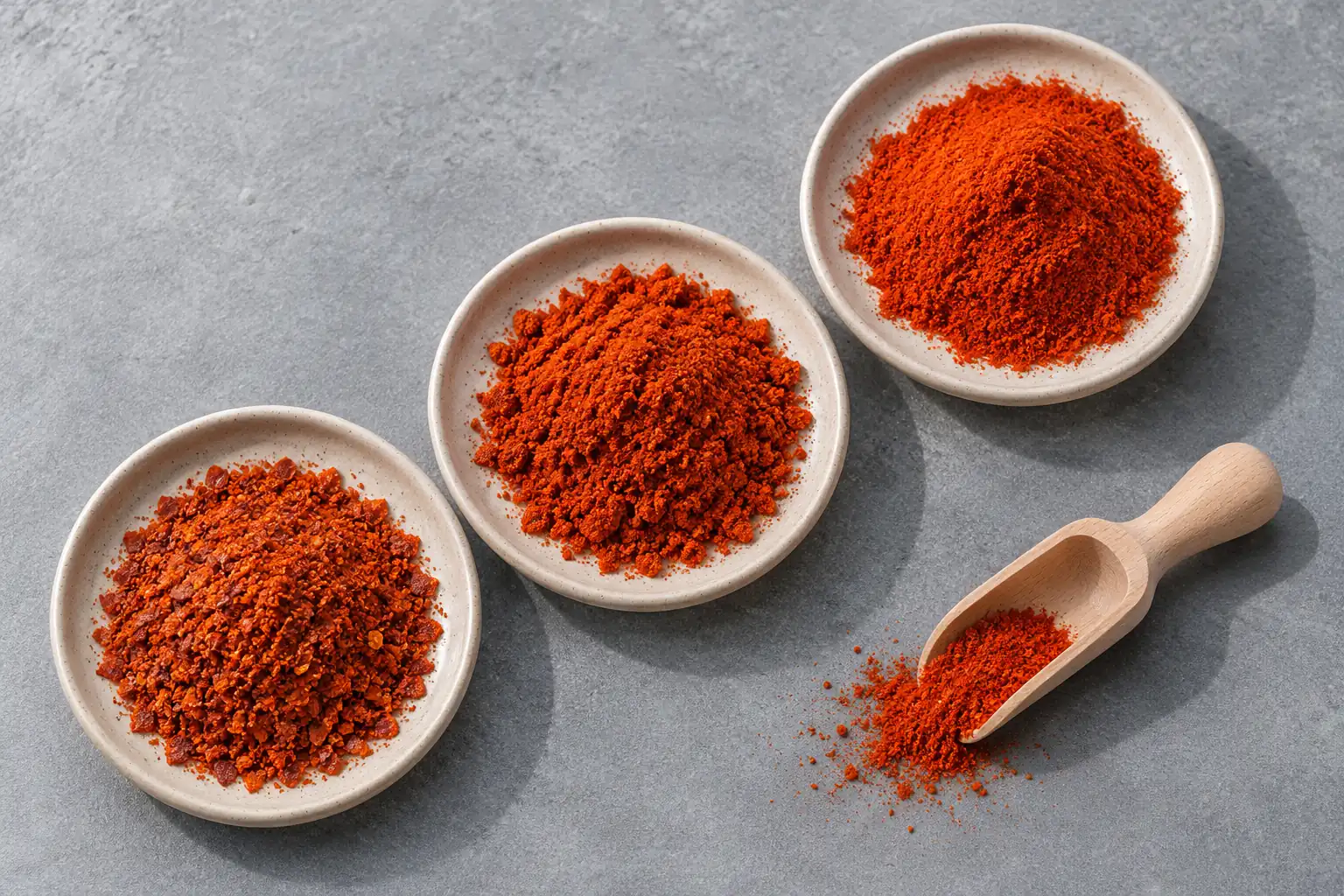
Send the powder identity, target heat and particle requirements, current material and the dosing task. Include your sieve criteria if established, target addition and tolerance, equipment-trial conditions and sample needs. Add required documents, quantity, packing and destination.
We can discuss a selected powder option or a 100-mesh candidate against that brief. Keep the agreed physical specification and accepted equipment-trial version with the quotation so repeat enquiries concern the same material and use conditions.
Send Your Dosing-Trial Requirements