
Fresh or Frozen Red Chilies for Sauce Production
Choose fresh or frozen red chilies around the way your sauce operation receives, holds and prepares the ingredient. Our fresh raw red-chili reference provides a 3–6 cm starting size; our whole IQF red chili provides a frozen whole-pepper route with storage below −18°C.
Neither state is a universal winner. Fresh pods suit an operation designed around fresh receiving and preparation; a frozen route needs compatible frozen storage and a defined preparation plan. Compare the selected material in the sauce before deciding which route supports your process.
Map the Steps Your Factory Will Still Perform
List sorting, stem removal, cutting, grinding and cooking as they apply to your recipe. A fresh whole pepper and a frozen whole pepper both leave physical preparation tasks to confirm. A frozen ingredient should not be assumed to arrive diced or puréed.
Record the input state your equipment and recipe actually require. If a prepared cut would fit better than a whole pod, move to a separately defined pre-cut or purée enquiry rather than assume the whole-pepper supply eliminates those steps.
A Fresh Red-Chili Starting Point
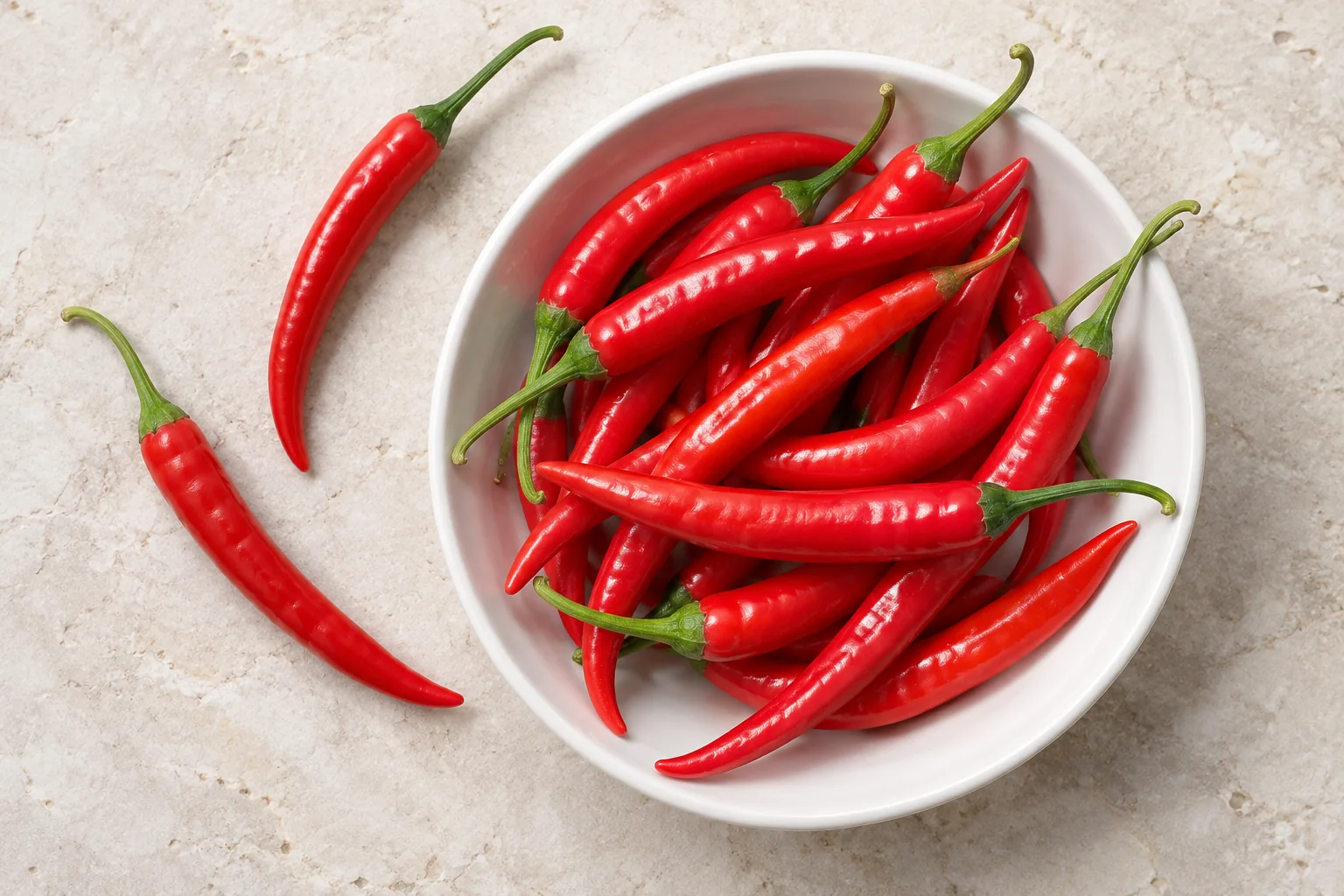
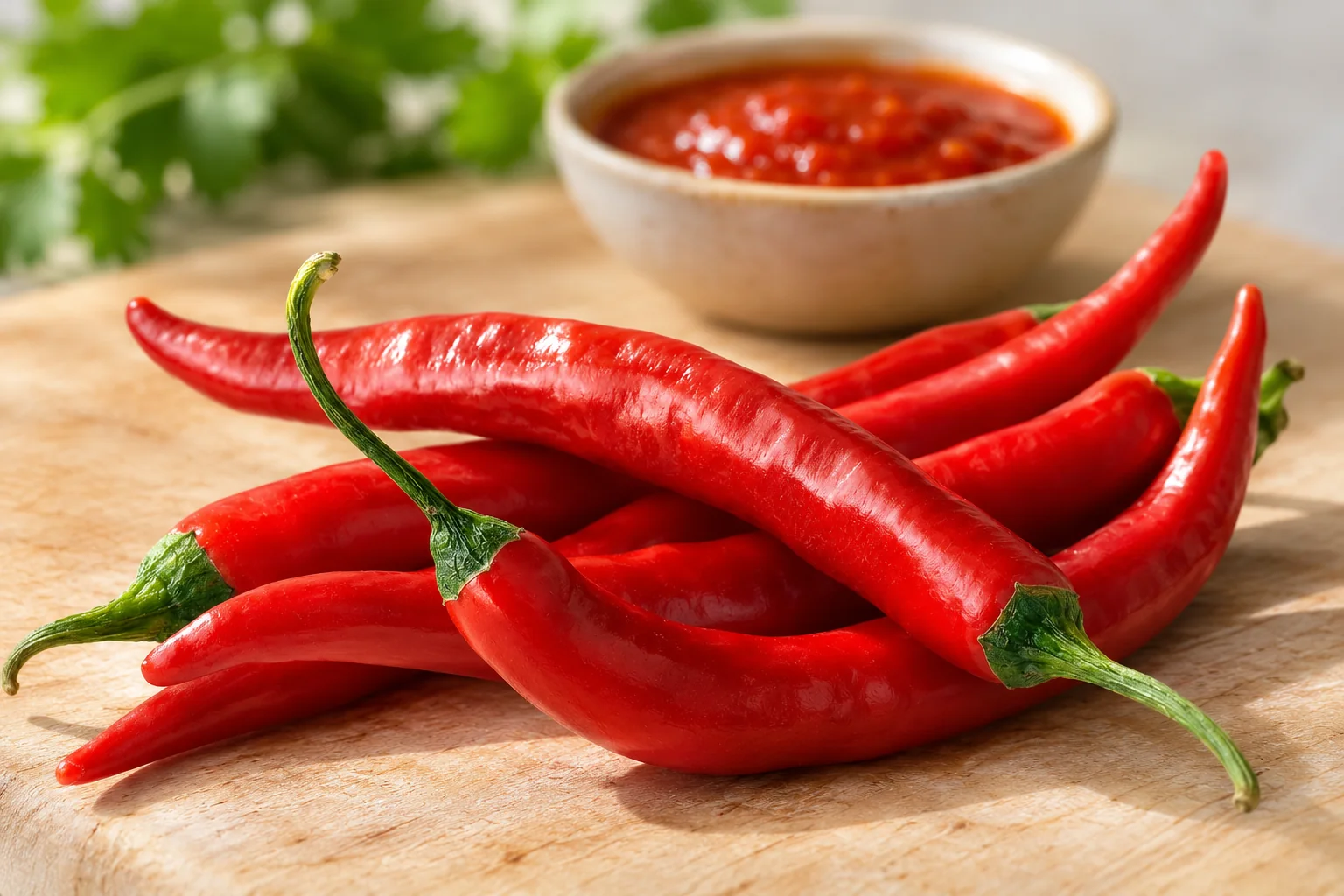
Our fresh raw red chili lists chili as the ingredient, red colour, 3–6 cm size and a 30 kg pack reference. It is a raw material for sauce and other food preparation, rather than a finished sauce or a preserved chili product.
Confirm the selected size grade, stem condition, heat requirement and the actual packing arrangement. Agree fresh handling conditions and the usable period for the proposed route before building a receiving schedule. A pack description alone does not settle destination availability or arrival timing.
| Selection field | Starting point | Confirm |
|---|---|---|
| State | Fresh / raw / red | Selected condition |
| Size | 3–6 cm | Grading and stem state |
| Pack | 30 kg reference | Order arrangement |
| Recipe | Sauce ingredient | Heat and process fit |
Inspect Fresh Pods Against the Intended Sauce Input
Assess the fresh sample for the physical condition and preparation needs important to your sauce. Record the amount of usable ingredient your trial obtains after the steps your operation performs, and note the final texture and flavour at the chosen dose.
Use that result to complete the fresh grade requirement. If you change the pod selection or preparation method, update the trial record. A fresh label does not establish a numerical heat value, cultivar assay or fixed yield for every supply.
A Whole IQF Frozen Route
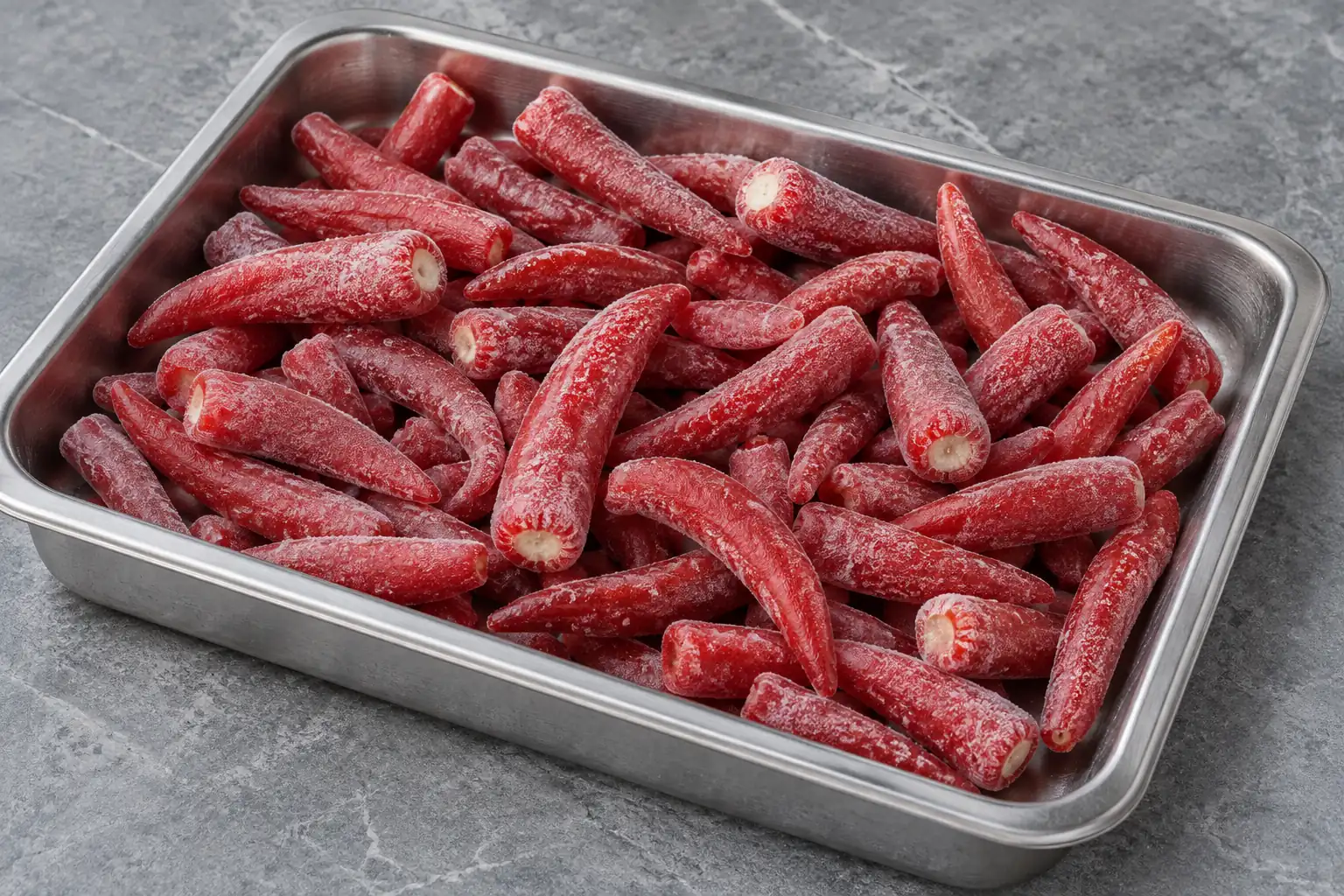
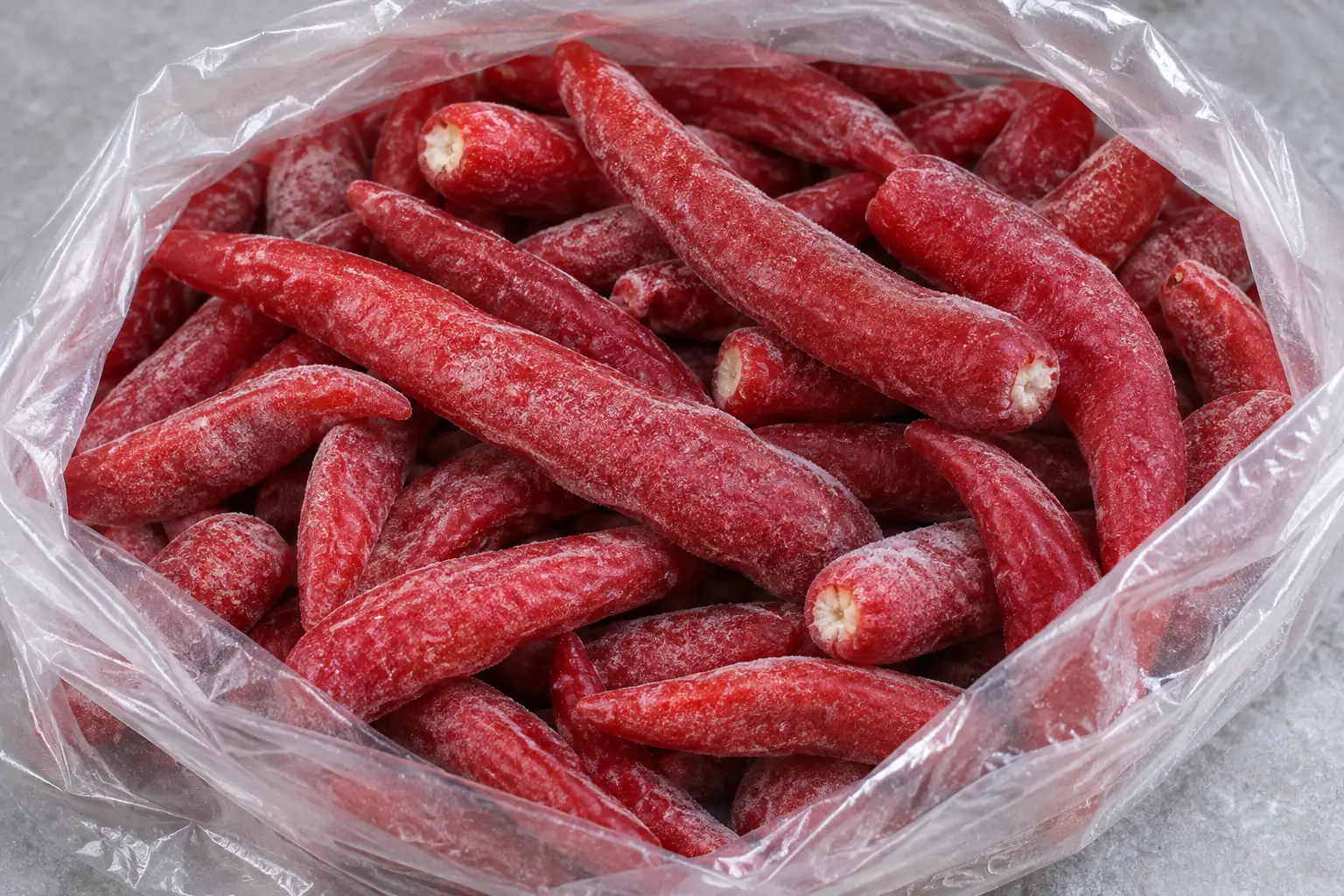
Our whole IQF red chili lists 100% fresh-chili content, whole form and bulk supply. Its supplied state is frozen. The reference specifies storage below −18°C, a 24-month shelf life and no refreezing after defrosting.
Confirm the actual grade, size, heat, dates and packing with the order. The fresh-chili content describes the ingredient, while IQF describes the supply route. Keep the frozen handling requirement visible when deciding whether this material fits your receiving and inventory system.
Plan Frozen Preparation Before the Food Trial
Agree how the selected frozen ingredient will enter your process, including any handling before cutting or cooking. Obtain the product-specific preparation and remaining-use guidance and keep it with the instruction against refreezing after defrosting.
Run the sauce comparison under the preparation conditions you intend to use. Record the ingredient weight basis and any liquid incorporated or removed, so the result is meaningful for the recipe. Frozen and fresh trial portions should be compared on a clearly documented basis rather than appearance alone.
Compare Usable Material and Recipe Result Together
For each route, record the incoming amount, preparation work, usable amount and final sauce outcome. These observations let you compare the material your recipe actually receives, alongside the quoted ingredient and handling costs.
Keep the comparison specific to your operation. A whole fresh pod may require different preparation from a selected frozen whole pod, and a different cut could change the result again. Use the trial to decide the practical route without assigning an unmeasured yield or cost advantage to either state.
| Decision | Fresh route | Whole frozen route |
|---|---|---|
| Receiving | Agreed fresh condition | Frozen acceptance |
| Preparation | Your fresh-pod steps | Agreed frozen method |
| Recipe basis | Usable prepared weight | Defined weight and liquid basis |
| Outcome | Sauce trial | Sauce trial |
Confirm the Route to Your Destination
Provide the destination, intended receiving date, quantity and available storage conditions. Discuss the current supply route and product-specific documents before you approve a commercial offer. These details are part of choosing the material, not an afterthought following a flavour trial.
For frozen supply, retain the agreed temperature and handling conditions with the order. For fresh supply, retain the actual fresh handling and usable-period instructions. Confirm timing for the proposed arrangement rather than treating a catalogue entry as a promise of stock or transit performance.
Choose the Supply State Before Refining the Cut
Select the fresh or whole frozen route that fits your receiving and sauce trial. If the main remaining issue is grinding or cutting, define a separate purée or pre-cut requirement, with its own texture and supply form.
We can discuss the selected red chili and your process brief together. Keep the accepted grade, ingredient state, preparation record and commercial arrangement connected so a repeat order follows the same sauce requirement.
Discuss Red Chilies for Sauce Production