Whole Dried Chilies for Your Own Milling Operation
If you mill chili powder in your own operation, we can discuss whole dried red chili as the incoming raw material. Our catalogue includes elongated whole dried red chilies with raw AD processing, plus smaller whole-pod options in multi-format dried chili listings.
Start with the condition your line can receive and the powder you need to make. Pod form, seed and stem state, cleaning requirements and the result of your milling trial determine the useful comparison. Whole-chili pricing alone does not show the cost of usable powder after your own preparation.
Discuss Whole Chilies for Milling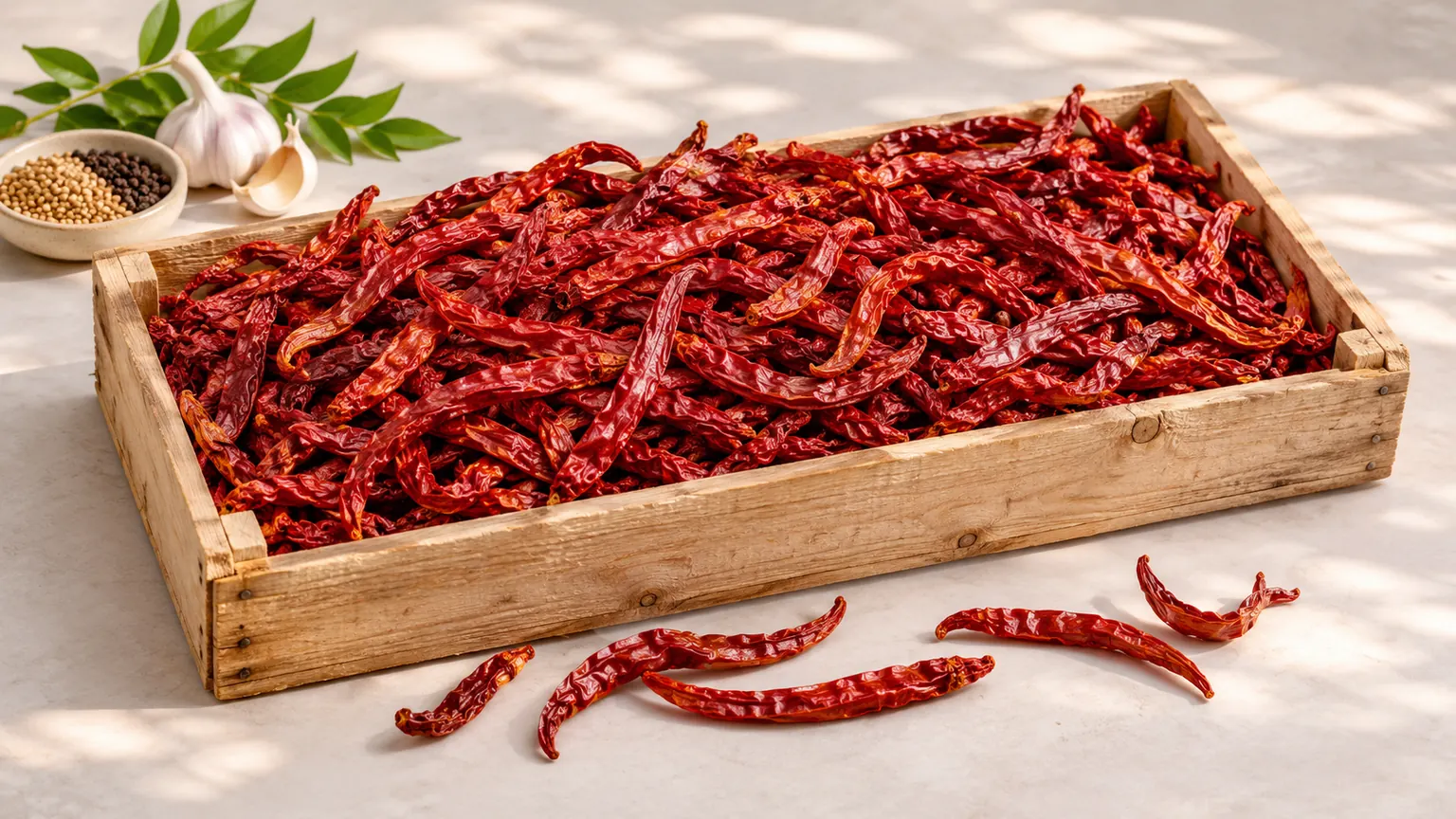
Work Back from the Powder and the Feed Condition
Describe your target powder first: its ingredient identity, heat, colour, seed requirement and final particle specification. Then identify which preparation steps you perform before milling. A buyer who removes stems needs a different incoming-material brief from one who requires stems removed before delivery.
Include physical feed restrictions that affect your operation. Whole-pod dimensions do not specify the mesh of the powder produced later. Your process and the selected raw material need to be evaluated together, with the finished powder judged against its own acceptance criteria.
Compare Whole-Pod Options as Separate Materials
The elongated dried chili reference is described as whole, raw and AD dried. Its shape is elongated, but it does not provide an exact pod length or heat value. Put any dimensional or pungency requirement into your enquiry instead of adding an assumed number.
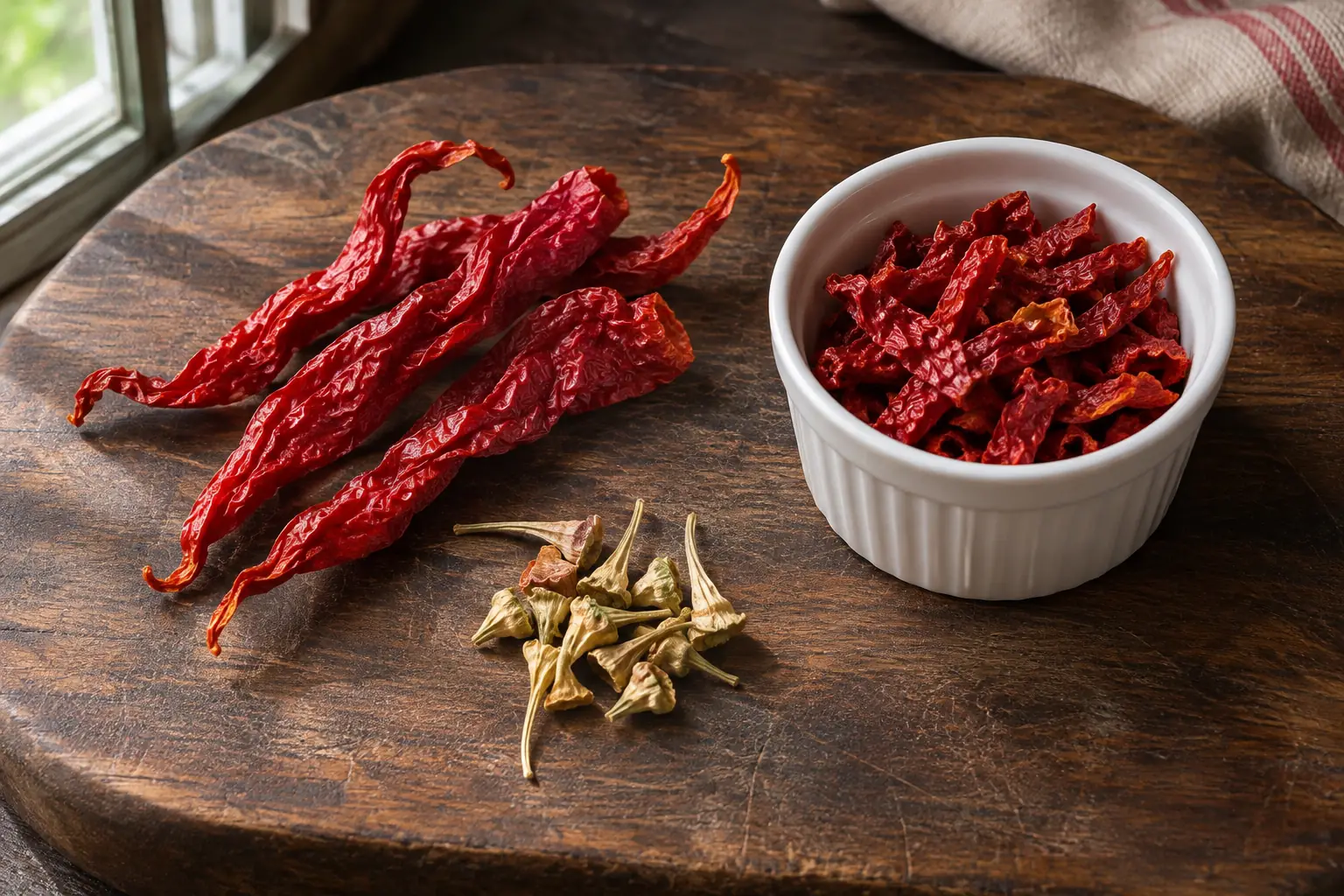
The other two references list whole pods at 3–5 cm or 5–7 cm among several forms. Select a whole-pod option and the actual variety or grade. Those pages also describe powders and flakes, which are separate purchasing choices rather than evidence of the output from your milling line.
Whole Elongated Dried Red Chili · Selected Small Whole-Pod Options · Yidu and G4 Dried Chili Options
| Reference | Catalogue starting point | Specify for your line |
|---|---|---|
| Elongated whole red chili | Whole elongated; AD; raw | Dimensions, heat and receiving condition |
| Multi-format dried chili | Whole pods 3–5 cm or 5–7 cm | Chosen length, seed and stem state |
| Yidu/G4 dried chili | Whole-pod options; Yidu/G4 context | Actual variety, length and seed option |
Put Seed and Stem State into the Material Definition
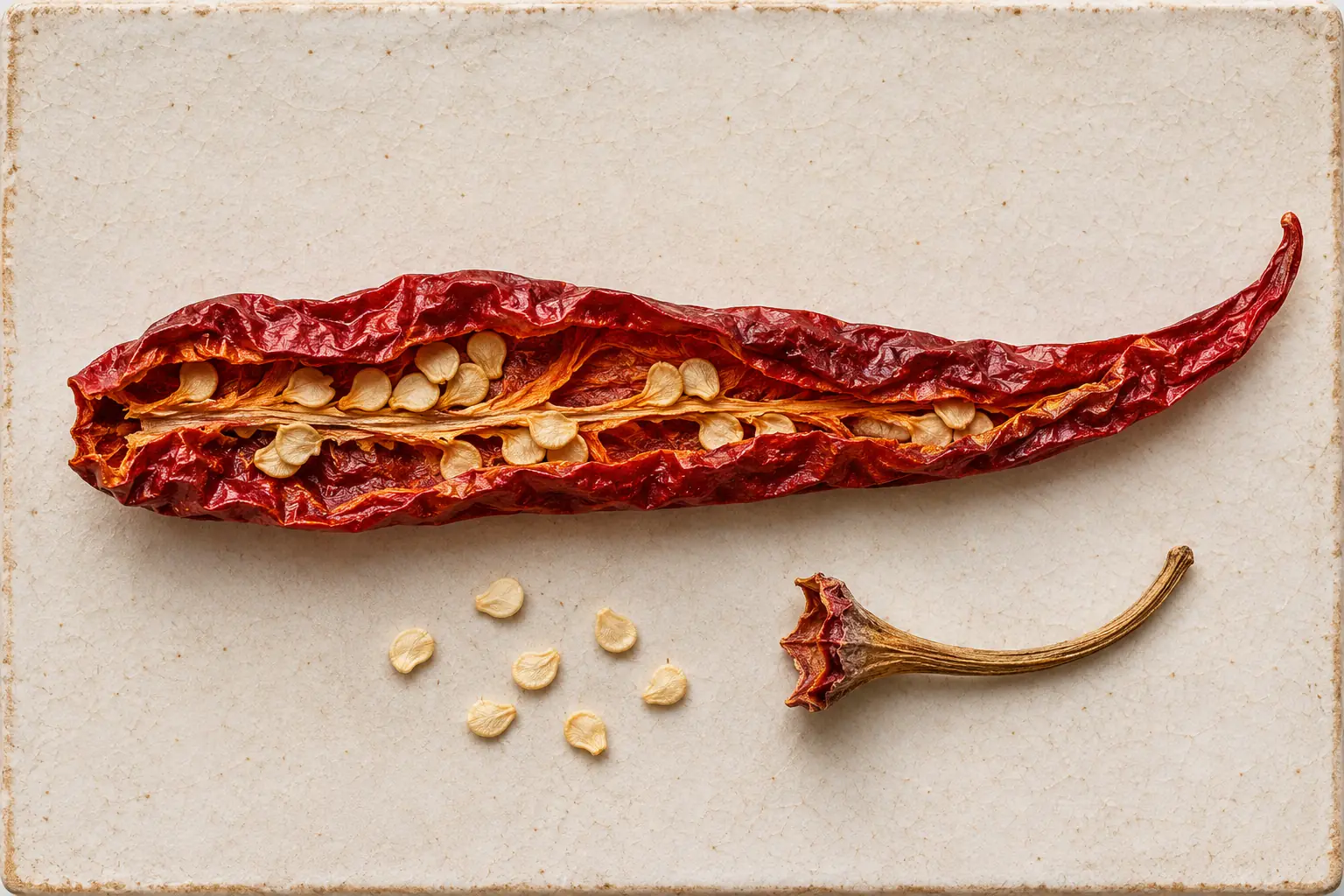
A with-seed or seedless requirement changes the material you are comparing. State whether the incoming whole pods should retain seeds and whether stem removal occurs in your operation or before delivery. Keep those decisions alongside the selected chili identity.
Use the sample to review visible receiving condition against agreed criteria. If your production needs a particular limit for foreign material, broken pods or other incoming attributes, provide that requirement for review. We do not assign a numeric limit where the selected product has not supplied one.
Confirm the Actual Drying and Handling Specification
Raw AD processing is declared for the elongated reference. The smaller-pod listings describe sun drying and machine drying within their options, with details to confirm for the selected supply. Ask for the actual process description needed by your quality team.
Storage also belongs to the selected material. The two-year statement on the smaller-pod references is specifically tied to −18°C; it should not become a two-year ambient-storage promise. Agree storage and transport conditions with the whole-pod choice before planning your stock.
Run a Trial That Measures Usable Output
Use an identified incoming sample and record its mass before preparation. Record any material removed during your normal sorting, cleaning or stem removal, then mill the remaining material under documented conditions. Keep the accepted powder output separate from material that needs reworking.
Assess that powder against the target your team defined, including heat, colour and texture where required. The trial gives your own line a comparison basis. It does not establish a universal yield, an energy saving or a production rate for every mill.
Compare Offers on the Same Usable-Material Basis
When trial conditions and acceptance rules are consistent, compare how much acceptable powder each incoming sample produced. Preserve the cleaning and rework records so a low raw-pod price is not mistaken for a lower usable cost without evidence.
Add the actual costs your operation tracks, such as material removed and additional handling. Keep purchase terms comparable too: the selected pack, delivery basis and quantity can affect the comparison. We can discuss the raw-material offer; your own trial establishes the usable-output result.
| Stage | Record | Decision supported |
|---|---|---|
| Incoming sample | Identity and mass | Comparable starting quantity |
| Preparation | Removed material and retained feed | Your cleaning requirement |
| Milling | Operating conditions and output | Repeatable trial |
| Approval | Accepted powder mass and specification | Usable cost comparison |
Arrange Packing Around the Receiving Operation
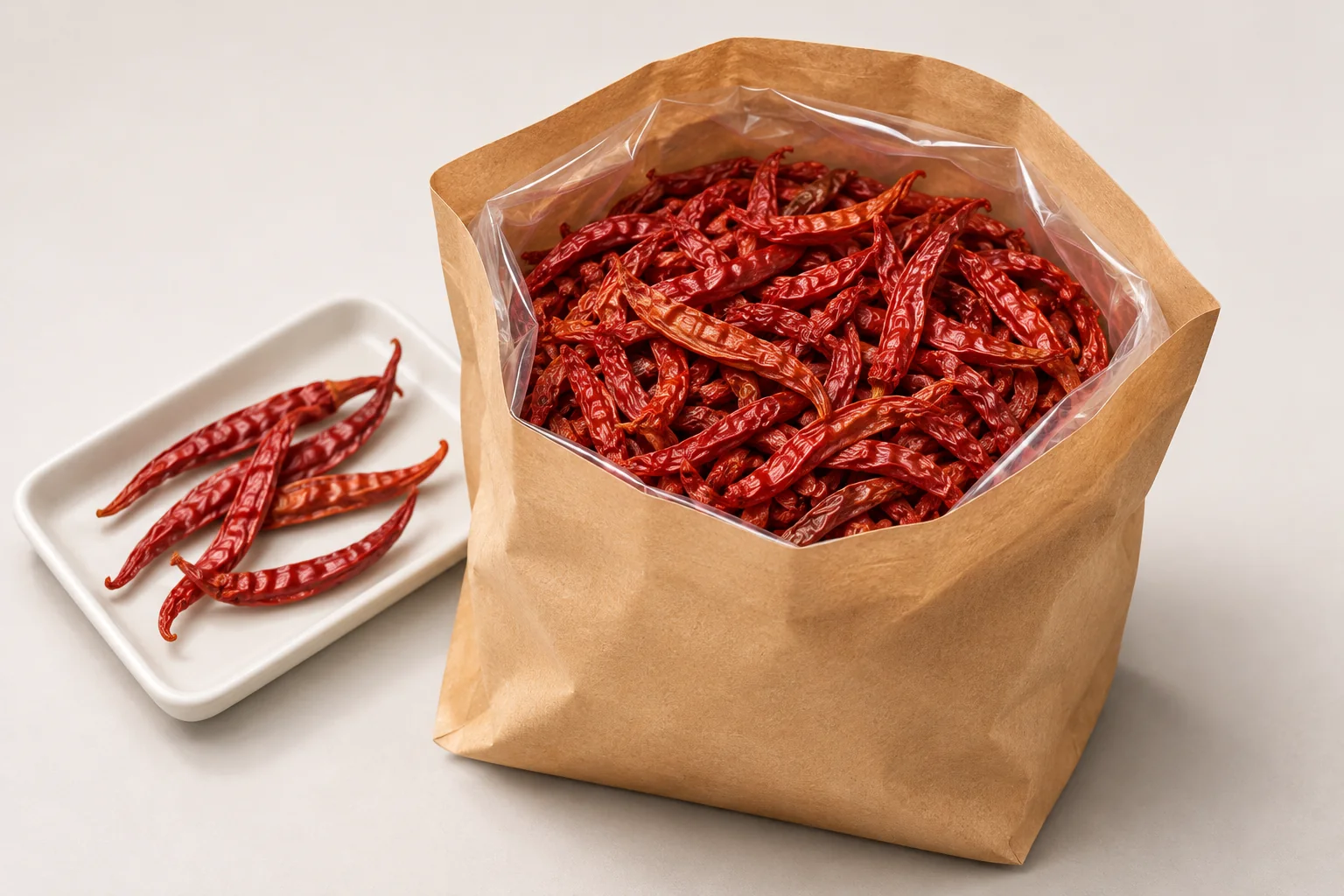
The elongated whole chili listing allows packing to customer request. Describe the pack size and presentation that suit your unloading, storage and feed preparation, and ask us to confirm the actual arrangement in the offer.
Connect the sample and selected specification to that offer. A small sample bag shows the material for evaluation; it does not fix commercial net weight or minimum order quantity. Retain the agreed storage instruction and pack closure with your incoming-material record.
Send a Raw-Material Brief for Your Milling Trial
Send your intended powder specification, the preparation steps you perform, and the whole-pod condition your line needs. Include any length, seed, stem, heat and documentation requirements, along with sample needs, quantity, destination and preferred packing.
We can use that brief to discuss the elongated or smaller whole-pod candidates. If you also purchase finished powder and flakes, put them on separate lines in a combined sourcing request. If the food retains the whole pod, use the separate cooking-focused whole-chili selection instead of a milling-yield comparison.
Send Your Whole-Chili Requirement