Contract Blending and Packing from a Buyer-Owned Chili Formula
Bring us your established chili-seasoning formula when you want to discuss a defined blending and packing project. The useful starting point is the recipe version, ingredient specifications, intended food and pack requirement. We can review the requested scope against those inputs and discuss the sample and commercial conditions.
This route differs from selecting an existing blend or asking for a new flavour from a sensory brief. Your formula should identify what is already fixed and what, if anything, may be changed.
Discuss a Buyer-Owned Formula Project
Provide a Recipe that Identifies Every Component
Use one controlled formula version with ingredient names and quantities on a clear basis. If the recipe uses percentages, check that the complete formula totals 100%. Include the exact identity of compound ingredients rather than a broad spice mix name that leaves their composition undefined.
Agree how detailed recipe information will be exchanged before sending sensitive material. Your initial enquiry can describe the ingredient categories, restrictions and intended use so that both sides understand the proposed project before reviewing the full recipe.
Specify the Chili and the Other Raw Materials
A quantity of chili powder is incomplete without the heat, colour and particle requirements relevant to your food. Define those fields for the selected ingredient and identify acceptable tolerances on an agreed basis. Do the same for other components when their form affects the recipe.
State whether your proposal requires particular supplied ingredients or allows alternatives for review. A change in chili grade or compound seasoning should be approved as a material change, not concealed under an unchanged formula percentage.
| Component | Useful specification | Change boundary |
|---|---|---|
| Chili ingredient | Composition, heat, colour and particles as required | Approved grade or reviewed alternative |
| Salt and other powders | Identity and relevant physical requirements | Allowed material versions |
| Compound ingredients | Complete declaration and required documents | Selected recipe and source reference |
Confirm the Actual Project Scope
Our chili-lime seasoning reference describes custom label and blend support. Our barbecue marinade reference provides a concrete mixed-powder example naming chili powder, MSG and salt. These support a focused discussion of your project; they do not establish that every possible recipe or pack can be accepted.
Specify the services requested, such as ingredient proposal, sample preparation, blending discussion and packing arrangement. Confirm what is included, what information is needed and the conditions attached before treating the project as an agreed supply commitment.
Custom label and blend enquiry · Blended barbecue marinade example
Approve the Sample against the Recipe and the Food
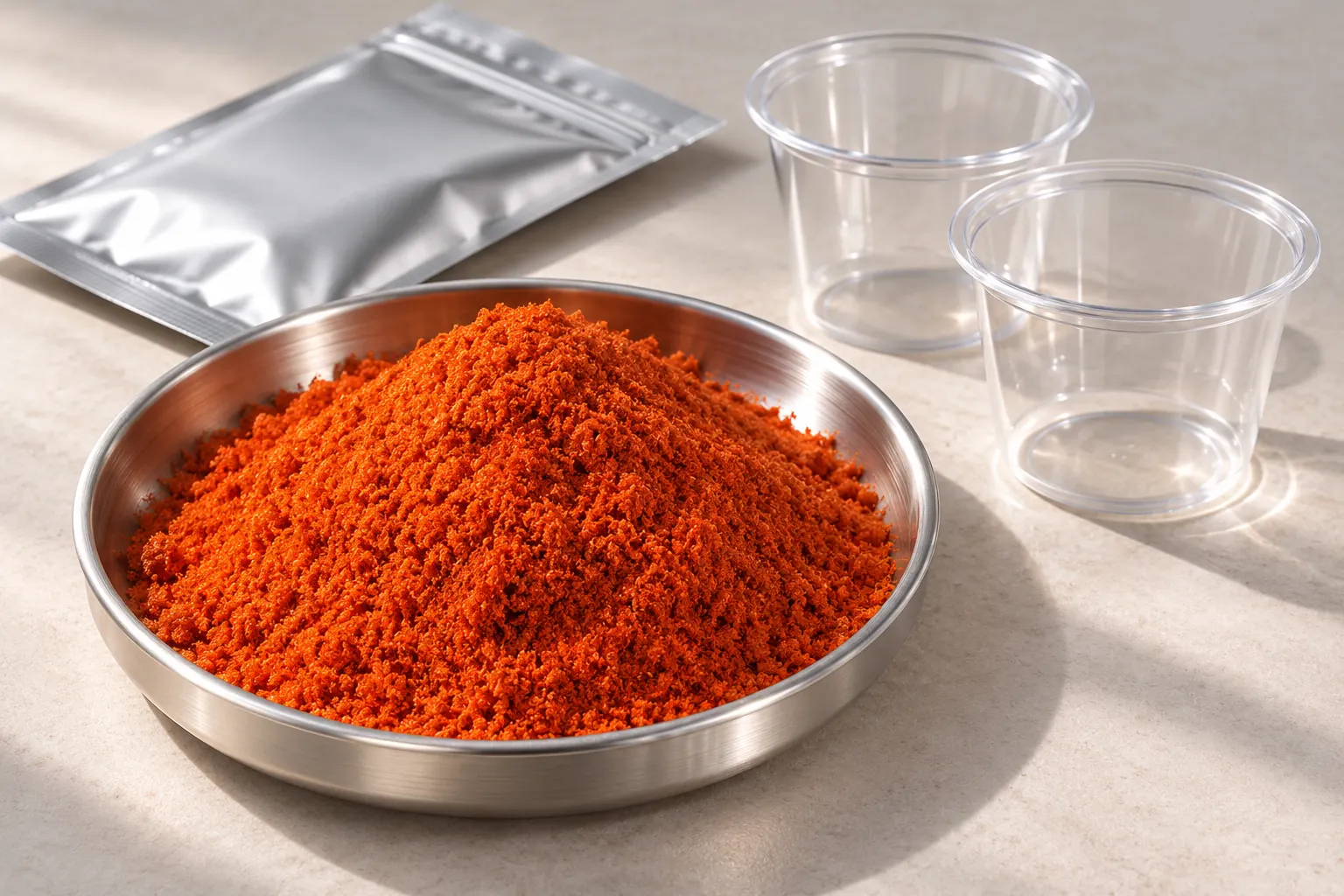
Compare the proposed sample with the agreed formula and your accepted food reference. Record its identity, the relevant material data and the actual preparation used by your team. A dry-powder match alone may not establish the desired result after marinating, cooking or finishing.
Give feedback by attribute and identify any requested recipe or material change. Each revision should have a new reference so that the approved sample can be connected unambiguously to the formula chosen for the order.
Keep the Actual Application with the Contract Brief
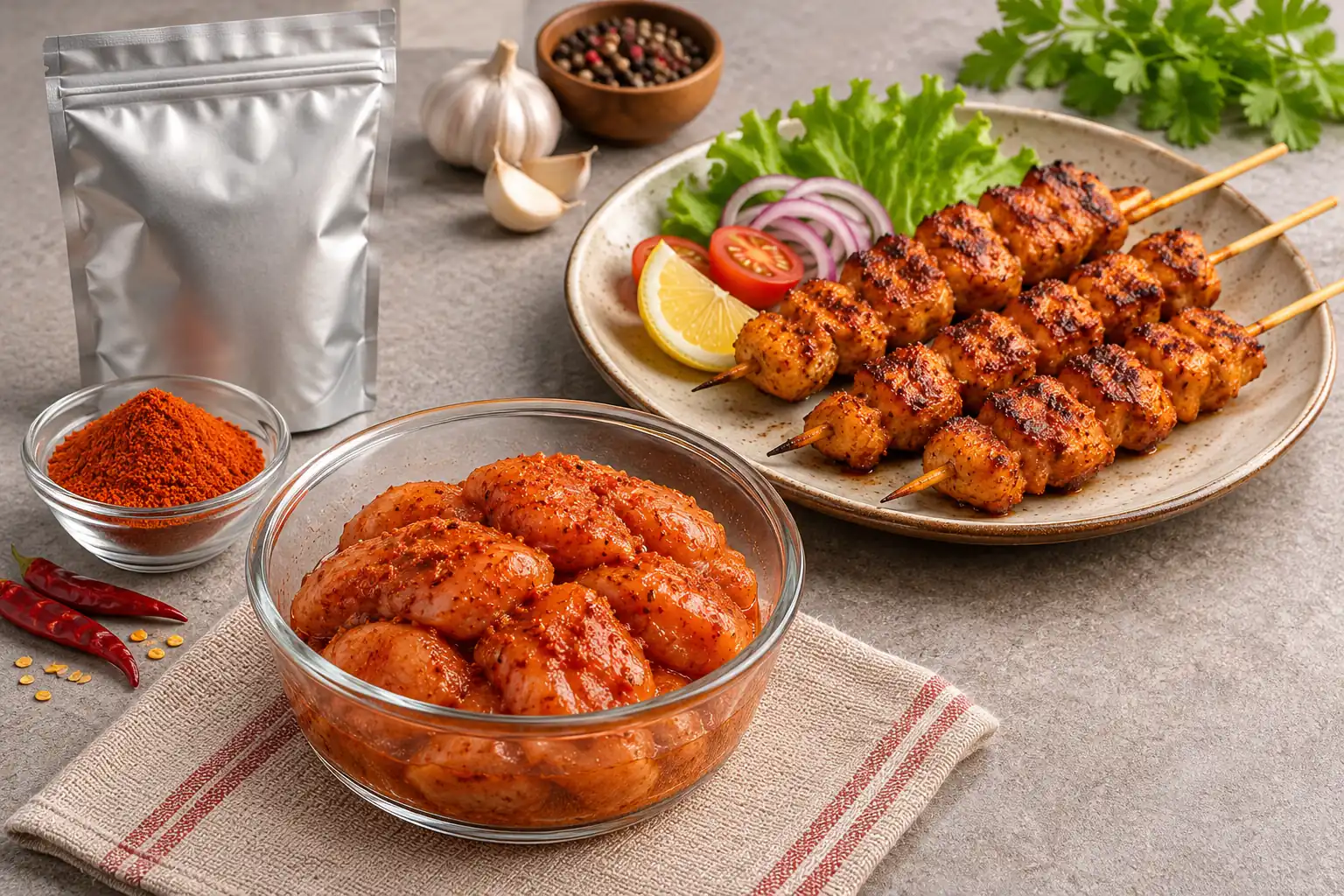
For a marinade project, describe the food, powder addition and the rest of the preparation. For a finishing blend, define the addition stage and serving routine. Keep the same application conditions during the first comparison and use your own handling and cooking procedures.
Do not borrow an unrelated catalogue use instruction as the dose for your buyer-owned recipe. Your approved application trial should identify the amount and process that your team evaluated for that particular formula.
Define What Will Be Checked for the Ordered Blend
Agree the selected-material specification, complete ingredient declaration and quality records needed for approval. Where the project has ingredient restrictions, review both the formula components and the supporting information relevant to the proposed supply. Keep those requirements in the accepted brief.
Identify the receiving criteria and the reference used when reviewing an observation. Keep the required ingredient declarations, analysis records and selected-product documents with the same formula and sample so the order has a clear acceptance basis.
Define Packing as Part of the Same Project
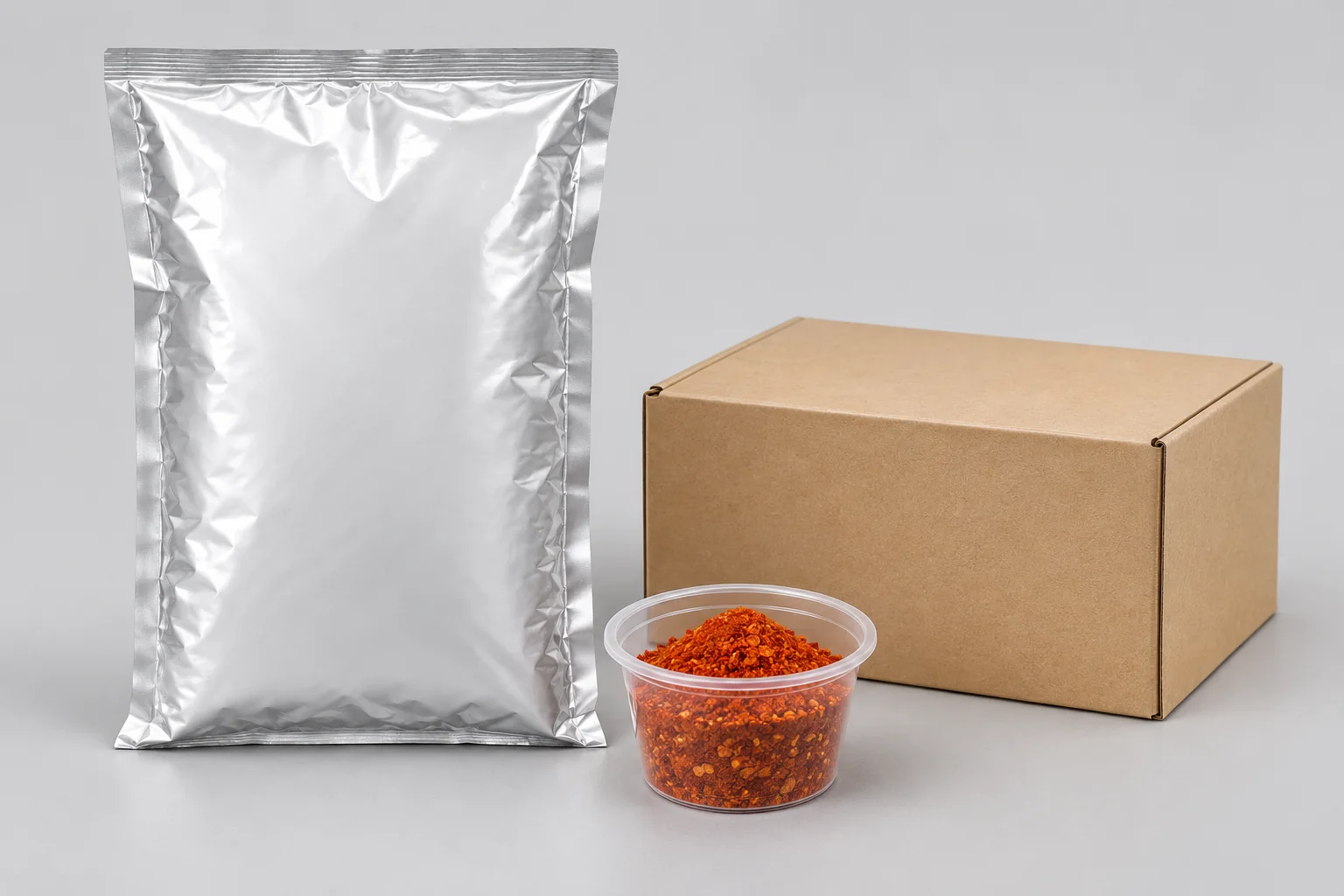
State the required bag or bottle, net weight, closure, outer count and destination. Include artwork and declaration requirements where a brand presentation is involved. The pack should identify the approved formula rather than become a separate request for an unspecified red powder.
Confirm quantity, minimum order conditions, timing and commercial terms for the actual scope. A sample or private-label reference does not establish identical terms for a buyer-owned formula with different materials and packing.
Send a Controlled Formula and a Clear Scope
Send us the recipe status, intended food, relevant ingredient specifications and the services you want reviewed. State the permitted changes, sample need, target order quantity, destination and packing requirement. Identify the records your team will use for approval.
We can discuss whether the proposed project can proceed on that basis. Once agreed, retain the selected formula, raw-material versions, sample and pack specification together so repeat enquiries refer to the same approved project.
Start a Formula Scope Discussion